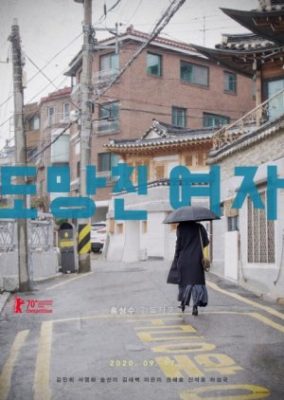
There is a quiet revolution brewing in the shadows of conventional storytelling—a revolution that does not shout but whispers, that does not demand but invites, that does not shatter but reshapes. It is the kind of revolution that unfolds not in grand declarations but in the subtle, deliberate choices of a woman walking away from what was expected of her. This is the essence of feminism as embodied in The Woman Who Ran, a narrative that dares to redefine agency, autonomy, and the very fabric of human connection. It is not a story about rebellion for rebellion’s sake, but about reclaiming the right to exist beyond the gaze of others, to move through the world not as an object of scrutiny but as a sovereign being. This is not just a tale—it is a manifesto disguised as art, a quiet provocation that lingers long after the last page is turned.
The Illusion of Choice and the Weight of Expectation
At the heart of every woman’s journey lies the unspoken contract: the promise that if she adheres to the rules—be they societal, familial, or romantic—she will be rewarded with safety, approval, or love. But what happens when the rules themselves are the cage? The Woman Who Ran dismantles this illusion with surgical precision, exposing how choice is often a mirage, a carefully constructed narrative that serves the comfort of others more than the woman herself. The protagonist’s decision to leave is not an act of defiance but an assertion of self-preservation, a refusal to be complicit in a system that demands her silence in exchange for belonging. This is not merely a personal rebellion; it is a political one, a quiet refusal to perform femininity on demand.
The brilliance of this narrative lies in its refusal to glorify suffering. There are no grand speeches, no dramatic confrontations—just the steady, unyielding rhythm of a woman walking away from a life that was never truly hers. It is a rejection of the myth that a woman’s worth is tied to her ability to endure, to adapt, to shrink herself into the spaces others deem acceptable. Instead, the story posits a radical idea: that freedom is not a privilege granted by others but a right inherent to existence. This is the first crack in the foundation of patriarchal expectation—a fissure that widens with every step she takes.
The Body as Battleground and Sanctuary
Feminism has long grappled with the paradox of the female body: it is both a site of oppression and a tool of resistance. The Woman Who Ran navigates this duality with a poet’s touch, portraying the body not as a vessel for others’ desires but as a compass guiding her toward truth. There is a visceral honesty in the way the narrative lingers on physicality—not as something to be ogled or controlled, but as a language all its own. The protagonist’s body becomes a sanctuary, a place where she can finally be alone with herself, unburdened by the weight of being seen.
This reclamation of bodily autonomy is not just symbolic; it is visceral. The act of walking, of moving through space without apology, is a political statement. It rejects the notion that a woman’s body exists for consumption, whether by lovers, strangers, or the institutions that seek to regulate it. In a world that polices female movement—whether through dress codes, street harassment, or the ever-present threat of violence—this simple act of walking becomes an act of defiance. It is a reminder that a woman’s body is not a public domain, not a territory to be mapped or claimed by others. It is hers, and hers alone.
The Erasure of Women’s Stories and the Power of Silence
History has a habit of silencing women, of reducing their lives to footnotes in the grand narratives of men. The Woman Who Ran confronts this erasure head-on, not through loud declarations but through the power of absence. The protagonist’s decision to leave is not dramatized; it is matter-of-fact, as if her story is too ordinary to warrant spectacle. Yet this ordinariness is its own rebellion. By refusing to perform the role of the tragic heroine, she denies the world the catharsis it craves—the spectacle of a woman broken by love, by duty, by the expectations of others. Instead, she offers something far more radical: the quiet dignity of a life lived on her own terms.
This narrative strategy is a feminist act in itself. It rejects the trope of the woman whose story is only valuable when it is tragic, when it is consumed by an audience hungry for her pain. Instead, it centers the woman as the author of her own life, not as a character in someone else’s drama. The power of silence, in this context, is not passivity—it is resistance. It is a refusal to be co-opted, to be turned into a cautionary tale or a morality play. It is, quite simply, the assertion that her life matters because she says it does.
Love as a Prison and the Courage to Walk Away
Love, in patriarchal narratives, is often framed as the ultimate reward for a woman’s compliance—the carrot dangling at the end of a very long stick of sacrifice. But The Woman Who Ran dares to ask: what if love is not liberation but another form of captivity? The protagonist’s departure is not an act of cruelty but an act of self-respect. It is a recognition that love, when it demands erasure, is not love at all—it is control. This is a radical reframing of romantic narratives, one that challenges the idea that a woman’s happiness should be contingent on her ability to endure, to forgive, to shrink herself into the mold of what a man—or society—deems acceptable.
The story does not vilify the man she leaves behind. There is no melodrama, no villainy, no grand confrontation. Instead, there is the quiet tragedy of two people who loved each other but could not love each other well. This is the unspoken truth of many relationships: that love is not always enough to bridge the chasm between two people’s needs. The protagonist’s choice to walk away is not an indictment of love itself but a rejection of the idea that love should require her to betray herself. It is a reminder that love, at its best, should be a sanctuary—not a cage.
The Future She Walks Toward
The genius of The Woman Who Ran lies in its refusal to offer easy resolutions. There is no triumphant return, no grand reconciliation, no neat bow tied around her story. Instead, there is the open-ended promise of a future she is building for herself, brick by brick, step by step. This is the most radical act of all: the decision to live in the uncertainty of possibility rather than the false comfort of a life half-lived. The protagonist’s journey is not about finding a new home but about becoming the architect of her own existence.
This narrative does not promise that the road ahead will be easy. It does not sugarcoat the loneliness of walking away from everything familiar. But it does promise something far more valuable: the freedom to define success on her own terms. In a world that constantly measures women by their utility to others—whether as wives, mothers, or objects of desire—this is a revolutionary act. It is a declaration that her life is not a transaction, not a performance, not a series of roles to be played for the benefit of others. It is hers, and hers alone.
The Woman Who Ran is not just a story about leaving—it is a story about arriving. Arriving at the understanding that she is enough, exactly as she is. Arriving at the realization that her worth is not contingent on anyone else’s approval. Arriving at the quiet, unshakable certainty that she is the author of her own life. This is the promise of feminism: not a utopia, not a revolution in a single stroke, but the slow, deliberate work of reclaiming what was always hers to begin with.