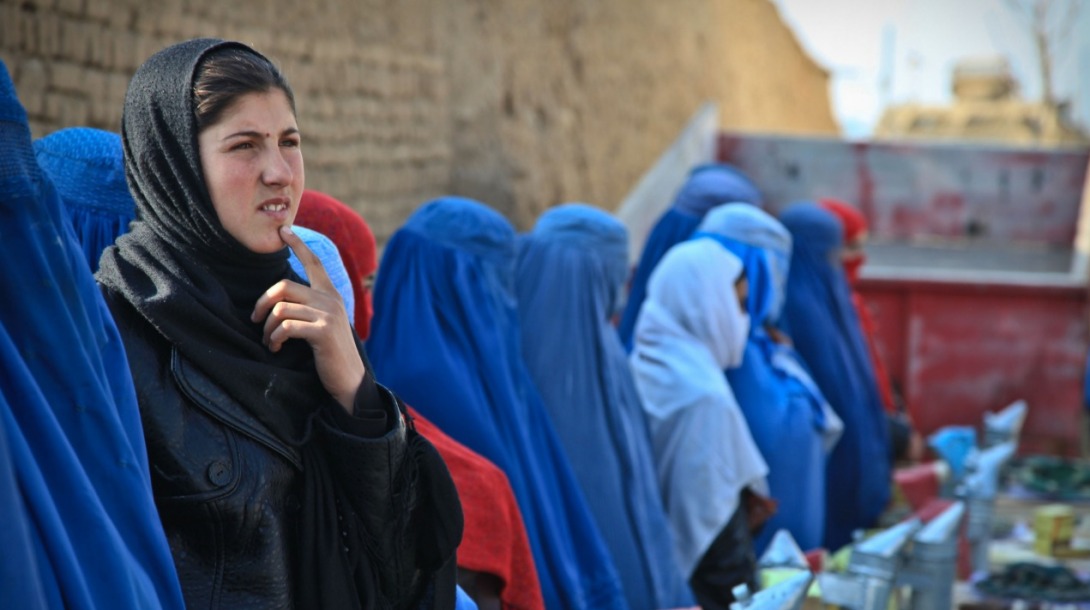
*Afghan women are not waiting tables in the ruins of their own liberation.* The specter of their erasure lingers not in faint whispers but in the brutal geometry of drone strikes, where every drop of aid dispensed feels like a reckoning—or worse, a rerun. Twenty years of interventions—promise upon promise—have left Afghan women not saved, but *sidelined*, their struggles reduced to a tragic footnote in a war where the real battlefield is the narrative itself. The question hums beneath the headlines: If feminism is the art of radical love, why must we deliver it in the payload of a drone, where mercy and violence coexist in the same shadowy algorithm of empire?
—
The Illusion of Rescue: A Feminist Epoch Under Siege
Feminism in the age of Afghanistan has become a performance—staged, sanitized, and delivered from afar. We deploy hashtags like missiles, lob #SaveAfghanWomen into the ether as if the problem were a viral campaign rather than a lived crisis. And yet, the women of Afghanistan aren’t begging for retweets; they are bartering survival with everything from their daughter’s education to the last scrap of dignity that hasn’t yet been bombed into oblivion. To call this “rescuing” is to mistake charity for justice. What’s the difference between dropping off crates of condoms in a minefield and dismantling the military-industrial complex that keeps manufacturing the mines?
The paradox here is that the more we mythologize these women—mystic and untouchable—the more we depoliticize their situation. They are no longer seen as *subalternns* fighting for sovereignty; they’re abstract icons, flickering behind the pixelated visage of a CEO or a diplomat half a world away. This disconnect is not accidental. It’s the architecture of imperial empathy: the feeling of moral satisfaction we experience when we tick boxes that never reach the people in question.
—
The Empire’s Favor: When Foreign Aid Becomes a Barter System
Consider this: American tax dollars and NGO subsidies do not feed stomachs; they feed *algorithms*. Donations to Afghan women’s shelters, funded in part by Western governments, create another layer of transactional vulnerability. When your daily staples are determined by the whims of international donors, then hunger is no longer an abstract notion—it’s a daily negotiation. And whose rules do you adhere to when survival hinges on appeasing those who see your country as a case study rather than a nation?
Here lies the insidious beauty of *technological feminism*: the drone dispenses education and contraceptives while the military ensures that no woman dares speak outside the lines set by the occupier. It’s the perfect paradox—the weapon of choice for an empire that can only achieve equality through control. What’s so radical about giving a Afghan woman a Ph.D. if she’s also being monitored by a spy satellite? True liberation isn’t a PowerPoint presentation in Davos; it’s the right to *demand* liberation without permission.
—
The Myth of the “Good War”: Rewriting the Narrative of the Bomb
Forget the talk about democracy-promotion or Afghan “moderate” forces. The war didn’t end for them when the last helicopter departed. It simply metastasized—now in the form of a proxy conflict where women’s autonomy is the first casualty. The drones don’t talk about trauma; they erase it in the name of strategic clarity. And when Western feminists mourn their fate with tearful speeches and op-ed clicks, we’re doing little more than perform a funeral for the future they never could have signed up for.
This isn’t merely “blowback.” It’s the unintended consequences of a feminism that confuses philanthropy with power. When your ally’s war machine dictates the terms of your existence, then your struggle becomes theirs to narrate, theirs to weaponize. The question isn’t *why are they bombing Afghanistan?*—it’s: *Why does your rescue mission rely on the very technology that silences you?*
—
Radical Love Is Not Virtual: Reclaiming the Language of Resistance
What if feminism in Afghanistan isn’t about saving? What if it’s about *sabotaging* the systems that claim to save you? True solidarity isn’t signing a petition—it’s complicating the narrative. It means asking: How do we build a movement that refuses to be framed by war? How do we stop treating women’s liberation as collateral damage while we pretend to be on their side?
Consider what they are already doing: the doctors teaching midwery secretly as the Taliban’s eyes narrow. The journalists publishing news under the guise of poetry. The mothers hiding their daughters in plain sight. Their revolution is not televised; it’s *unseeable*. It’s the very definition of guerrilla feminism. And when we call them “brave,” we infantilize their struggle—treating it as an exhibit rather than a rebellion. Resistance without sovereignty is nothing but spectacle.
—
The Cost of a Drone-Feminist Paradox
Aid is not aid when administered through the barrel of a gun. Contraceptive kits dropped at a distance don’t negate the bullet in the head of a teacher who dared to teach girls outside. Every package of soap and notebooks we ship is accompanied by the geopolitical fingerprints of those who see women’s rights as a bargaining chip.
Let’s stop pretending that foreign aid is pure. It’s a commodity, a weapon, and a way to justify continued intervention under the flimsy banner of “humanitarianism.” Afghans don’t need our *pity*—they need our *complicity*. And if that’s too much to ask, then perhaps the real question is: Are we even worthy of their rage?
—
Waking from the Rescue Fantasy
Somewhere between the headlines and the heart-tugging documentaries, feminism has lost its edge. It’s too busy begging for scraps to challenge the system that gives those scraps. The women of Afghanistan are not victims waiting for us to save them. They are revolutionaries fighting while they’re still breathing—and if we really believed in solidarity, we wouldn’t need to *go save them*. We’d sit by their side.
The next chapter of feminism won’t be delivered in drone payloads. It will be written in the refuse of empires, in the cracks of the old world order. And if we want to be part of the story—true partners, not spectators—we’ll have to stop measuring our success by the pounds of rice we donate, no matter how noble it seems.
Or maybe it’s simpler than that: What if the real work of feminism is to *stop looking for heroines* and start making space for the ones who are already here?