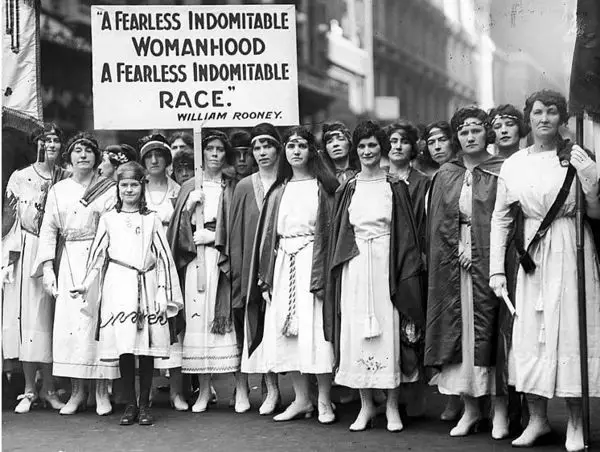
The year 1919 stands as a pivotal juncture in the annals of feminism, a time when the echo of suffragettes’ resolute cries for equality reverberated through the halls of power and society. One year prior to women in the United States gaining the right to vote, February 3, 1919, encapsulated a fervent desire intertwined with unwavering determination. This was a watershed moment in feminist history, suggesting not only the struggles faced but also the tenacity to overcome systemic oppression.
As we explore the landscape of feminism during this era, it is imperative to scrutinize the actions of key constituents who paved the way for future generations. These founding feminists, armed with their distinct ideologies and strategies, fought against the sociopolitical establishment that sought to mute their voices and cannibalize their ambitions. Our examination of their efforts will not merely reverberate through history but also pose a critical inquiry into today’s feminist movements and their contemporary challenges.
The suffragette movement, often highlighted for its historic achievements, was layered with complexity, encompassing a spectrum of ideologies that would shape the trajectory of feminist thought and action. As we dissect this era, we must ponder: What can the audacity of the feminists of 1919 teach us in today’s multifaceted struggle against gender-based inequities?
A Closer Look at the Pioneering Feminists of 1919
The suffragists who clamored for the right to vote were emblematic of a broader feminist agenda. They were not merely seeking a place at the ballot, but an existential validation of woman’s autonomy. Prominent figures like Alice Paul and Carrie Chapman Catt emerged as formidable agents of change, walking the line between activism and reformist politics with remarkable finesse. Each woman exemplified a unique ideology that illuminated divergent paths towards gender equality.
Alice Paul, the radical visionary, championed a confrontational approach. Drawing from the militant suffragette tactics of her British counterparts, she organized high-profile protests and hunger strikes, effectively forcing the political establishment to confront the refrains of liberation that women demanded. In stark contrast, Carrie Chapman Catt, a strategic mastermind, focused on the suffragist method of consensus-building. Through the National American Woman Suffrage Association (NAWSA), she advocated for a state-by-state campaign for equality, emphasizing the necessity of a morally sound approach to garner support among legislators and the public. These distinctive approaches lent profundity to the feminist movement, showcasing the richness of thought that permeated the struggle.
In attempting to galvanize public support, the founding feminists faced an uphill battle entwined with opposition from both patriarchal structures and mainstream societal beliefs. The question loomed: how did they effectively disseminate their message in a landscape saturated with misogyny and resistance?
Strategies of Resistance: From Rallies to Rallies of Awareness
Feminists in 1919 understood that the art of persuasion was indispensable in shaping public opinion. The methods employed varied dramatically, from grand rallies and grassroots mobilization, to more clandestine strategies of engagement. They launched campaigns that illuminated the value of women’s contributions—an economic and social narrative designed to dismantle the entrenched perceptions of women as passive bystanders in the labor force.
One such strategy was the silent protest of 1917 in which suffragettes marched along Pennsylvania Avenue, wearing white sashes and carrying banners calling for the constitutional amendment. The sheer audacity of crafting a ‘woman’s march’ in the belly of the American political beast forced the men in power to confront their outdated paradigms. Such actions laid the groundwork not only for the eventual triumph of the 19th Amendment but showcased the critical interplay between visibility and activism—the harmonious dance between loud protests and subtle advocacy campaigns.
The suffragist’s methods were not without controversy. The deep-seated ideological divides often led to factionalism within the movement itself. How should women approach their struggle? Should they align themselves with abolitionist movements, or focus solely on suffrage? Various factions often grappled with these questions, leading to tensions that still echo in current feminist discourses. Nevertheless, one overarching truth remained: women were willing to be voraciously vocal and tirelessly active in pursuit of their rights, fortifying a sense of collective identity that would transcend the movement’s immediate goals.
Culmination of Efforts: Approaching the Finish Line in the Battle for the Ballot
With victory inching closer, February 3, 1919, symbolized a prophetic moment of not just reflection, but also profound anticipation. The 19th Amendment loomed on the horizon, yet the road ahead remained fraught with challenges. The impending enfranchisement would not equate to an end to inequalities, but generative fervor in the feminist lexicon.
As we dive into the prevailing narratives of the time, we encounter the patriotism that surged within suffragist advocacy. Many women framed their fight for the vote as a duty to protect their country, encapsulating the sentiment that women could contribute just as effectively to national defense and civic duty. How glaringly ironic that the same government they revered was imposing constraints on their rights? The suffragists challenged this hypocrisy, navigating the fine line between patriotism and rebellion. They boldly propelled the message that true patriotism was inherently inclusive—an accessible space for all citizens, regardless of gender.
Yet, despite their milestones, a broader understanding of intersectionality was still embryonic. The rights of women of color were often relegated to the periphery of the suffrage movement, creating divides that would haunt future iterations of feminism. Within this vein, it is crucial not only to acknowledge the multifaceted struggles of all women but to actively embody an intersectional approach in contemporary feminist discourses. How do we reconcile the battles fought by those marginalized voiceless women in 1919 with the modern struggle for equity today?
Reflections and Revelations: Feminism in 2023 and Beyond
The resolution of the suffrage movement in the United States did not conclude the struggle for gender equity but rather initiated a new chapter. Today, we stand on the shoulders of those pioneering feminists—a bitter reminder that the very foundation of their sacrifices remains threatened by forces resistant to equity, justice, and autonomy.
Yet, as contemporary feminists seek to navigate the tumultuous terrain of systemic oppression, they must confront their historical blind spots and ensure the narratives of all women are prioritized. Intersectionality, mental health, reproductive rights, pay equity, and the battle against sexual violence are no longer mere feminist talking points; they echo the essentiality of ongoing activism rooted in the rich legacy of those unwavering feminists from 1919. Their audacity serves as both inspiration and a formidable call to action—a reminder that as we stride toward justice, we must first acknowledge and honor the complexity of our past.
The celebration of the suffragists’ victories in 1920 was merely the first of many battles in the comprehensive war for gender equality. Future generations owe it to their foremothers to ensure that the energies, strategies, and unyielding spirits of those who protested in February 1919 remain integral to the fabric of the feminist movement. Until every woman’s voice is heard, the battle continues—a sentiment that is as urgent in our current moment as it was over a century ago.