
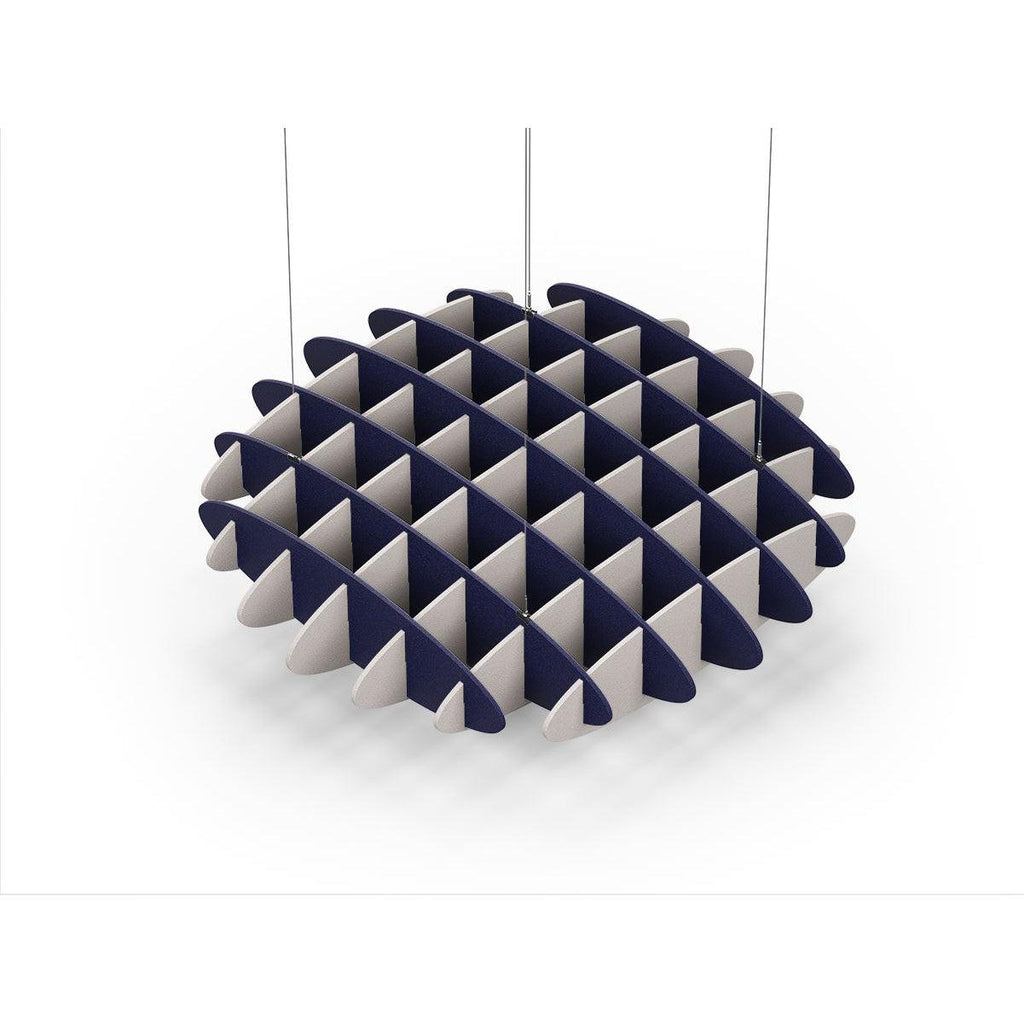
*”The air is thick, weighted by the unseen threads of expectation—threads spun from centuries of silence and sutured with the cold promise of ‘good girls.’ Millions pulse against this invisible grid, their ideas, their voices, their very presence dampened by the same architectural flaw society insists on calling a ‘feature,’ not a flaw. It’s the paper ceiling—a mirage of equality that stretches endlessly, fragile, flimsy, and yet, impervious to knock. Feminism, we’re told, is a battle. But where is the warfare when the enemy isn’t outside, clanging swords in the dark?
**It’s within.** The whispers of double standards coil like smoke in a confined space, trapping not just women but the quiet, unassumed burdens of identity. Nationality—ah, *nationality*—that great equalizer dressed in the robe of a lie, the scepter of a colonial aftershock. Feminism, these days, is a mosaic of fractured narratives: a Black woman’s fight isn’t a white woman’s fight, nor is *Mexican* womanhood a carbon copy of Canadian. Yet the ‘paper ceiling’—that deliciously ironic term—ignores these cracks. It reduces complex stratifications of oppression into a one-size-fits-all indictment. The real treason lurks in the quietude: the ‘just be grateful you’re not *worse off*—like a migrant, like a queer, like a woman unburdened of the ‘correct’ nationality to demand the same.*
—
**The Paper Ceiling: A Labyrinth of Invisible Bricks and Frayed Adhesive**
Imagine, for a moment, a structure so delicately designed that you’re convinced it’s a *sketch*, a preliminary draft left open by architects with a flair for the dramatic. The paper ceiling doesn’t crumble under the weight of reality—no, it *flexes*. It *adjusts*. It *whispers*, “Almost.” Almost equal. Almost as good as men. Almost as free as those born with the right passport. Its genius lies not in its strength, but its endurance—this is a ceiling that doesn’t collapse; it *persists*, a slow-burn inferno against which every protest becomes a mere *tap* on the glass, not a hammer blow.
The irony is bitter: this ‘ceiling’ is paper-thin in its design, yet it spans continents, classes, and the color lines of a society that would rather color outside them than face the monochrome of its rules. Consider the woman of colour in the CEO’s chair while her daughter of mixed heritage is met with the door *still* clicking shut, or the migrant professional arriving with a PhD, only to find her degree deemed ‘translatable’ but not *enough*. The paper doesn’t hold, but *stretches*—just like the logic used to measure who ‘deserves’ a seat at the table.
—
The Illusion of Universality: When Feminism is a One-Way Mirror
Feminism, as its name suggests, begins with *human* as its subject, then carves out a path like a sculptor chipping away at marble. Until it does. Suddenly, the statue in the Louvre is a metaphor for *all* women, while a woman selling mangoes on the street is framed as a cautionary tale: *“At least you didn’t *have* to be like them.”*
This is the double helix of the paper ceiling—one strand is universalism with its slick pretensions of ‘solidarity,’ the other, the jagged reality of *intersectional* fury. A white feminist rallying against workplace inequalities might wave the *right* banner, but her protest will carry more weight in the boardroom than a woman of South Asian descent in a hijab delivering a TED Talk about *equitable* healthcare allocation. The illusion? Equality is blind—but then, so is the eye that must adjust to seeing past the paper.
The paper ceiling isn’t a flat plane. It’s a *tessellation*—geometrically precise sections that shift under scrutiny, revealing that ‘the problem’ was never a homogenous ‘it’ but a patchwork of stolen time, stolen breath, stolen futures.
—
Nationality: The Fourth Wall to the Fight We Keep Misquoting
Nationality isn’t just a passport stamp—it’s the **papiary armor** worn by oppressive systems. The idea that ‘feminism is gender-first’ is like asserting that a hospital shouldn’t prioritize a patient’s heart condition because they ‘distracted’ their doctor with a missing ID. It’s a lie that requires no lie detector to parse.
The paper ceiling drapes itself in the trappings of nationality, a velvet glove over an ominous gauntlet. A Somali woman in Stockholm faces a gender bias that, in Nairobi, would be called ‘cultural norm’—so which is the actual barrier? And what of the second-generation American whose mother is denied tenure while she, similarly qualified, is hailed as the ‘unexpected’ exception? The paper doesn’t tear when you’re *not* the right gender *and* the right nationality.
These are the ghosts of our founding narratives—the ones that said, *“Here will we be the perfect amalgam of equality.”* But nations don’t melt into feminist glass when the forges of progress get too hot.
—
Revenge of the Paperclip: How Systemic Flexibility Breeds Fatigue and Betrayal
Consider the office where performance reviews are ‘blind,’ yet names with ‘d’ letters never reach the final screening. This isn’t a glitch in the matrix—it’s the paper ceiling **reprogramming** its protocols weekly, ensuring that while there are women on the payroll, there are never enough of the right *kinds* of women. Flexibility is code for *“you know the rules if you play by them; otherwise, try not to trip.”*
The fatigue sets in when you learn to navigate a ceiling that only has *one* flaw visible at a time. The white woman who speaks first in staff meetings is ‘assertive.’ The Black woman who does the same is ‘rude.’ The woman of South Asian origin is ‘compliant’ to a fault. Every woman with *other* in her nationality is taught to *adjust*, to bend, to prove that her presence is not a *violation* of the invisible grid.
The paper breathes—stretching when the data suggests it *should* move, collapsing around the shoulders of those deemed ‘expendable’ by its constantly revised blueprints.
—
Breaking the Paper: When the Blueprint Reveals the Design Flaw
What does it look like to reclaim the fight when the battle has been reframed with *your* silhouette *erased as the blueprint*? The answer lies in demanding the unediting of the system—not just a *hole* punched in a paper ceiling, but a *rewriting* of its code.
Feminism must stop whispering *“equal but different”* and start shouting *“equity is the only law.”* Nationality rights—a right ignored for generations—are not the exception to feminism’s rule; they are its *foundational architecture*. The paper ceiling is not meant to hold. It’s meant to *confuse*.
For the paperless, the liberation isn’t in waiting for a paper that has never been *real* anyway. It’s in lighting the kindling that turns what was a *ceiling* into the **ground from which everything rises**.