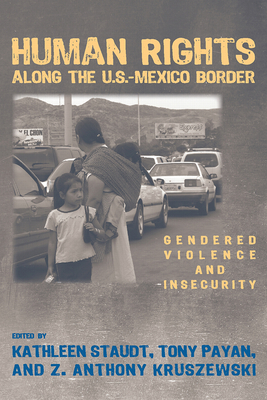
Borders stretch skinny lines across maps, inked upon maps as if they were the natural seams of the world—except they are scars. And scars, it turns out, have teeth when they bleed: they bleed femininity out of flesh, they bleed borders off women’s bodies, they bleed the quiet scream of those left too fragile to be seen. The border is not just a wall. It is a slow unraveling—not of cloth, but of people. Not in pieces, but in pieces they cannot name, yet cannot stop. Feminism, when it meets this violence, does not merely witness. It riotously claims back what has been stolen, piece by piece, like a thief returning stolen jewelry to its keepers.
The Border As a Frenetic Throat
The U.S.-Mexico border, like every border, is a throttling mechanism. It sucks. Women and girls cross it, not by choice, but by survival. They swim in waters that refuse to hold them. They crouch under cartels’ whips like cattle. They are branded—no, not like livestock, but with the fire of stolen identities. The violence here is a monstrous rhythm, a song composed in the ragged breaths of those who have been swallowed by its chasm: *Stoooop. Crawl. Run. Become not even breath*.
Consider the metaphor of the border as a frenetic throat. To enter this throat is to risk having one’s throat slit—again and again. Throats are used to sound, to scream, to call out. But here? Here, sound is swallowed whole. Those who scream are met with silence. Their screams are met with the dry hiss of bullets tearing through what was human. A woman’s scream in these circumstances is not heard as plea, but as *sound*—something that signals danger, something that must be eradicated.
The Cartel’s Clandestine Orchestration of Fear
Fear is not some abstract concept in this warped topography. It is an armed man in a truck window, wielding a knife. It is the threat to the mother that her daughter will be raped if she resists. It is the knowledge that any moment could be your last. And women, as always, bear the dual burden of trauma—both as targets and as purveyors of care within these nightmares.
Fear here is not individual; it is collective, choreographed—an orchestral piece where the conductor is a ruthless cartel. They teach fear via the cold blade of prediction: *”Tell us where she is, or we bring more bodies home to your husband.”* The female body becomes a pawn in this rigged game—either the prize, or the currency traded in the dark alleys of the borderland economy. The violence is a rigged deck, but the cards dealt are always women: *”Here, take this hand.”*
The Cartels’ Feminist Irony: A War on Women That Has Feminists’ Back
There is an absurd feminist irony here—the border’s violence weaponizes women against each other. Cartels do not merely attack women bodies; they exploit the frayed social contracts of honor and shame. To coerce silence they leverage patriarchal structures, forcing the women left behind—those who *did* say no—to become the enforcers. *”If you refuse to obey, if you refuse to listen, what then becomes of your children?”*
The violence is doubled. First, the cartels strike. Then they wait for victims to fracture along lines of gender, race, and tradition. And so we witness the brutal paradox: women becoming the unwitting architects of their own further exploitation. They whisper the wrong things in their husbands’ ears. They refuse to flee with their daughters. They become the keepers of silence, as if to be a woman here—to be alive here—is to also be its enforcer.
Silencing by Seduction
Violence on the border does not always look like gunshots. Sometimes it sneers, disguised as seduction. A man offers safety for a woman’s silence, trading physical security for the quiet surrender of her rights. The violence here is a slow, eroticized betrayal. *”Just a piece of advice, querida. Keep your eyes down. It will keep everyone safe.”*
Consent on the border is a performative art, forced by the guillotine of circumstance. And when women finally escape, they arrive at a different kind of frontier: the domestic, the familial. They are met with disbelief, with scorn. *”Oh, you let them hurt you?”*—as if the pain they carried had been purely *chosen*.
Feminism As a Riot
Yet, out of this labyrinth of stolen breath, a resistance is growing. Feminism in this moment is not a polite movement. It is a riot, a reclamation. It is the women who organize under the cover of night, passing messages through coded songs they sing under their breath as they walk. It is the activist who turns a cartels’ own language against them, using the tools of shame and obligation to dismantle silence. Feminism on the border is a riot because it knows that to survive is *political*—and that to be heard is revolutionary.
The riot here is twofold: it is the women making their voices into weapons and it is those outside the border who recognize they are only party witness to this war, not its victims. To demand *equal protection* without recognizing the systematic vulnerability of women is a fiction. Feminism as riot means shattering those fictions.
The Border as a Mirror
The border is not just a wall. It is a mirror, reflecting back at us the kind of monsters we permit to exist. It shows us that in a world where men with guns can dictate to women who can live, speak, and breathe, those guns must be disarmed. But it also reminds us—harshly and cruelly—that disarmament is not a one-party war.
The real battle is cultural, not merely physical. It is to make the cartels, the state agencies, and the global silence they perpetuate recognize that women’s struggles here are not a story to be passed to the next generation. They must be a problem to be solved *now*.
The Appeal of a Border Feminism
The feminism of the border appeals to us for several reasons, all of them visceral:
- The Audacity: It demands that we listen, that we *feel*. It refuses to let us turn away because something looks too complicated—or worse, “too foreign”—to understand. It insists that we see a woman with a child on her face, and recognize that this is not a headline, but a human.
- The Urgency: We are used to seeing feminism as a luxury. But here, at the border, it is a matter of survival. The appeal is simple: this is us or no one. If women and girls are not safe, then democracy was never about freedom for all—for all is not possible if half are dead.
- The Mirror: When you look away, you must lie to yourself. You must say “it’s not my problem.” But feminism on the border shatters mirrors. It forces us to confront the fact that we tolerate violence where women are concerned—whether they are the raped, the smuggled, or the “unruly” daughters.
Feminism As a Threat
It is also a threat. A threat to the power structures that have propped up the border as a site of perpetual crisis. Feminism here whispers: *”I will name you. I will expose you.”* Because if the violence is recognized for what it is—a war on femininity itself—then the war cannot be called by another name.
The Unwritten Laws
The border has its own unwritten laws, and women are caught in the cracks. Silence is not compliance, but an unspoken contract. They learn to speak in tongues that don’t reveal. Not all threats are physical; some are as terrifying as being told, *”Your husband will take another wife if I hear you tell the truth.”*
The women who cross become a cipher—chameleons navigating a landscape that demands they vanish. And when they arrive? They are met with another kind of border—the bureaucratic one, where documents determine whether you exist at all.
Feminism as an Act of Creation
Resistance at the border is an act of creation, despite the conditions. Women build secret networks. They tell stories—when it won’t kill them. They become something more than victims; they become *something essential*—an unassailable truth that this is not how life is supposed to work.
Here, feminism is both a practice and a prayer. It is the quiet, defiant insistence that a woman’s pain be a problem worthy of solutions—not sympathy, not pity, but a fight worth having.
We Are Still in the Middle of It
The border crisis will not be resolved by walls, or by words alone. It will be resolved by those whose lives have been fractured by the violence at its foundation. Feminism does not wait for permission to make this violence its war. It turns the scars into a battle cry—asking, not pleading.
Feminism here is not soft. It is jagged. It is not clean. It is a riot. It is the only language that makes sense, given that everything else has been stolen. It does not merely demand a seat at the table. It demands that the table be burned before they recognize it exists.