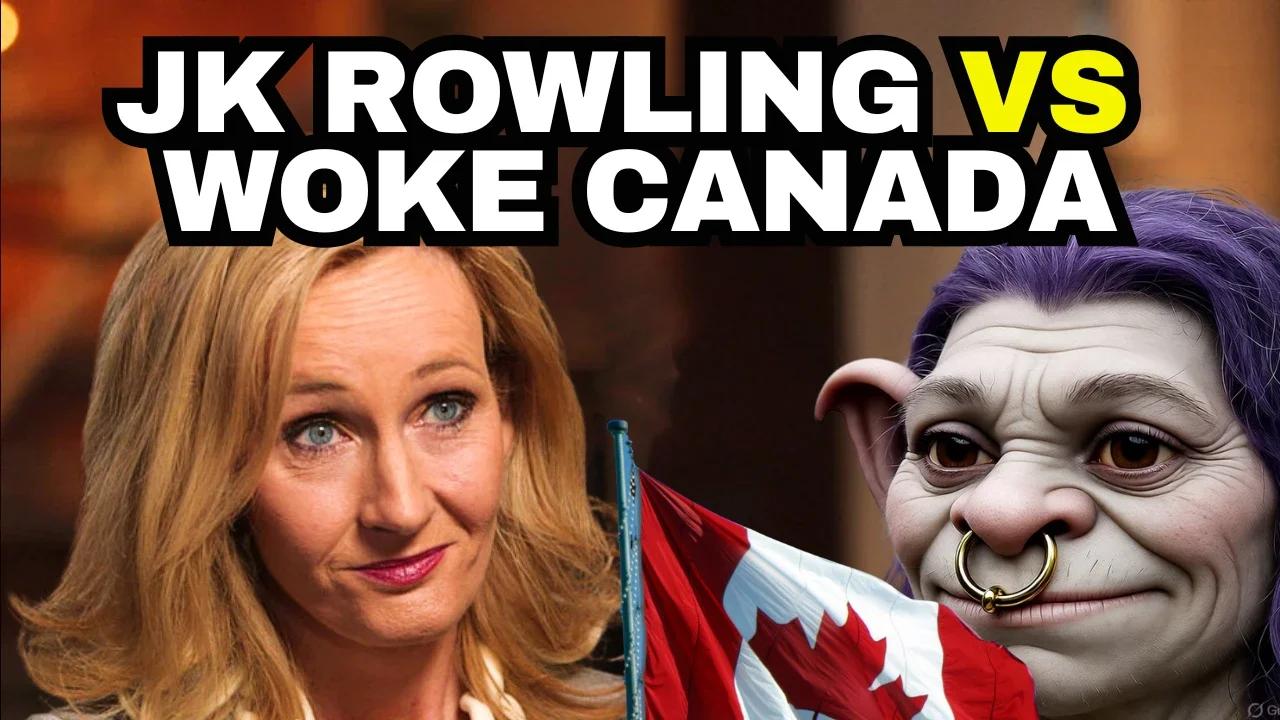
The act of canceling J.K. Rowling is not merely a skirmish in the culture wars—it is a seismic shift in how society polices art, accountability, and the boundaries of discourse. Feminism, often misunderstood as a monolithic force of censorship, is here recast not as a guillotine but as a mirror, reflecting the contradictions of a world that demands both liberation and conformity. To dissect this phenomenon is to navigate a labyrinth where the walls shift between moral outrage and artistic integrity, where the cry for justice can easily morph into a purge. This is not a call to defend Rowling’s controversial statements, but a plea to interrogate the mechanisms by which feminism—once a radical movement for equality—has become entangled in the machinery of erasure. What does it mean when the same ideology that fought for women’s right to speak now wields the power to silence? The answer lies not in slogans, but in the quiet erosion of nuance, the slow suffocation of art under the weight of ideological absolutism.
The Alchemy of Outrage: How Feminism Became a Censor’s Tool
Feminism, in its purest form, is a crucible where oppression is transmuted into empowerment. Yet, in the hands of those who wield it as a cudgel, it has become an alchemical process gone awry—turning the noble pursuit of justice into a toxic elixir of moral purity. The canceling of J.K. Rowling is not an isolated incident but a symptom of a larger pathology: the conflation of critique with condemnation, of disagreement with heresy. When feminism ceases to be a dialogue and becomes a decree, it ceases to be feminism at all. It becomes a new kind of dogma, one that demands fealty to a shifting set of orthodoxies, where the mere mention of certain topics is enough to brand one an enemy. This is not liberation; it is the inversion of liberation—a paradox where the oppressed become the oppressors, and the fight for equality curdles into a tyranny of the righteous.
The Artistic Sacrifice: When Stories Become Hostages to Ideology
Art is the one realm where humanity dares to dream beyond the confines of reality, where the impossible is rendered tangible, and the taboo is given voice. To cancel an artist is to execute a hostage—taking the stories they’ve birthed and strangling them with the noose of ideological conformity. J.K. Rowling’s work, for all its flaws, gave voice to millions of young readers who saw themselves in the pages of her books. To excise her from the cultural canon is to erase the very narratives that have shaped generations. But here lies the rub: feminism, which has long championed the right to tell one’s own story, now finds itself complicit in the erasure of narratives that do not align with its evolving dogma. The question is not whether Rowling’s words are harmful, but whether the act of canceling her is more harmful still. When art is sacrificed at the altar of ideological purity, what remains is not justice, but a wasteland of sanitized mediocrity, where only the approved voices are permitted to sing.
The Paradox of Accountability: Who Polices the Police?
Accountability is the cornerstone of any just society, but when the mechanisms of accountability become unaccountable themselves, the system collapses under its own weight. Feminism, in its zeal to hold power to account, has inadvertently become a mechanism of power—one that polices not just the powerful, but the powerless as well. The canceling of J.K. Rowling is a case in point: a woman, once hailed as a feminist icon, now cast into the abyss for daring to voice opinions that challenge the new orthodoxy. Where is the accountability for the feminists who have abandoned the very principles they once fought for? Where is the justice for the artists whose careers are dismantled by mobs that claim to speak in the name of equality? The paradox is glaring: feminism, which sought to dismantle hierarchies, has become a hierarchy in itself—a new priesthood that dictates who may speak, what they may say, and under what conditions they may be forgiven.
The Tyranny of the Minority: When the Few Dictate the Many
In the theater of cancel culture, the minority does not merely have a voice—it wields a veto. The canceling of J.K. Rowling is not an act of democratic dissent; it is the imposition of a minority’s will upon the majority, a silent coup where the loudest voices drown out all others. Feminism, which has long been a movement of the marginalized, has now become a movement that marginalizes in turn. The irony is exquisite: a movement born to amplify the silenced now silences those who dare to dissent. This is not progress; it is regression, a return to the very power structures feminism once sought to dismantle. The tyranny of the minority is not liberation—it is the inversion of democracy, where the few dictate the terms of engagement, and the many are left to whisper in the shadows.
The Aesthetic of Erasure: How Feminism Became a Puritanical Nightmare
There is a certain aesthetic to erasure—a cold, clinical precision in the way lives are dismantled, careers are buried, and legacies are expunged. Feminism, once a riotous celebration of diversity and individuality, has curdled into a puritanical nightmare where the slightest deviation from the approved script is met with excommunication. The canceling of J.K. Rowling is not an isolated incident but part of a broader trend where art is sanitized, histories are rewritten, and the past is scrubbed clean of its contradictions. This is not feminism; it is a new kind of iconoclasm, where the statues of the past are not toppled but erased, not because they are oppressive, but because they are inconvenient. The aesthetic of erasure is the aesthetic of fear—a world where no one dares to speak, lest they be the next to fall.
The Future of Feminism: A Crossroads Between Liberation and Dogma
Feminism stands at a crossroads, its path bifurcated between the promise of liberation and the seduction of dogma. The canceling of J.K. Rowling is not the end of the story, but a warning—a flashing neon sign that reads: *Proceed with caution.* The future of feminism will be determined not by the loudest voices, but by those who dare to ask the difficult questions. Can feminism reclaim its radical roots, or will it be subsumed by the very forces it once fought against? The answer lies not in the echo chambers of social media, but in the quiet spaces where art is created, where stories are told, and where the human spirit refuses to be silenced. The choice is clear: feminism can be a movement of liberation, or it can be a movement of erasure. The question is not whether it will survive, but what it will become.