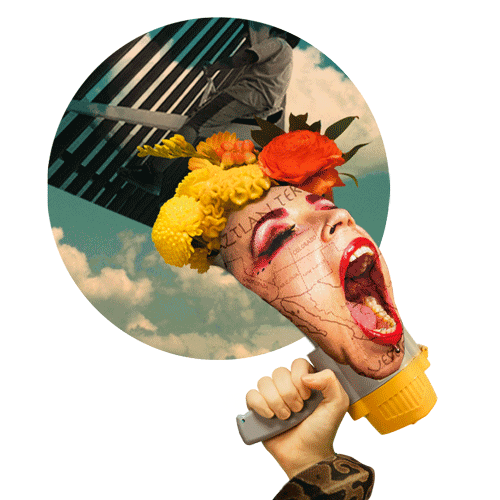
In the vast, contested terrains where identities blur and borders dissolve, feminism carves its own *borderlands*—a liminal space where resistance and reinvention collide. Gloria Anzaldúa’s seminal work, *Borderlands/La Frontera: The New Mestiza*, didn’t just describe a geographical or cultural divide; it illuminated the psychic fractures and rebellious potential of those who exist in the interstices of multiple worlds. This is not a place of passive endurance but a crucible where oppressions are forged into tools of liberation. Feminism, when it embraces the borderlands, becomes more than a movement—it transforms into a living, breathing critique of the systems that seek to contain us. It is here, in the margins, that we find the raw materials for a revolution that refuses to be silenced.
The Borderlands as a Feminist Cartography
The borderlands are not mere metaphors; they are the physical and metaphysical landscapes where power is both contested and reimagined. Think of the undocumented worker navigating ICE raids, the queer person of color navigating familial rejection, the disabled woman navigating a world that refuses to accommodate her body. These are not isolated struggles but interconnected threads in a larger tapestry of resistance. Feminism, when it centers the borderlands, acknowledges that liberation is not a monolithic destination but a series of negotiations—with language, with culture, with the state, with one’s own body. It demands that we ask: Who gets to define the borders of identity? And who is erased in the process?
The borderlands are a site of *epistemic disobedience*—a term coined by Walter Mignolo to describe the rejection of colonial knowledge systems that have historically marginalized non-Western ways of knowing. Feminist borderlands thinkers like Anzaldúa and Cherríe Moraga have long argued that the personal is not just political; it is *geopolitical*. The way we speak, the way we love, the way we resist—all are acts of cartography, mapping territories that the state and patriarchy have tried to erase. To exist in the borderlands is to be a cartographer of your own survival.
The Mestiza Consciousness: A Feminist Manifesto of Hybridity
The mestiza consciousness is not a passive acceptance of duality but an active embrace of multiplicity. It is the ability to hold in tension the contradictions that colonialism and patriarchy have forced upon us: the sacred and the profane, the colonizer and the colonized, the feminine and the masculine. This consciousness is not a resolution but a *dissolution*—a breaking down of binaries that have kept us trapped in false dichotomies. Feminism, when it engages with mestiza thought, becomes a practice of *decolonial love*, where we learn to love ourselves not despite our contradictions but because of them.
Consider the woman who is both a mother and a revolutionary, who is both tender and fierce, who speaks multiple languages—one for her abuela, one for her boss, one for her lover. She is not a paradox; she is a *living archive* of resistance. The mestiza consciousness teaches us that identity is not a fixed point but a constellation of experiences, some inherited, some chosen, all fluid. To be feminist in the borderlands is to reject the idea that there is a single, “pure” way to be a woman, a feminist, or even human.
Language as a Weapon and a Sanctuary
Language in the borderlands is never neutral. It is a site of violence—when slurs are hurled, when accents are mocked, when silence is enforced—but also a site of reclamation. Spanglish, for instance, is not just a linguistic quirk; it is a refusal to be contained by the rigid borders of English or Spanish, a middle finger to the monolingualism that has historically been a tool of assimilation. Feminist borderlands thinkers have long used language to disrupt, to heal, to create new worlds. The Chicana feminist poet Lorna Dee Cervantes writes in a way that feels like a revolution in itself—her words are both a weapon and a balm, cutting through the lies of the dominant culture while cradling the wounds of the marginalized.
But language is also a battleground within feminism itself. Who gets to speak? Whose words are centered? The borderlands remind us that feminism is not a monolith but a cacophony of voices, some amplified by privilege, others barely audible. To engage with feminist borderlands is to listen—to the silences as much as the words, to the stuttered phrases as much as the eloquent manifestos. It is to recognize that sometimes, the most powerful feminist act is not to speak but to make space for those who have been silenced.
The Body as a Contested Territory
The body in the borderlands is a site of both oppression and resistance. It is the body that is policed by the state—through reproductive laws, through dress codes, through the criminalization of poverty. It is the body that is pathologized—by medicine, by religion, by the gaze of the other. But it is also the body that refuses to be disciplined. The fat woman who takes up space unapologetically. The trans woman who demands to be seen. The disabled woman who refuses to be pitied. These bodies are not just sites of struggle; they are *embodied theories*, living critiques of the systems that seek to control them.
Feminism in the borderlands demands that we rethink the body not as a vessel of shame or a commodity to be consumed, but as a *political artifact*. The way we move, the way we dress, the way we love—all are acts of defiance. The borderlands teach us that the body is not a prison but a *launchpad* for revolution. When we reclaim our bodies, we reclaim our right to exist, to desire, to demand. The body is not just a site of feminist discourse; it is the *ground zero* of liberation.
Solidarity Across Borders: The Feminist Diaspora
Solidarity in the borderlands is not a given; it is a *deliberate act of love*. It requires us to recognize that our struggles are interconnected, even when they look different. The Black feminist in the U.S. and the Dalit feminist in India may not share the same language or culture, but they share a common enemy: a system that seeks to divide and conquer. Feminist borderlands thinkers like Audre Lorde and bell hooks have long argued that liberation is not possible without intersectionality—the recognition that race, class, gender, and sexuality are not separate struggles but interlocking systems of oppression.
But solidarity is not just about recognizing our shared oppressions; it is about celebrating our shared resistances. The Indigenous woman protecting her land from extractive industries. The queer activist fighting for housing justice. The migrant worker organizing for labor rights. These are not isolated movements; they are threads in a larger tapestry of resistance. Feminism in the borderlands is not about erasing differences but about weaving them into a stronger, more resilient fabric. It is about recognizing that our liberation is bound together—or it is not liberation at all.
The Future of Feminism: A Borderless Revolution
The future of feminism lies not in the centers of power but in the borderlands, where new worlds are being imagined. It is a feminism that is not afraid of messiness, of contradictions, of the unknown. It is a feminism that embraces the *queer* in all of us—the part of us that refuses to be pinned down, categorized, controlled. It is a feminism that is not just about equality within the existing system but about *dismantling* the system itself.
This is not a feminism of easy answers or neat resolutions. It is a feminism of *radical questioning*—of asking not just how we can make the system more inclusive, but how we can burn it down and build something new. It is a feminism that centers the most marginalized not out of pity but out of recognition that their liberation is our liberation. It is a feminism that is not afraid to be uncomfortable, to be unpopular, to be *dangerous*.
The borderlands are not a place we visit; they are a place we *inhabit*. And in inhabiting them, we become the architects of a new world—one where borders are not walls but bridges, where identities are not cages but constellations, where feminism is not a demand for inclusion but a *revolution of the imagination*.