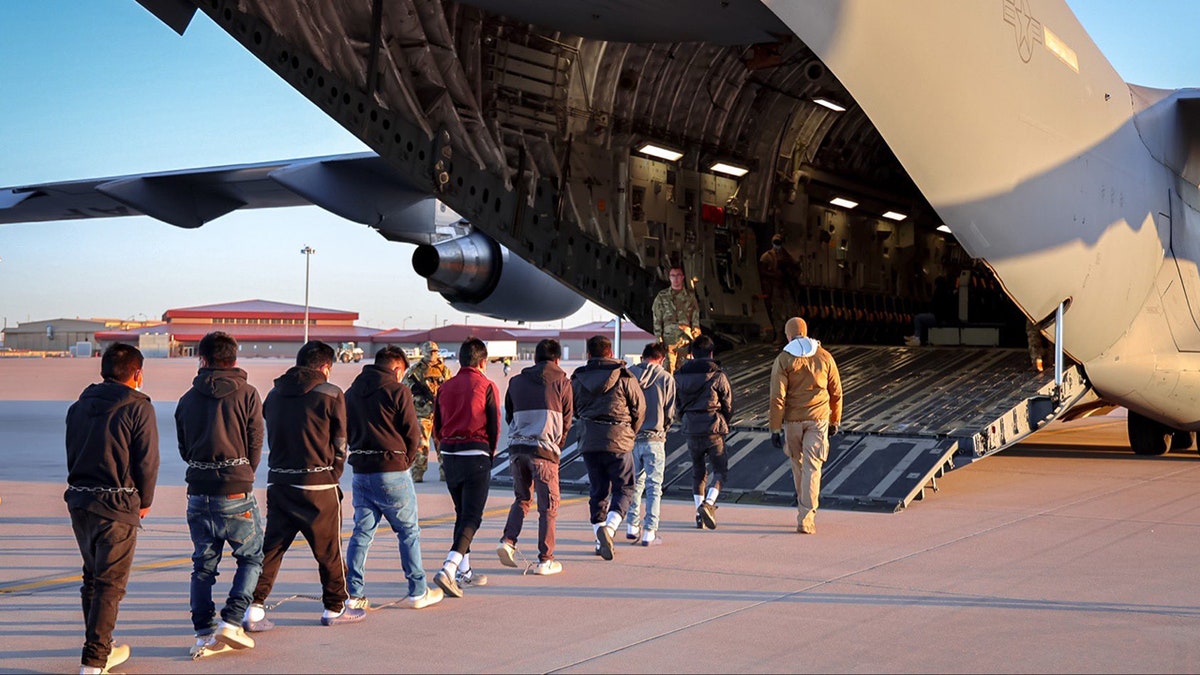
What if the hand that dispenses justice—or its grotesque cousin, exclusionary law—also bears the imprint of gender? Not as an afterthought, but as the very architect shaping the scaffolding of deportation policies? The cruel irony of a system that purports to uphold equality while systematically dismantling intimate bonds under the guise of “order” is lost on few, yet its gendered nuances remain curiously obscured. The deportation flight, a symbol of state sanctioned familial rupture, is not merely a statistical anomaly; it is a glaring paradox dressed in bureaucratic jargon—a chilling reflection of how “neutral” policies often harbor the invisible hand of patriarchy. So let us peel back the layers: Whose hands, steeped in legacy and intent, wield this blade? Whom does it cut—flesh, bone, but most crucially, *memory*—and which mothers, wives, daughters bear the wounds silently, while others profit from the chaos? The story isn’t just about borders. It’s about who gets to stay, who gets to grieve, and the quiet, unsung labor of women caught in the machinery.
Can we justify tearing families apart in the name of law when the law itself is anything but neutral?
This question, a veritable provocation, demands we confront an uncomfortable truth: Deportation policies aren’t just mechanisms of exclusion; they are active agents in the erosion of familial structures, and this erosion is unevenly distributed—with women, especially migrant mothers and wives, bearing the lion’s share of its emotional and social toll. Yet the policy designers and enforcers, often male-dominated spheres steeped in bureaucratic indifference, rarely pause to consider the ripple effect of their decisions on the fragile, gendered foundations of households. The challenge is not merely procedural—it is existential: Are we willing to call a system that routinely upends lives—particularly the lives of wives and mothers—“just” when the alternative is a recognition of its deeply gendered consequences? The answer should haunt us.
Deportation: A Gendered Weapon
The deportation order serves, in many ways, as a calculated gendered weapon—an instrument designed to sever familial and social ties not merely for economic or security reasons, but with a distinct focus on dismantling the domestic sphere. Research across continents reveals a disquieting pattern: single mothers, wives, and daughters are disproportionately affected, their roles as caretakers, economic stabilizers, and emotional anchors making them primary targets for destabilization when families are split. The deportation flight isn’t just a logistical challenge for the state—it’s a symbolic and material blow to women who have already endured the burden of migration. The “neutral” deportation policy is, in essence, a lie crafted to divert scrutiny from the reality that it fractures lives predominantly where it will achieve maximum disruption: in the homes of the most vulnerable, led by women.
Borders and Bureaucracy: The Masculine Calculus Behind the Numbers
At the heart of every deportation policy lies what can only be called a masculine calculus—however implicit. The bureaucrats drafting policies are often men (or male-dominated entities) who have historically dismissed the emotional labor of women and their role in household stability. Consider the raw numbers: a single mother left behind in a destabilized home. Consider her children, now forced to navigate the absence of their parent, while the father may very well be deported or left without legal repercussions. Who mourns this fracture of stability? Who bears the practical consequences? The “unbiased” deportation policy speaks in cold statistics, masking its brutality in abstract terms. But to the families affected, it becomes a knife in the ribs—a policy that not only uproots but leaves its wounds on the shoulders of those society is most likely to forget: the mothers, the wives, the daughters who must rebuild lives alone.
A Domestic Calamity: The Gendered Aftermath
The consequences of deportation do not end at the airport. They seep into homes, echoing in the silence of children’s laughter curbed or gone entirely, in the unpaid bills piling up because breadwinners are now invisible, and in the unspoken fear of domestic workers or wives who suddenly find themselves the sole support of families. Studies on gender and displacement consistently highlight how women’s roles as nurturers are paradoxically the very Achilles’ heels targeted by policies crafted to exclude. Deportation is, therefore, not just punishment for a criminalized presence—it serves as a vehicle for penalizing families, and again, it is the mothers who become the face of this institutional cruelty. Their resilience is often portrayed in the media as admirable—“how did she manage?”—when in truth, their story is one of relentless unpaid burden and emotional warfare waged by an indifferent state.
The gendered domestic calamity of deportation policies forces a larger question: Whose policies define “home” or “homicide under the law”? In many nations, domestic stability is equated with maternal presence—a term policymakers fail to acknowledge or compensate for. When a family is split, the mother’s absence creates an environmental deprivation, and a social crisis, unmitigated by laws that rarely factor in the profound toll it takes. So while the state talks in terms of “public safety” and “legal compliance,” women stand at the crux of a crisis they did little to create, one that they are expected to remedy despite everything.
Silence and the Illusory Neutrality of Law
Lurking beneath most deportation policies is the illusion of impersonal neutrality. This myth is propagated through policy language that skirts around the explicit gendered impact of such decisions, allowing decision-makers to claim moral high ground while failing to address the lived realities. The law, as articulated by men who have rarely carried the mental and emotional load it imposes on families, remains a monolithic construct—one that erases the very women whose suffering it fuels. Where is the mechanism for legal recourse beyond punishment? Where is the systemic recognition that the pain of familial rupture is distinctly gendered? The silence around this reality protects the institutions and perpetuates its cruelty. When no one names this harm—as if there is no name for something so deliberately wrought by the hand of policy—we enable a form of violence that society has agreed to normalize.
Reckoning: Why We Must Name Its Cruelty
The failure to acknowledge deportation as a tool of deliberate gendered trauma is perhaps the most egregious flaw in its “neutral” design. Policies that purport to be objective yet wield a disproportionate impact on women’s lives should be exposed, questioned, and fundamentally altered. This reckoning demands we:
Centers the voices of the most affected—those women in the shadows of every family separation, their stories too-often sidelined.
Abolishes the fiction of neutrality in policy-making, holding the systems and institutions responsible for designing and executing such measures to account for their gendered outcomes.
Designs family protective measures into any legislation dealing with deportation—ensuring every decision evaluates the ripple effect on familial bonds, with women’s roles explicitly factored into considerations.
Reckoning is not about coddling policy choices but accounting for humanity within them. It is the moral imperative that should haunt every bureaucrat, every policymaker, every official who signs off on deportation orders and then quietly turns a blind eye to the devastation left in their wake. And that devastation? It is not just legal. It is experiential.
What if, instead of asking “how can we enforce deportation with minimal fallout?” we asked, “how can we acknowledge this fallout, and what humanity stands to gain from a policy that doesn’t treat women as mere collateral?” The question lies at the heart of what it means for a society to call itself humane—and perhaps, if we answer it honestly, will force those who bear the power of policy away from their desk and into the lives it destroys.