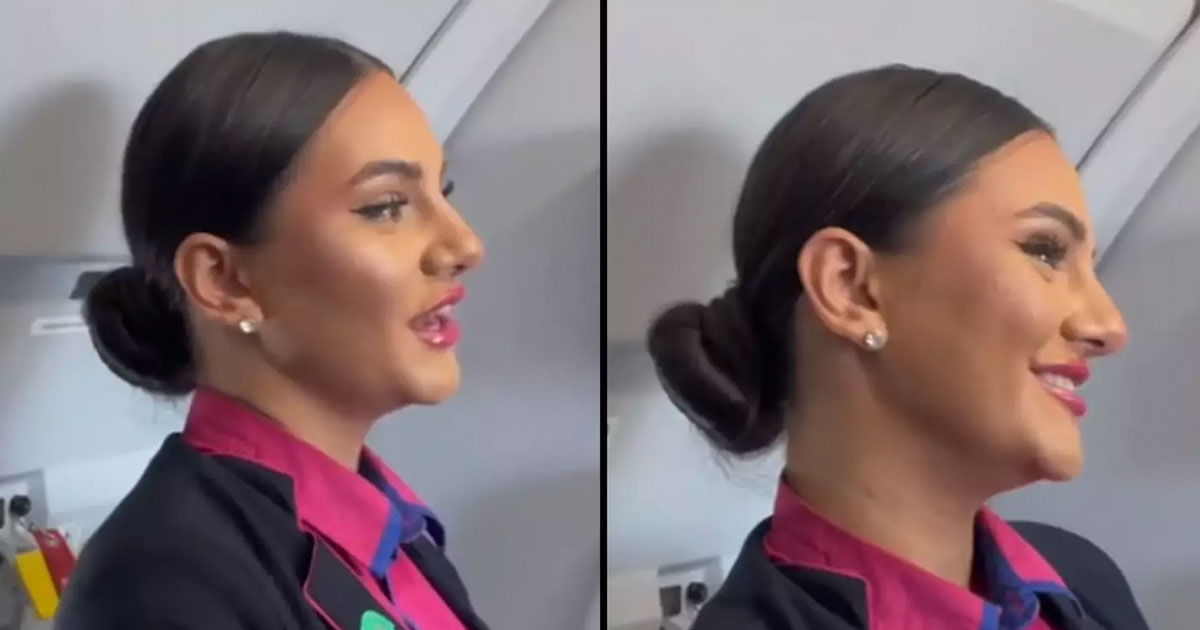
The skies are a frontier of human interaction, where strangers are crammed into metal tubes and propelled at terrifying velocities by forces beyond their comprehension. Yet, in this controlled chaos, one figure stands apart—not as a servant, but as a sentinel of safety, a guardian of calm, a woman whose presence is both a shield and a statement. She is the flight attendant, and her role is not to pour coffee or smile at your jokes—it is to command authority, to enforce order, and to remind us all that feminism isn’t just a movement; it’s a necessity written into the very fabric of our most pressurized environments.
The Cabin as a Microcosm of Patriarchal Expectations
Step into the cabin of a commercial airliner, and you step into a carefully curated theater of gendered expectations. The passengers, many of whom would never dream of addressing a male flight attendant as “honey” or “sweetie,” feel entitled to infantilize the women who serve them. The cabin is a floating patriarchy—a space where the illusion of control is maintained by those who believe they are entitled to comfort, silence, and deference. Flight attendants, predominantly women, are not there to fulfill your fantasy of the subservient hostess. They are there to ensure your survival. And yet, the moment the seatbelt sign illuminates, the same passengers who would bristle at a man in a similar role will casually demand extra pillows, refills, or—worse—their undivided attention—as if their comfort is the sole purpose of the flight.
This is not hospitality. It is entitlement. And it thrives in the unchecked assumption that women in service roles exist for your convenience, not for the collective good of the journey. The cabin becomes a stage where power imbalances are performed daily, where the flight attendant’s uniform is mistaken for an invitation to project fantasies of docility onto her body. But she is not a character in your sitcom. She is the first responder in a high-stakes environment where seconds can mean the difference between life and death.
The Illusion of the “Smiling Attendant” and the Violence of Compliance
There is a pervasive myth that a flight attendant’s role is to smile, to nod, to perform emotional labor without complaint. This myth is not just outdated—it is dangerous. It frames her demeanor as a service to be purchased, her patience as an infinite resource, her authority as negotiable. When a passenger snaps at her for a delayed meal service or refuses to stow their bag properly, they are not merely being rude—they are asserting dominance in a space where they have none. The flight attendant, bound by protocol and professionalism, cannot respond in kind. But make no mistake: her silence is not submission. It is strategy. It is the quiet resistance of a woman who knows that her job is not to absorb your frustration but to ensure your safe arrival.
The expectation that she must endure verbal abuse with a serene expression is a form of emotional violence. It normalizes the idea that women in service roles are public property, their emotions secondary to the comfort of those who pay for a ticket. This is not feminism. This is the commodification of her humanity. The “smiling attendant” trope is a leash, a way to tether her to the expectation of perpetual compliance. But compliance is not safety. Compliance is the illusion of order built on the backs of those who are told to endure.
Authority Worn Like Armor: The Flight Attendant’s Command
Contrary to the infantilizing narratives that reduce her to a waitress, the flight attendant is a figure of quiet authority. She is the one who can ground the plane if she deems it necessary. She is the one who can remove a passenger for violating safety protocols. She is the one who, in an emergency, will shout commands with the precision of a drill sergeant and the urgency of a lifeguard. Her uniform is not a costume. It is a uniform. Her voice is not a suggestion. It is an order.
This authority is often overlooked because it is delivered with a smile, because it is wrapped in the language of care. But make no mistake: when she announces over the intercom that the seatbelt sign is on and you must remain seated, she is not asking. She is commanding. And when she tells a drunk passenger to cease their disruptive behavior, she is not negotiating. She is enforcing the law. The flight attendant is not your waitress. She is your first responder. And first responders do not exist to cater to your whims—they exist to protect you from yourself.
The Feminist Imperative in the Skies
Feminism is not a debate to be had over peanuts and ginger ale. It is a framework for survival in spaces where women’s labor is routinely undervalued and their authority is routinely undermined. The flight attendant embodies this tension every day. She is a woman in a role that has been historically feminized, yet she is also a woman who holds power that cannot be ignored. Her existence challenges the notion that service equals subservience. Her presence forces us to confront the reality that feminism is not about asking for permission to exist—it is about demanding the right to command.
To recognize the flight attendant as a feminist icon is to acknowledge that feminism is not confined to boardrooms or protests. It is in the emergency exits, in the oxygen masks, in the firm but measured tone that cuts through panic. It is in the refusal to be reduced to a caricature of servitude. The next time you board a plane, look at the flight attendant not as a server, but as a sentinel. Not as a waitress, but as a warrior. Her fight is not just for better working conditions—it is for the fundamental right to be seen as more than what you expect her to be.
The Unspoken Contract: Respect as a Flight Requirement
There is an unspoken contract between passengers and flight attendants, one that extends beyond the transaction of a ticket. It is the understanding that in exchange for the privilege of flight, you will respect the authority of those who make it possible. You will not touch her without consent. You will not demand her time as if it is yours to waste. You will not reduce her to a punchline in your in-flight entertainment. This is not about politeness. It is about justice.
The skies are not neutral territory. They are a battleground where old hierarchies are challenged daily by women who refuse to be invisible. The flight attendant is not your hostess. She is your first responder. And the next time you fly, remember: feminism isn’t just a movement. It’s the oxygen mask that ensures you arrive at your destination with your dignity—and hers—intact.