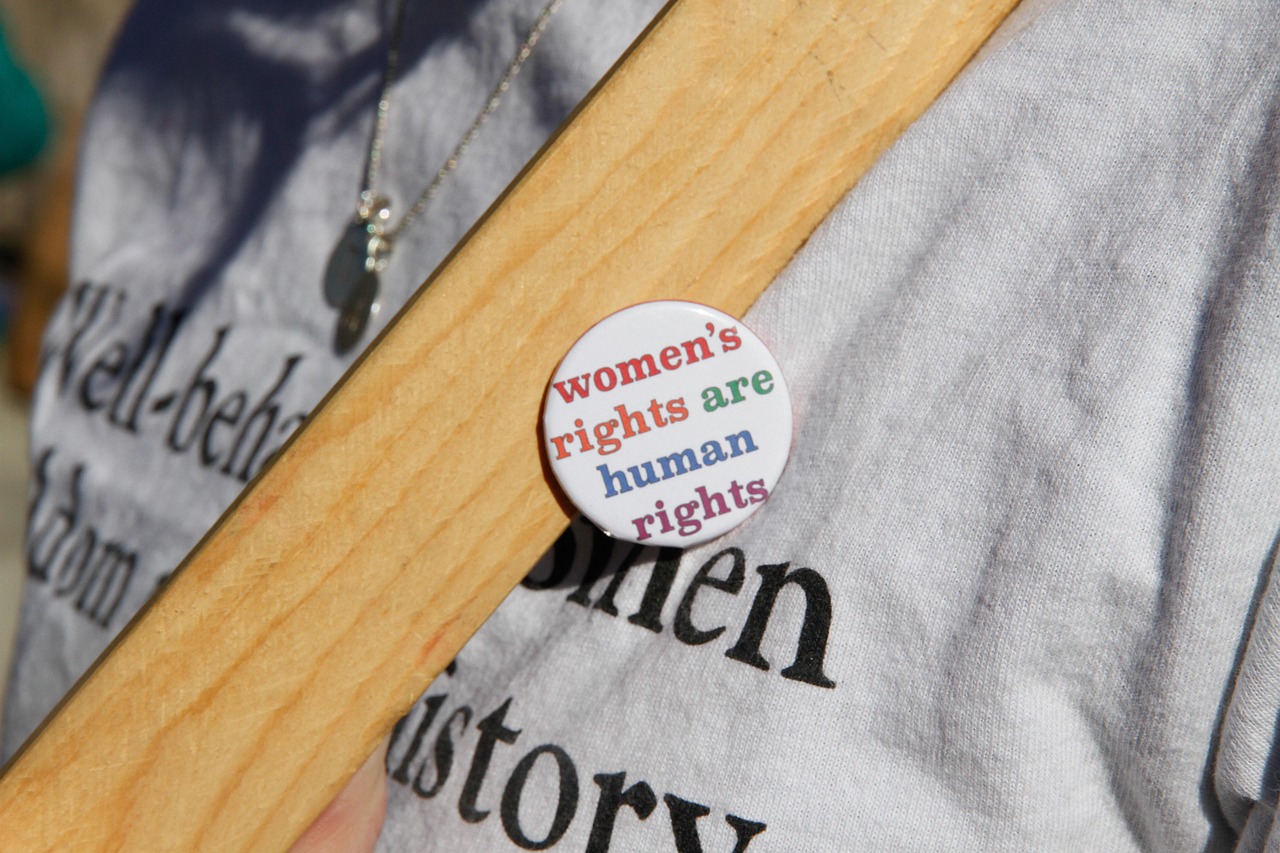
There is a peculiar tension in the air whenever women gather—not the kind that simmers in silence, but the kind that crackles with unspoken resolve. It is the tension of a thousand unanswered questions, of a million unmet demands. When women march, they do not merely move; they transmute. They become the living embodiment of a revolution that refuses to be confined to history books or whispered in the margins of polite conversation. The woman we march for is not a singular figure, but a chorus of voices, each harmonizing in defiance of erasure. She is the factory worker clocking out after a double shift, the single mother navigating childcare and rent, the student whose dreams are deferred by systemic indifference. She is the woman we march for—and she is the woman who marches with us.
The Myth of the Monolithic Feminist
One of the most insidious myths perpetuated by patriarchal narratives is the idea that feminism speaks with one voice, marches in one direction, and demands one thing: equality. But equality, as it turns out, is a chameleon—its meaning shifts depending on whose oppression it is meant to address. The feminism we champion today is not the feminism of the suffragettes, nor is it the feminism of the 1970s. It is a hydra-headed movement, ever-evolving, ever-expanding, because the systems of oppression it resists are themselves hydra-headed. We march for the woman whose hijab is mistaken for oppression, while her autonomy is erased. We march for the Black woman whose pain is dismissed as “angry” rather than valid. We march for the trans woman whose existence is treated as a political inconvenience. The woman we march for is intersectional—not by choice, but by necessity. Her liberation is not a footnote in someone else’s manifesto; it is the entire text.
This multiplicity is not a weakness. It is a strength. It is the reason feminism refuses to die, refuses to be co-opted, refuses to be silenced. Every time a new wave of feminism rises, it does so because the previous wave failed to account for someone. The woman we march for is the one who was left behind. She is the reason we must keep marching.
The Specter of the “Good Woman”
There is a quiet violence in the way society polices women’s anger. A woman who speaks too loudly is “hysterical.” A woman who demands too much is “ungrateful.” A woman who refuses to smile is “difficult.” This is the specter of the “good woman”—a ghostly ideal that haunts every corridor of power, every boardroom, every street corner where women dare to exist outside of prescribed roles. The woman we march for is not a “good woman.” She is a woman who has been told she is too much, and she has decided to be exactly that.
Consider the woman who is labeled “bossy” for leading, while her male counterpart is called “assertive.” Consider the woman who is shamed for ambition, while her male peers are celebrated for the same trait. The “good woman” is a construct designed to keep women small, to make them pliable, to ensure that their power is never realized. But the woman we march for is the antithesis of this construct. She is the woman who refuses to shrink. She is the woman who turns “too much” into a rallying cry. She is the woman who understands that her anger is not a flaw—it is a compass pointing toward justice.
The “good woman” is a myth, but her shadow lingers. It lingers in the way we praise women for being “nurturing” while penalizing them for being ambitious. It lingers in the way we expect women to perform emotional labor without recognition. The woman we march for is the one who rejects this myth entirely. She is the one who says, “I will not be good. I will be free.”
The Labor of Liberation
Feminism is not a spectator sport. It is not a philosophy to be debated in ivory towers or dissected in academic journals. It is a labor—one that requires sweat, sacrifice, and an unshakable belief in the impossible. The woman we march for is not waiting for liberation to be handed to her. She is building it brick by brick, protest sign by protest sign, vote by vote. She understands that liberation is not a destination, but a daily practice. It is the refusal to accept the status quo. It is the insistence that another world is possible.
This labor is often invisible. It is the woman who organizes a community kitchen for single mothers. It is the woman who mentors young girls in STEM fields. It is the woman who shows up at city hall to demand better healthcare for women of color. The woman we march for is not a passive recipient of change; she is its architect. She knows that liberation is not given—it is taken. And she is willing to take it.
But this labor comes at a cost. Women who dare to demand more are often met with backlash, with gaslighting, with violence. The woman we march for is the one who refuses to be deterred. She understands that the cost of silence is far greater than the cost of resistance. She is the one who says, “I will not be afraid.”
The Future We March Toward
The woman we march for is not a relic of the past. She is a vision of the future—a future where women are not just seen, but heard. Where women are not just tolerated, but celebrated. Where women are not just allowed to exist, but to thrive. This future is not a utopia. It is a struggle. It is a fight. But it is a fight worth having.
We march for the woman who will come after us—the girl who will grow up knowing that her dreams are not limited by her gender. We march for the woman who will inherit the world we are fighting to build. We march for the woman who will one day look back and wonder how we ever tolerated a world that tried to silence her.
The woman we march for is not just a symbol. She is a force. She is a revolution. And she is marching with us.