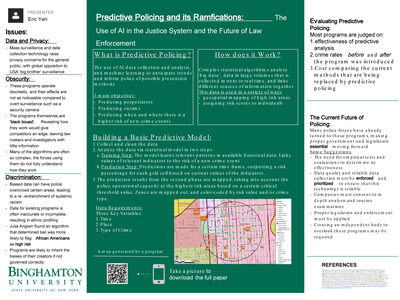
Imagine a future where algorithms, supposedly neutral and objective, scan millions of data points to predict criminal intent. This isn’t science fiction; it’s the premise driving predictive policing. Yet, casting this technology as inherently pure ignores a deeply unsettling truth: these complex algorithms don’t operate in a vacuum. They draw their first breath from the flawed terrain of historical crime data, societal biases, and legally constructed inequalities. Let’s peel back the layers of this digital crystal ball, particularly focusing on how feminist critiques illuminate the specific dangers of algorithmic bias, especially concerning the intersection of race, gender, and punishment.
The Algorithmic Mirage: What Predictive Policing *Actually* Uses
Often heralded as a revolution in law enforcement, predictive policing rests on the premise that data illuminates the path of future crime. But what specific “data” powers these criminological crystal balls? The answer isn’t always transparent, even to those implementing the systems. While proponents tout crime statistics – stops, arrests, charges – these very datasets are far from impartial records of objective reality. They are historical artefacts, stamped with the biases and enforcement priorities of the past. Thinkers from Edward Said remind us that interpretation frames reality; the data chosen reflects not empirical necessity, but constructed definitions of crime and criminality, tinged with the ideologies of the time.
Heredity of Bias: How Algorithms Learn to Discriminate
This is where the core issue lies. Algorithms function through pattern recognition. To build a model predicting future events (offenses), they are trained on a historical dataset of past events (past offenses). If those historical offenses were disproportionately concentrated in specific neighbourhoods, or involved specific demographics for legally questionable reasons, the algorithm isn’t discovering a “truth” about certain people being inherently criminal. It’s learning a correlation, often a false one, reflecting past biases and systemic neglect. This isn’t conscious racism, yet the mathematical output replicates and potentially amplifies it, creating an echo chamber of pre-existing prejudice. There exists a profound tension here: the desire for an unbiased predictive tool feeding on inherently biased raw material.
Dismantling the Illusion: Gender and Race in the Data Soup
Feminism, particularly critical race theory intersecting with gender studies, provides a crucial lens to dissect this data soup. Who defines the “crime” that enters the system? Why does domestic violence, often underreported compared to violent crime, or the financial crimes predominantly committed by affluent individuals, sometimes receive less algorithmic attention? Algorithms trained on data that doesn’t equally represent all experiences risk overlooking significant harms affecting particular communities. This isn’t just about race; it’s about gender. A system patterned after predominantly male, heteronormative policing assumptions might fail to adequately address the specific dangers faced by women, LGBTQ+ individuals, or those policing in gendered contexts like social services or domestic situations. Intersectionality demands that these unique experiences inform the algorithms, not just the outcomes.
Beyond the Numbers: The Human Cost of Algorithmic Error
Imagine an algorithm predicting “future crime.” Where does this prediction surface? Primarily through resource allocation. Police patrols, investigative focus, and surveillance infrastructure are often directed towards areas or individuals flagged by the algorithm. But here lies a sinister feedback loop. If the system flags a predominantly Black neighborhood not because there is more crime there (perhaps there isn’t), but because the *way* past policing allocated resources and made arrests disproportionately targeted that community, then the algorithm learns to *predict* more policing leads in that area. Feminist analysis further layers this: if the system mispredicts a woman’s likelihood of being involved in certain offenses (sometimes reflecting a bias against women or single mothers), where does that take policing resources? Does it lead to over-policing of women’s spaces or their poverty-stricken neighborhoods, potentially impacting their children and lives disproportionately? These algorithmic shortcuts don’t just misallocate resources; they can predict and perpetuate further disadvantage, particularly for women and girls of color.
Feminist Interventions: Questioning the Paradigm
Feminist responses to predictive policing go beyond mere criticism. They demand radical questioning of the entire paradigm. Why police? Who defines public safety? What counts as crime? If we wish to use algorithmic tools, they must serve *all* citizens equitably, not simply reinforce the status quo. This requires radical transparency about the data, constant auditing for bias, diverse perspectives in development and deployment, and crucially, the prioritization of preventative measures and address root causes, not just prediction and repression. Feminists must also actively challenge the technological determinism that assumes these systems require adoption for efficiency, forgetting that efficiency can be defined differently by different communities. We must ask: which communities are made more *safe* by these tools, and conversely, which are rendered more vulnerable?
Toward a Human Future: Rethinking Justice and Algorithm
The seductive promise of prediction offers a shortcut to perceived efficiency and objectivity. But the reality is that algorithms, products of human design using inherently subjective data, cannot be truly neutral. The mirror they offer back to society reflects not an unbiased future, but the biases embedded within its past and present. Feminism, with its long history of exposing seemingly rational frameworks hiding patriarchal and racist underpinnings, provides invaluable tools to scrutinize these new forms of social classification and control. The challenge is not whether algorithms can be “fixed,” which is always secondary to addressing the data and societal biases they represent. The real question demands a soul-searching re-evaluation of whether predictive technology should even be used to define freedom, and whose freedom the system ultimately serves.