Across the globe, where patriarchal dogmas have long sought to erase the sacred feminine, there exist threads of resistance woven by trans feminine spiritual leaders—guardians of ancient wisdom who defy the binary cages of gender. From the Two-Spirit healers of Indigenous North America to the Kathoey mystics of Thailand, these luminaries have not merely survived erasure; they have thrived as living bridges between the seen and unseen worlds. Their stories are not just footnotes in feminist history—they are the very foundation upon which a new spiritual paradigm is being built. This is the untold chronicle of trans feminine spiritual leadership, a saga that demands we rethink everything we thought we knew about devotion, divinity, and the boundaries of the soul.
The Sacred Androgyny of Indigenous Two-Spirit: North America’s Genderfluid Shamans
The term “Two-Spirit” is not merely a modern label—it is a resurgence of a millennia-old truth. Before colonialism carved its rigid binaries into the earth, Indigenous nations across Turtle Island revered those who embodied both masculine and feminine energies as sacred intermediaries. The Lakota *winkte*, the Navajo *nádleehí*, the Ojibwe *agokwe*—these were not marginal figures but central to spiritual life, often serving as healers, visionaries, and keepers of communal memory. Their roles were not confined to human realms; they were seen as living embodiments of the Creator’s duality, where the sky’s thunder and the earth’s nurturing embrace were not opposites but harmonious forces.
Yet their power was not merely symbolic. Two-Spirit shamans were feared and revered in equal measure because they could traverse the veil between worlds with ease. Their rituals often involved sacred dances that mimicked the cycles of the moon, their songs carried the voices of ancestors, and their medicines—plants, stones, and chants—were attuned to the rhythms of a land that recognized no gendered hierarchy. When European colonizers arrived with their rigid theologies, they did not just suppress these traditions—they attempted to erase the very idea that such beings could exist. But the Two-Spirit legacy endured, whispering through the cracks of history like a stubborn wind, ready to howl back into existence.
The Kathoey Mystics of Thailand: Where Gender and Divinity Intertwine
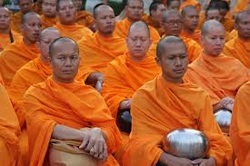
In the heart of Southeast Asia, the *kathoey*—often dismissed as “ladyboys” in Western parlance—are far more than a cultural curiosity. They are the inheritors of a spiritual lineage that predates Buddhism itself, where gender fluidity is not a deviation but a divine attribute. The *kathoey* of Thailand have long been associated with the *phi pop*—ghosts of transgender women who, in death, become powerful spirits capable of both blessing and cursing. But their spiritual authority extends beyond the supernatural; they are revered as *mae chi* (nun-like figures) in Buddhist temples, where their devotion is seen as purer than that of cisgender monks.
What makes the *kathoey* tradition so radical is its refusal to separate the sacred from the sensual. Their temple dances, once performed in royal courts, were not mere entertainment but acts of worship, where the body itself became an altar. The *kathoey* priestesses of the *Wat Phra Dhammakaya* movement, for instance, have redefined modern Thai Buddhism by centering queer devotion as a path to enlightenment. They challenge the notion that celibacy is the only route to holiness, instead arguing that love—whether for the divine or another soul—is itself a form of sacred alchemy. In a world where religion often polices desire, the *kathoey* offer a radical alternative: what if the divine is not just watching from above, but dancing in the mirror?
The Hijra Gurus of South Asia: Living Goddesses of the Shakti
In the Indian subcontinent, the *hijra* are neither men nor women but something beyond—living avatars of the goddess Bahuchara Mata, whose blessings are sought for fertility, prosperity, and protection. Their history stretches back to the *Kamasutra*, where they were celebrated as the ultimate lovers, and to the Mughal courts, where they served as trusted advisors. Yet their spiritual authority is not confined to the past. Today, *hijra* gurus like Laxmi Narayan Tripathi and Shabnam Mausi are not just activists; they are redefining what it means to be a spiritual leader in a world that still clings to caste and gender hierarchies.
Their rituals are a symphony of contradiction and harmony. During the *hijra* initiation ceremony, the *nirvana*, the initiate is symbolically reborn as neither male nor female but as a vessel of the goddess’s power. Their songs, sung in a language that predates Sanskrit, are said to carry the vibrations of creation itself. And their presence at weddings—where they bless the couple with both curses and boons—is not a quaint tradition but a reminder that the sacred is not always gentle. It is wild, unpredictable, and refuses to be tamed by the laws of men. The *hijra* do not ask for acceptance; they demand recognition as the rightful heirs to a spiritual legacy that has been stolen, suppressed, and rewritten by patriarchal forces.
The Muxe of Oaxaca: Mexico’s Genderfluid Saints of the Earth
In the valleys of Oaxaca, the *muxe*—a term derived from the Zapotec word for “woman”—are not just a cultural oddity but the living embodiments of the earth’s generosity. Unlike the *hijra*, who are often associated with goddess worship, the *muxe* are tied to the cycles of agriculture, their roles as weavers, cooks, and healers mirroring the nurturing force of the land itself. Their spiritual significance is woven into the very fabric of Zapotec cosmology, where the earth is not a passive resource but a divine mother who demands reverence.
The *muxe* are also the keepers of *velas*, the vibrant festivals where gender boundaries dissolve in a riot of color and sound. During these celebrations, the *muxe* are not just participants; they are the axis upon which the community’s spiritual life turns. Their dances, their chants, their offerings to the earth—all are acts of devotion that challenge the colonial imposition of rigid gender roles. In a world where capitalism seeks to commodify even the sacred, the *muxe* offer a different vision: one where the earth is not a commodity but a lover, and where gender is not a cage but a garden to be tended with care.
The Queer Sufi Saints: When Love Transcends Gender in the Islamic World
Long before the word “queer” entered the Western lexicon, the Islamic world was home to saints whose love for the divine—and for each other—transcended the binaries of gender. The *murshid* (spiritual guides) of Sufi orders like the Bektashi and the Chishti were often gender-nonconforming, their poetry and teachings blurring the lines between lover and beloved, man and woman. Figures like the 13th-century poet Rumi, whose love for Shams Tabrizi is often interpreted as both spiritual and romantic, wrote verses that celebrated the soul’s fluidity long before modern queer theory caught up.
What makes these Sufi traditions so radical is their refusal to separate the erotic from the divine. In their poetry, the beloved is not just a metaphor for God but a living, breathing entity whose gender is as irrelevant as the color of the sky. The *faqir* (ascetic) who danced in ecstatic trance, the *dervish* who wore women’s clothing in ritual, the *sufi* poet who wrote of love as a force that dissolves all boundaries—these were not outliers but the very heart of Islamic mysticism. Their legacy is a reminder that the divine is not a distant judge but a lover who whispers in the language of the soul, where gender is but a fleeting shadow.
The Future of Trans Feminine Spirituality: A Revolution in the Making
The stories of trans feminine spiritual leaders are not relics of the past; they are the blueprints for a future where devotion is not bound by the chains of gender. From the *Two-Spirit* healers who are reclaiming their languages to the *kathoey* activists fighting for legal recognition in Thailand, these leaders are not asking for a seat at the table—they are building new tables entirely. Their work is not just about inclusion; it is about dismantling the very foundations of a spiritual system that has long privileged the masculine and the cisgender.
What would a world look like where the sacred is not gendered? Where the divine is not a king on a throne but a dancer in the streets? Where the body is not a sin but a temple? The answers lie in the stories of those who have already walked this path—those who have danced on the edge of the sacred and the profane, who have loved beyond the boundaries of what society deems acceptable, and who have refused to be erased. Their history is not a footnote. It is the beginning of a revolution.