What if I told you that the most radical feminist revolution isn’t happening in the streets, but in the quiet corridors of policy debate? The Nordic Model, with its bold “end demand” mantra, stands as a fortress against the commodification of women’s bodies—while full decriminalization whispers promises of liberation through deregulation. These two feminist paradigms don’t just clash; they perform a high-stakes dance on the edge of ideology, economics, and survival. One demands justice through prohibition, the other through emancipation. But which path truly dismantles patriarchy? And more importantly—who gets left behind in the crossfire?
The Nordic Model: A Feminist Bastion or a Moral Crusade?
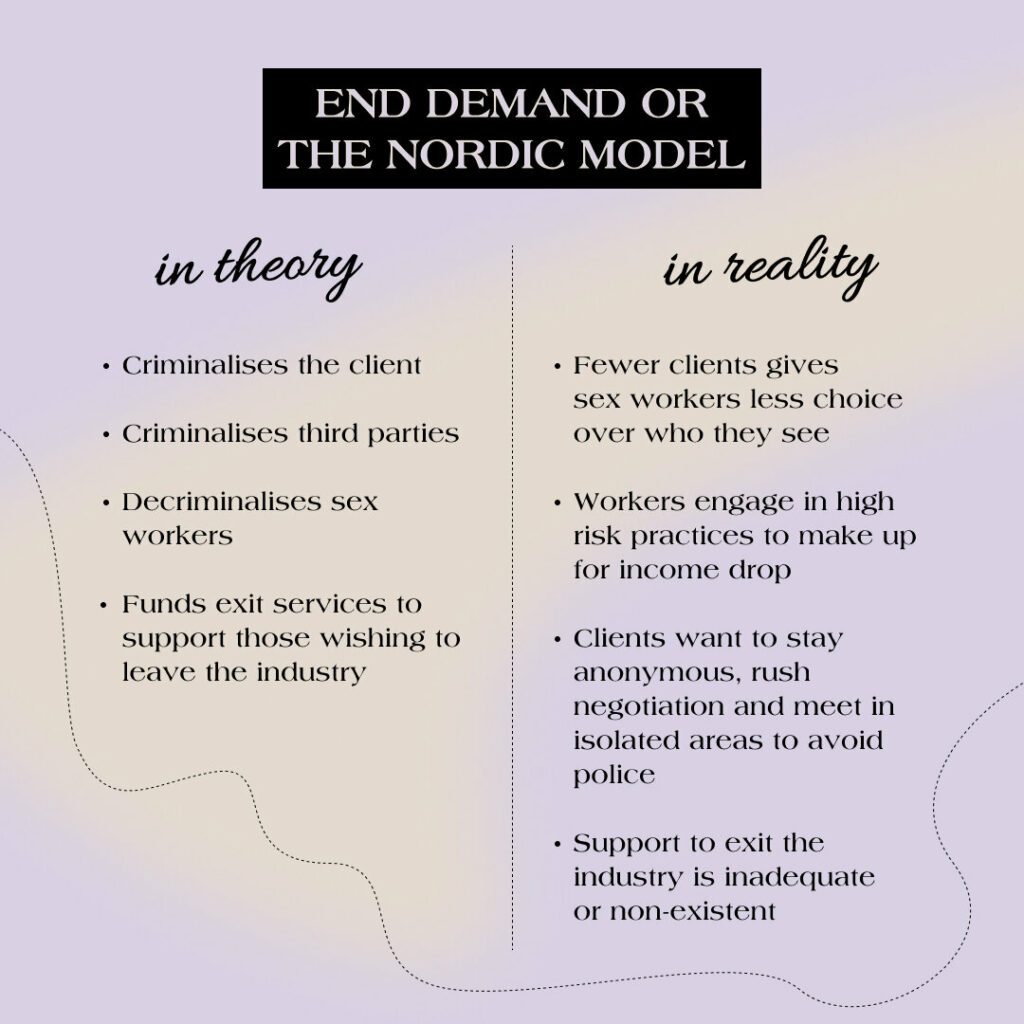
The Nordic Model isn’t just a policy—it’s a feminist manifesto wrapped in legalese. By criminalizing the purchase of sex while decriminalizing those who sell it, it flips the script on exploitation. The logic is elegant: if men can’t buy what they’ve been conditioned to demand, the market collapses. No buyers, no business. No business, no violence. It’s a seductive simplicity, a feminist utopia where demand meets deterrence.
But does it work? Critics sneer that it merely drives the industry underground, where the most vulnerable—migrant women, trafficking victims, the economically desperate—suffer in silence. Proponents counter that the model’s strength lies in its refusal to normalize commodification. Sex, they argue, isn’t a service like any other. It’s a transaction steeped in centuries of oppression, where the buyer’s entitlement is the original sin. The Nordic Model doesn’t just regulate; it rebels against the very premise that women’s bodies are for sale.
Full Decriminalization: Liberation or Exploitation in Disguise?
Enter the counterargument: full decriminalization, where sex work is treated like any other labor. No stigma, no criminalization, just workers’ rights and unionization. The logic is airtight—if sex work is work, then why shouldn’t sex workers have the same protections as baristas or bankers? The movement’s rallying cry is autonomy: women should have the right to choose how they use their bodies, free from state interference.
Yet the fantasy frays at the edges. Decriminalization doesn’t erase the power imbalances baked into the industry. It doesn’t magically transform coercion into consent. What happens when a woman’s “choice” is between starvation and the streets? When pimps become “managers” and brothels rebrand as “wellness centers”? The language of liberation obscures the reality: for many, sex work isn’t a career—it’s a last resort. And in a world where women are still paid less, expected to perform emotional labor for free, and told their worth is tied to their desirability, can we really call this freedom?
The Great Divide: Consent vs. Coercion in Feminist Theory
Here’s where the debate gets messy. The Nordic Model frames all sex work as inherently coercive, a product of systemic inequality. Full decriminalization, meanwhile, insists that some women *do* choose this path—and that choice must be respected. But what if the choice itself is a mirage? What if the real question isn’t about consent, but about the conditions that make consent possible? A woman in a warzone doesn’t consent to rape because she’s “free”—she survives. Similarly, a woman in poverty doesn’t consent to sex work because she’s liberated; she endures it because she has no other options.
The tension between these two feminist camps reveals a deeper schism: one prioritizes structural change, the other individual agency. The Nordic Model demands we dismantle the demand that fuels exploitation. Full decriminalization asks us to trust women to navigate the wreckage of capitalism. But can either approach truly address the root cause—the idea that women’s bodies are a resource to be exploited?
The Invisible Victims: Who Pays the Price of Ideological Battles?
Feminist debates aren’t abstract—they’re lived realities. When Sweden criminalized buyers in 1999, reports emerged of sex workers being harassed by police under the guise of “rescue.” In New Zealand, where decriminalization was implemented in 2003, sex workers gained rights—but also faced increased violence from clients emboldened by the lack of legal consequences. The Nordic Model protects some women by punishing others. Full decriminalization empowers some while leaving others at the mercy of the market.
And then there’s the elephant in the room: race and class. The women most likely to be criminalized under the Nordic Model are Black, Indigenous, poor, or migrants—those already marginalized by society. The women most likely to thrive under decriminalization are those with privilege, education, and options. The debate isn’t just about feminism; it’s about which women we’re willing to sacrifice on the altar of ideology.
Can Feminism Afford to Pick a Side?
The truth is, neither model is perfect. The Nordic Model risks pushing exploitation into the shadows, where it festers unchecked. Full decriminalization risks normalizing an industry that thrives on inequality. So where does that leave us? Perhaps the answer isn’t in choosing between these two extremes, but in demanding something radical: a world where no woman has to sell her body to survive. A world where care work is valued, wages are fair, and autonomy isn’t a privilege reserved for the few.
Until then, the feminist debate rages on—a clash of ideals, a battle of principles, and a reminder that even in revolution, the most vulnerable are always the first to fall.