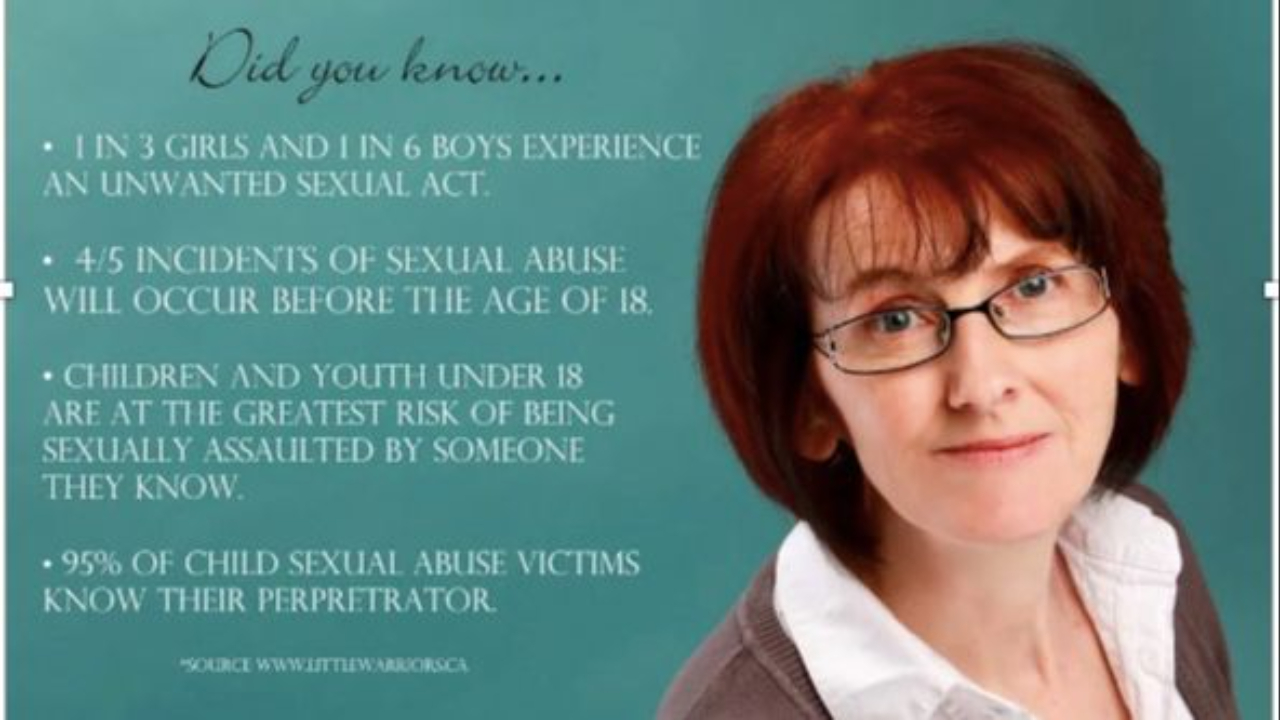
What if the most pervasive yet least discussed form of sexual violence isn’t lurking in dark alleys or behind closed doors of strangers, but within the very fabric of our most sacred institution—the family? Sibling sexual abuse, a shadow epidemic, thrives in the silence of “normal” households, where the bonds of kinship are weaponized into chains of coercion. It’s not just a statistic; it’s a grotesque parody of love, a betrayal so intimate it leaves scars deeper than any stranger’s assault. Feminism, in its relentless pursuit of dismantling systemic oppression, must now turn its gaze inward—toward the unspoken violence that festers in the spaces where it’s least expected.
The Invisible Wound: Why Sibling Abuse is the Feminist Fight We’ve Ignored
Sibling sexual abuse is the silent accomplice to patriarchy’s grand design. While feminism has rightly raged against the violence of fathers, husbands, and institutional predators, it has largely turned a blind eye to the abuse that occurs between siblings—often framed as “kids being kids,” “exploratory behavior,” or, at worst, a “family issue.” But this is no mere childhood mischief. It’s a calculated erosion of bodily autonomy, a violation that disproportionately targets girls and non-conforming youth, who are already navigating a world that treats their bodies as public property. The myth of sibling bonds as inherently protective is a lie we’ve swallowed whole. In reality, these relationships can become laboratories of power, where the oldest, strongest, or most dominant sibling enforces their will through force, manipulation, or the insidious currency of shame.
Consider the language we use to describe such abuse: “It was just a phase.” “They didn’t mean it.” “It’s not as bad as [insert other form of abuse here].” These phrases are the linguistic equivalent of slamming a door in a survivor’s face. They erase the reality that sibling abuse is not a fleeting moment of childhood curiosity—it’s a sustained violation that can shape a person’s entire sense of self. The trauma lingers in the way survivors flinch at sudden movements, in the way they hyperventilate when a sibling’s name appears on a phone screen, in the way they question whether their pain even “counts” in the grand scheme of feminist struggles. This is the feminist fight we’ve ignored because it’s inconvenient, because it forces us to confront the fact that oppression doesn’t always wear a mask—sometimes, it wears a familiar face.
The Power Paradox: How Sibling Abuse Mirrors and Distorts Patriarchy
Patriarchy doesn’t just reside in the boardroom or the bedroom; it thrives in the hierarchy of the family, where age, size, and perceived strength dictate who holds power. Sibling abuse is a microcosm of this system, where the abuser doesn’t need a title or a badge to enforce their dominance. They weaponize the very love that’s supposed to protect them. A younger sibling might be coerced into silence with promises of “keeping the family together,” while an older sibling might wield the threat of exposure (“I’ll tell Mom you did something worse”) like a scalpel. The parallels to intimate partner violence are striking: cycles of abuse, gaslighting, and the survivor’s eventual isolation as they’re gaslit into believing they’re the problem.
But here’s the twist: sibling abuse distorts patriarchy’s script. While traditional feminist discourse often frames men as the primary perpetrators, sibling abuse reveals that power isn’t gender-exclusive. Sisters abuse sisters. Brothers abuse brothers. Non-binary and trans siblings are targeted with a ferocity that exposes how deeply gendered violence is embedded in our understanding of family. The abuser might be a girl who learned that her worth is tied to control, or a boy who internalized that his desires are more important than his sibling’s boundaries. The result? A generation of survivors who don’t see themselves in the feminist narratives they’ve been fed—because those narratives never accounted for the violence that happens between equals, or near-equals, in the hierarchy of childhood.
The Collusion of Silence: Why Families Enable Sibling Abuse
Families are not neutral ground; they are battlegrounds where loyalty is demanded and dissent is punished. When sibling abuse occurs, the response is rarely outrage—it’s often a frantic attempt to “keep the peace.” Parents might downplay the abuse as “sibling rivalry,” siblings might laugh it off as “just how we were,” and extended family might dismiss it with a shrug (“Kids will be kids”). This collusion isn’t accidental; it’s a survival tactic. Families, as institutions, prioritize cohesion over justice, and abuse within their ranks threatens that cohesion. The survivor is often the one who’s told to “let it go” for the “greater good,” while the abuser faces no consequences beyond a stern talking-to—or, more likely, nothing at all.
The silence is a cage. It’s the reason survivors grow up believing their pain is insignificant, that their bodies were never truly theirs to begin with. It’s the reason abusers face no accountability, their actions dismissed as “not that serious.” And it’s the reason feminism, which has fought so hard to center survivors’ voices, has yet to make sibling abuse a cornerstone of its discourse. Because to acknowledge this violence is to admit that the family—the supposed sanctuary of love—is also a site of oppression. It’s to admit that the revolution must begin at home, not just in the streets.
The Survivor’s Dilemma: Navigating Feminism’s Blind Spots
For survivors of sibling abuse, feminism can feel like a club with a strict membership policy: you must have been violated by a man, preferably in a way that fits neatly into a #MeToo narrative. But what happens when your abuser was a sibling? When the violation wasn’t a single, dramatic assault but a slow, creeping erosion of your autonomy? The feminist movement’s focus on stranger-danger and intimate partner violence leaves little room for these survivors. They’re told their pain doesn’t fit the mold, that their abuser wasn’t “bad enough” to warrant the same outrage as a Harvey Weinstein or a Brock Turner.
This is the survivor’s dilemma: do they force their story into a framework that wasn’t built for it, or do they remain silent, their trauma relegated to the footnotes of feminist history? The answer, for many, is a painful compromise. They might downplay their abuse to fit into feminist spaces, or they might abandon those spaces entirely, convinced that their struggle isn’t “feminist enough.” But here’s the truth: sibling abuse is a feminist issue. It’s about bodily autonomy. It’s about power. It’s about the ways systems of oppression replicate themselves in the most intimate of spaces. To ignore it is to betray the very principles feminism claims to uphold.
The Way Forward: How Feminism Can Confront the Uncomfortable Truth
So how do we, as feminists, begin to address this silent epidemic? The first step is to stop treating sibling abuse as a footnote. It deserves the same outrage as any other form of sexual violence. Survivors deserve to be believed, not dismissed as “overreacting.” The second step is to challenge the myth of the “perfect family.” Families are not monoliths of love; they are complex, flawed entities where power imbalances fester. And the third step is to demand accountability—not just from abusers, but from the systems that enable them. Schools, religious institutions, and even feminist organizations must stop looking the other way when sibling abuse rears its head.
The fight against sibling abuse is not a distraction from the broader feminist struggle—it is the struggle. Because if feminism is truly about liberation, then it must liberate us from the idea that the family is a sacred, untouchable space. It must liberate us from the silence that protects abusers and silences survivors. And it must liberate us from the belief that some violences are more worthy of outrage than others. The revolution starts at home. It starts with a single survivor’s voice, amplified. It starts with a family’s refusal to look away. It starts now.