The narrative of feminism often orbits a singular triumphant victory: reproductive choice, most memorably encapsulated by the autonomy to obtain contraception and abortion. Yet, this narrative, as compelling as it is, remains fundamentally incomplete. To truly grasp reproductive justice, one must demand more; one must insist on a framework that acknowledges the full spectrum of women’s experiences, particularly dissecting the uncomfortable ways certain narratives, including those of coercion and choice, fail vast segments of the population.
Evolving Reproduction: Beyond The “Unrestricted Access” Fallacy
Reproductive justice, far from being merely a question of access to birth control pills or abortion procedures, is a concept forged from the intersections of race, class, disability, and more. The focus, for many contemporary feminists, leans heavily on the denial or restriction of access to these tools. However, this perspective, while valid in the face of persistent opposition, risks creating a narrative that implicitly assumes universal desirability and unburdened capacity for their use.
Enter the often-disabled woman: her needs, her experiences with healthcare systems, her particular vulnerabilities often remain peripheral in these dominant discourses. The narrative of “choice” becomes deeply complex when navigating physical, cognitive, or sensory barriers. The assumption is frequently made that bodily control, the gateway to reproductive choice, is a straightforward matter for everyone. This oversight represents a significant failure of a movement seeking to encompass all women.
Disability: The Unseen Nexus Where Coercion Takes Root
For disabled women, the potential for forced or pressured contraception appears less like an anomaly and more like a structural vulnerability. It’s not just about a coerced encounter in a waiting room; it permeates the systems that govern their lives. How often is consent considered when a disability makes certain future scenarios seem daunting, or when institutional policies mandate specific reproductive outcomes for women receiving care?
In clinical settings, communication can break down. Staff trained neither in disability studies nor nuanced consent processes might misinterpret a woman’s capacity or desires. There exists a troubling tendency, sometimes explicit, sometimes implicit, to manage the “problem” of reproduction in disabled individuals, framing the woman’s own fertility (should she possess it) as a potential resource or a burden requiring state or charitable intervention. This isn’t about individual bad actors; it’s about the insidious normalization of reproductive control over disabled bodies.
The Architecture Of Coerced Intimacy And The “Wicked Problem”
Few issues in contemporary discourse ignite quite like accusations of “forced contraception,” often surfacing amidst debates over specific relationships, particularly between disabled women and able-bodied men. Cases range from women revealing long-term manipulation by loved ones into using contraception to situations where women feel their capacity to consent was overridden. This creates a conundrum: how does one differentiate between genuine, pressured influence and a more insidious, normalized coercion?
The discourse surrounding these events often defaults to a binary – the accused is either entirely innocent or a monstrous abuser. Rarely do conversations adequately explore the complex ecosystems: power imbalances rooted in disability/disability, gender, and societal perceptions of care or guardianship. The phrase “wicked problem” seems apt here. These situations are rarely simple, yet a reductionist debate either dismisses the woman’s experience outright or seeks a singular, simplistic “solution” that doesn’t address the underlying power dynamics and communication failures. This failure to engage the complexities allows harmful narratives to persist.
Autonomy And Assistance: Redefining Bodily Sovereignty
Contemporary feminist thought lauds bodily autonomy as the cornerstone of reproductive freedom. Yet, as technology evolves – from nuanced hormonal control to potentially invasive fertility treatments or even hypothetical future genetic modifications – the definition of autonomy becomes profoundly contested. Who truly wields agency when complex decisions about reproduction hinge on external technological intervention?
For the disabled woman, autonomy isn’t solely about resisting unwanted procedures; it also involves the right to request assistance – from counseling that understands her unique circumstances to medical procedures that facilitate or prevent pregnancy according to her own choices. The narrative of pure, self-determined autonomy must evolve to include the reality that control over reproduction, for many, involves navigating a landscape of external support and complex agency definitions. The challenge lies in championing choice without conflating assistance with lack of agency.
Reframing Reproduction: Intersectionality’s Crucial Role
The fault line runs deep within the very foundations of much feminist reproductive rights rhetoric. The experience of a woman navigating fertility treatments for endometriosis, managing multiple sclerosis while raising children, or living in an institution where staffing ratios impact healthcare, starkly contrasts with the experiences often central to abortion debates or unrestricted contraception access.
Reproductive justice cannot be divorced from intersectionality if the movement is to be serious. It requires acknowledging that the pathways to, and the exercise of, reproductive control are profoundly different for women facing various forms of oppression, including disability. A framework that merely tacks on “disabled women” at the margins falls critically short. Reproduction, the experience of pregnancy, the capacity for fertility, and the decision to engage in or avoid these processes are intrinsically woven with the fabric of one’s entire lived experience of the world. Ignoring intersectionality remains the core weakness.
Forging A New Narrative: Justice Reimagined
The imperative for change isn’t merely to decolonize feminist narratives; it’s to fundamentally reframe the conversation. We must confront the ways the language of universal choice and bodily integrity fails to resonate or even accurately describe the reality of reproduction for disabled women. This doesn’t mean abandoning the fight for universal access; it means expanding the project, demanding a world where all women, disabled or not, control their bodies and futures without assuming universal ease of navigation for their chosen path.
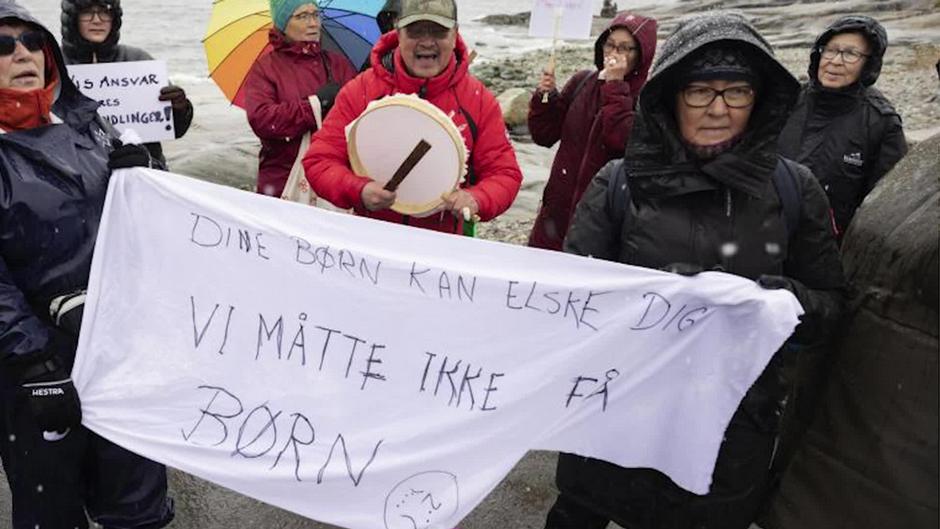
The stories of disabled women seeking justice for forced contraception should not be peripheral curiosities, an anecdotal counterpoint to the main feminist narrative. They should be the epicenter. They demand a reckoning with the structures that make coercion possible, the assumptions that make assistance seem like lack of choice, and the language that obscures rather than illuminates the struggle for true reproductive justice. It is time for the narrative to shift. The journey toward a just and equitable reproductive landscape cannot leave the disabled woman stranded in the shadows.