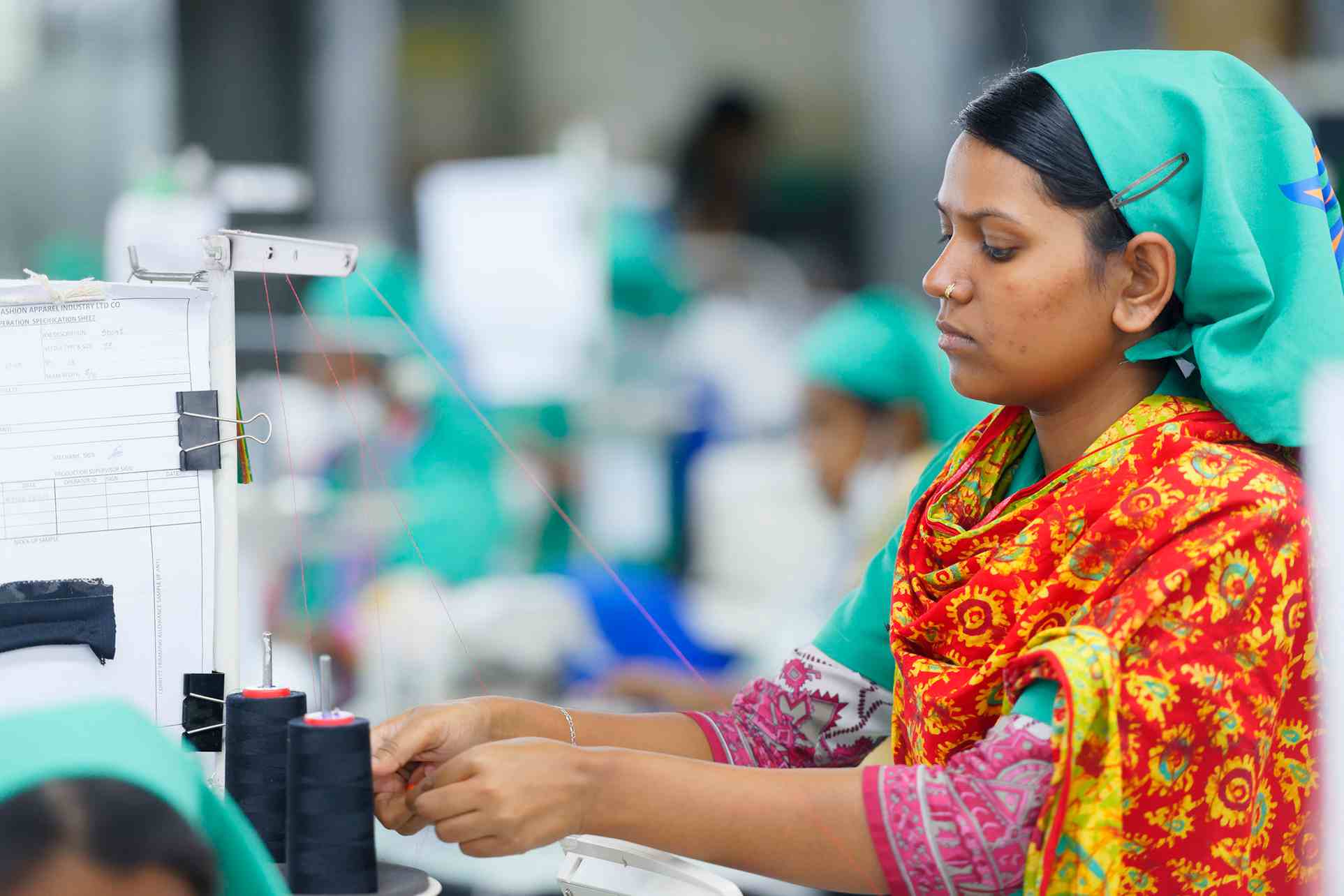
Feminism has long been at the forefront of challenging societal injustices, relentlessly advocating for equity and dignity. Yet, within its expansive scope lies a fissure too often overlooked: the precarious plight of home-based garment workers. These women, caught in the confluence of economic invisibility and gendered exploitation, embody a constellation of overlapping oppressions that demand urgent, nuanced interrogation. Their stories are not merely labor disputes—they are visceral accounts of systemic disenfranchisement, stitched into the very fabric of global capitalism. To unravel this tangled web is to confront uncomfortable truths about labor, gender, and power that feminists must engage with if true emancipation is to be realized.
The Invisible Workforce: Who Are Home-Based Garment Workers?
Home-based garment workers operate in a shadowy periphery of the textile industry, often detached from formal workspaces and protections. These artisans, primarily women, labor from their kitchens, balconies, and cramped living quarters—transforming raw textiles into finished garments. Economically marginalized and socially relegated, they represent an invisible workforce whose toil fuels the global fashion machine yet remains uncredited, unpaid fairly, and unprotected by labor laws. The intimate setting of their workspaces blurs traditional binaries between home and labor, maternity and money-making, thrusting them into unique vulnerabilities.
Gendered Exploitations: Intersection of Patriarchy and Labor
Their plight is entangled with patriarchal norms that confine women to the domestic sphere while simultaneously exploiting their labor. Home-based garment workers are doubly burdened—they bear the expectations of caregiving and household management while their productive contributions remain undervalued or ignored. This convergence exacerbates their economic dependence and diminishes their bargaining power. Unequal power relations within households and communities manifest as wage theft, coerced labor, and a lack of recourse. Feminism’s challenge is to expose and dismantle these deeply rooted gendered exploitations that are masked by the invisibility of home labor.
Economic Injustice: The Facade of Flexibility
Proponents of home-based work often tout flexibility as its prime virtue, painting a misleading picture that obscures the harsh realities of economic precarity. While the ability to work from home may appear liberating, it often translates into extended hours, unfixed productivity expectations, and no guarantees of a living wage. These women exist in a liminal economic space—neither fully employed nor entirely casual laborers, they possess virtually no social security, health benefits, or contractual rights. In a globalized economy obsessed with cost-cutting and branding, their goods are commodified without fair compensation flowing back to these indispensable crafters.
The Legal Void: Absence of Protections and Rights
The legal frameworks governing labor frequently fail to recognize home-based workers, thus leaving them bereft of rights that factory workers might nominally enjoy. Lacking formal contracts, documentation, or union representation, home-based garment workers navigate a legal vacuum. This absence facilitates exploitative practices such as underpayment, denial of overtime, and hazardous working conditions inside homes that are ill-suited for mass production. Efforts to codify protections often falter due to political inertia and entrenched biases that perceive such work as an extension of domestic tasks rather than formal employment.
Health and Safety: The Overlooked Costs of ‘Home’ Production
Health hazards incurred by home-based garment workers are a silent crisis. Unlike factories that may have rudimentary safety standards—albeit imperfect—working at home often means exposure to poor lighting, inadequate ventilation, and ergonomic neglect sustained over endless hours. The psychological toll is equally insidious: isolation, mental fatigue, and the stress of juggling multifaceted roles. These cumulative health degradations go unacknowledged because the production happens behind closed doors, away from the public eye and regulatory scrutiny. Their well-being is traded off against the relentless demand for fast, cheap fashion.
The Role of Global Supply Chains: Exploitation Enshrined in Complexity
Global supply chains thrive on obfuscation and dissociation from the end producer. The journey from cotton fields to couture involves layers of subcontracting, each distancing brands from the home-based workers who stitch the final seams. This labyrinthine complexity not only complicates accountability but strategically disempowers workers by diluting responsibility. Feminist critiques must therefore target the structural logistics of fashion capitalism that systematically conceal the underpaid artisans from consumer awareness and legislative scrutiny, perpetuating an exploitative status quo that thrives on invisibility.
Empowerment and Collective Action: The Path Forward
Despite oppressive odds, pockets of resistance are emerging as home-based garment workers mobilize to claim visibility and rights. Feminist advocacy intersects with grassroots organizing to create platforms where these women can articulate their demands, assert economic sovereignty, and rewrite narratives of subjugation. Cooperatives, awareness campaigns, and social enterprise initiatives seek to formalize and valorize home-based work without stripping it of agency or autonomy. These movements illustrate that empowerment requires not only legal reform but cultural recognition of these women as vital contributors to economies and societies.
Reimagining Feminism: Inclusive and Intersectional Advocacy
To effectively champion home-based garment workers, feminism must transcend traditional frameworks centered around the public workplace or middle-class concerns. It must embrace radical inclusivity that acknowledges how gender oppression intersects with class, geography, and labor conditions. This means centering the voices and experiences of informal women workers and critiquing the neoliberal ideologies that valorize individual flexibility while ignoring structural inequities. Reimagined feminism must contend with uncomfortable realities and respond with holistic strategies that dismantle overlapping exploitations rather than merely tweaking surface injustices.
Conclusion: Stitching Justice Into the Fabric of Feminist Struggle
The tangled experiences of home-based garment workers serve as a profound testament to the complexities of modern exploitation and gendered labor. Their invisibility is not accidental but a calculated perpetuation of economic and social hierarchies that feminism is uniquely positioned to challenge. True justice demands unflinching visibility, unequivocal rights, and collective empowerment. It also demands a radical reconceptualization of work and gender that refuses compartmentalization and embraces intersectionality. Only then can feminism fulfill its promise—not just as an abstract ideal, but as a transformative force stitching dignity back into the lives of those rendered invisible by the world’s garment seams.