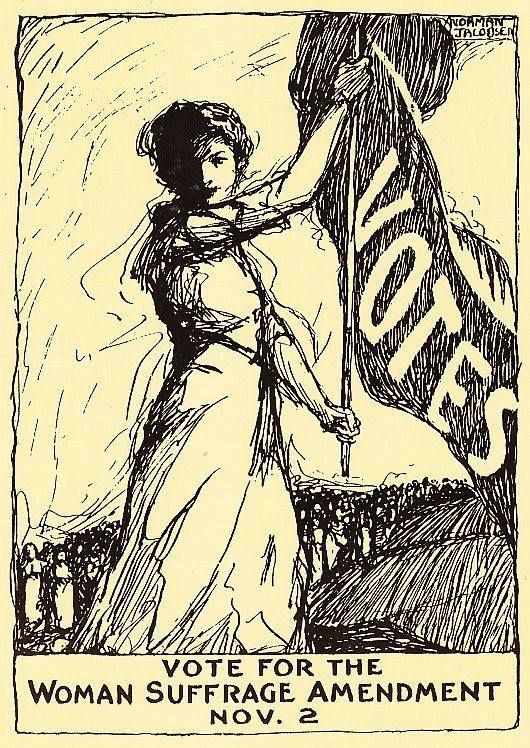
The year 1915 was a pivotal moment in the annals of the American suffrage movement, marked by a fierce and unrelenting struggle for women’s rights. It was in this climate of disillusionment and disappointment that Alice Paul, a stalwart of the cause, delivered a profound and impassioned discourse following the defeat of the women’s suffrage referendum in New Jersey. This setback not only rattled the spirits of countless suffragists but also catalyzed a crucial pivot in the methodology and ideology of the movement itself. The ramifications of that defeat serve as a vivid illustration of the entrenched resistance to gender equality and the lessons that reverberate through feminist discourse today.
The suffrage defeat in New Jersey—overwhelmingly thwarted by a coalition of male voters who whooped and hollered for the status quo—was emblematic of how deeply rooted patriarchy cloaked itself in political machinations. Alice Paul’s fierce retort to this disheartening outcome cannot be understated; she articulated a compelling vision that transcended mere voting rights, propelling the conversation about women’s agency into unexplored territories.
In her reflections, Paul emphasized that suffrage was not merely a question of ballots but an existential struggle for recognition, dignity, and autonomy. To adequately understand her fervent stance, we must dissect the layered dimensions of societal attitudes towards women at the epoch—attitudes that continue to underpin many facets of contemporary feminism.
The complexities of these attitudes reveal the virulent misogyny that permeated not only political arenas but also seeped into the daily lives of women. The suffragists’ securing of the vote was hypothesized as a panacea for inequality, yet Alice Paul vehemently argued that to accept a momentary defeat at the polls would be to connive with historical narratives that sought to relegate women to the shadows. This insistence on refusing defeat, and her ability to redirect its narrative, encapsulated not merely a fight for suffrage but laid the foundation for future feminist movements.
Regardless of the catalyzing force behind Alice Paul’s oration, we must recognize it was not merely her eloquence that resounded; it was the sheer audacity of a woman standing firm amid historic resistance. In this eccentric juncture, Alice Paul also incited conversation regarding intersectionality long before the term became the backbone of feminist scholarship. It was not enough for affluent white women to secure their rights; the tapestry of womanhood included voices often relegated to the margins. Alicia’s foray into such discussions presaged the multifaceted feminist waves that would flourish in the decades to follow.
The inevitable questions arise concerning the ramifications of societal perception, particularly regarding women’s roles. Paul acknowledged that the defeat was not merely an isolated incident but indicative of a broader dilemma: the denial of women’s intellectual and moral contributions to public life. In a society hesitant to align itself with progressive notions, the metanarrative tended to ensure that women’s worth was diluted, equated to domesticity and subservience.
This narrative presents a compelling dichotomy; while women’s suffrage was about the right to vote, it was merely the tip of the iceberg. Feminism extends beyond the act of voting. It encompasses autonomy, ownership over one’s body, the right to speak, and a voice in governance—elements staunchly resisted not just by men but also by a staunchly patriarchal societal structure that viewed women’s liberation with skepticism and animosity.
In explicitly dissecting Paul’s stance, it becomes apparent that rhetoric alone cannot dismantle oppressive societal structures. A symbiotic relationship must exist between moral fortitude and strategic action—an alignment that, by virtue of its complexity, instigated schisms within the suffrage movement. This brings us to the question of tactics. Alice Paul’s evolution of tactical approach stemmed from the recognition that pacific approaches were insufficient against roaring patriarchal machinations. While some suffragists adhered to a more conciliatory stance, Paul’s insistence on more audacious measures allowed the movement to rise from the ashes of despair, challenging societal norms directly.
This dichotomy of tactics remains relevant today, compelling contemporary feminists to question whether their methodologies align with the ambitions of Paul and her contemporaries. Are modern feminists engaging in discourse or merely performing? How do we challenge ingrained systems of oppression without forsaking our moral backbone? The questions are thorny, bleeding into the realms of activism which may only amplify polarization. Therein lies the challenge for today’s feminist activists: the necessity to ruminate on our techniques while tirelessly advocating for rights previously stripped away.
Moreover, Alice Paul’s innovative strategies, such as the use of hunger strikes and the protest demonstrations that garnered national attention, symbolize an undeterred spirit and proactive approach. This determination posed an existential threat to existing political paradigms and forced society at large to confront the uncomfortable and persistent gender inequalities that defined the epoch. As Paul stood in the face of backlash, she became both a symbol and a catalyst—her fight was a dedication to department rid a society steeped in misogyny regardless of the personal costs. Such fervor invites modern activists to reconsider the consequences of complacency and the necessity for radical disruption.
This calls forth the critical examination of modern-day feminism. While Alice Paul propelled women’s suffrage onto the national stage, today’s feminists wrestle with their legacy. They must grapple with the question of inclusivity and divergence from entrenched white, middle-class notions of feminism. Radical feminist scholars and activists differ in their interpretations of Paul’s legacy. Some argue she abandoned intersectional politics in her pursuit of a singular narrative that could overshadow other pressing issues. This conversation reveals a schism—a reckoning with the historical context that served Alice Paul and others well, but may leave contemporary voices fragmented and marginalized.
The arrival of a suffragette 100 years later poses exigent inquiries about the future of feminism itself. Does it remain an elitist endeavor, telescoped upon white womanhood, or does it pivot to embrace a richer, more varied representation? The challenge remains alive, echoing Paul’s struggle. Alongside this conundrum lies the potency of resilience, the realization that each defeat births the seedlings of further victories if one possesses the fortitude to change the narrative.
Alice Paul’s beleaguered spirit embodies that relentless pursuit—where failure is not merely an endpoint but a prelude to indomitable resolve and further inquiries. Her confrontational stance amidst opposition galvanized a generation, yet her legacy offers critical insight for today’s activists. It invites a reconsideration of strategies, an interrogation of intersectionality, and a progressive fusion of voices across the spectrum. As we navigate the socio-political landscape today, may we carry forth her determination, entwining it with our narratives to ensure that feminism is a vibrant, inclusive force rather than a monolithic echo of the past.