

















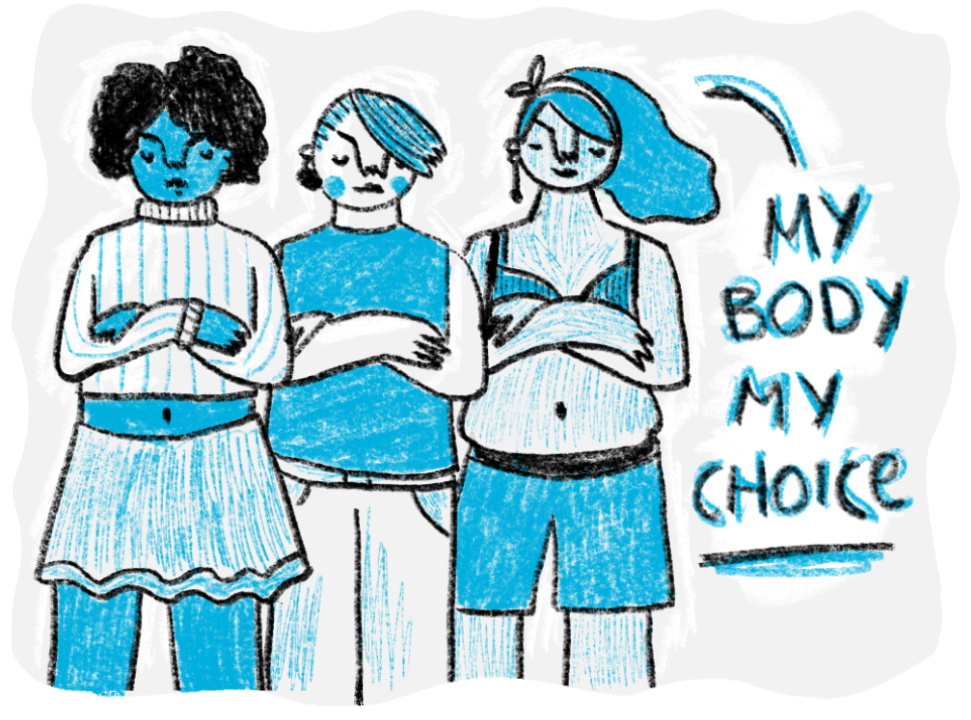
Few topics capture the collective imagination—and ire—quite like bodily autonomy. This concept, far from being a mere political talking point, has become the crucible through which the wider fight for democracy is tested and defined. The fascination with bodily autonomy isn’t incidental or purely moralistic; it is emblematic of deeper tensions about power, agency, and sovereignty. When the contours of one’s own body become battlegrounds, democracy itself is on trial.
The Anatomy of Bodily Autonomy: More Than a Feminist Rallying Cry
At its core, bodily autonomy insists on the inviolability of the self—the prerogative to govern one’s own body free from external coercion. Yet, it’s reductive to categorize it solely as a feminist issue, though feminism has significantly amplified its urgency. The concept resonates widely because it strikes at the essence of individual sovereignty, a prerequisite for any meaningful democracy. People across lines of gender, race, class, and nationality are drawn to this ideal because it reflects a basic human yearning: to be the absolute author of one’s own flesh and fate.
What elevates bodily autonomy to such prominence is its intersection with law, culture, and morality. It is often invoked in debates around abortion, consent, gender identity, and health care—areas where personal freedoms collide headlong with social norms and state interests. The enduring conflicts underscore a broader, unnerving paradox: how can democracy thrive when the state wields influence over bodies in what seem to be the most intimate, sacred realms?
Democracy’s Fault Line: Why Bodily Autonomy Is the Ultimate Boundary
Democracy claims to champion freedom, equality, and justice. Yet, the battleground of bodily autonomy reveals harsh contradictions. The body is the final frontier—the ultimate domain where individual liberty either flourishes or flounders. When governments legislate control over reproductive rights, medical procedures, or personal expression, they often cross what should be a non-negotiable threshold. This is where democracy’s promises are truly scrutinized.
The control of bodies exposes authoritarian impulses lurking beneath democratic façades, challenging the notion that voting and legislation automatically guarantee liberty. Bodily autonomy, therefore, acts as a litmus test for democratic integrity. It insists on a radical notion: that governance must be consented to on the very grounds of self-possession. Without that consent, democracy risks devolving into a regime of compliance rather than true freedom.
The Cultural and Historical Layers Feeding the Fascination
The obsession with bodily autonomy taps into centuries of cultural narratives and power struggles. Historically, bodies—especially those of women, indigenous peoples, enslaved individuals, and marginalized groups—have been sites of domination and control. These histories resurface each time the politics of the body is debated, providing a grim backdrop that magnifies present-day conflicts.
The fascination partly stems from this historical residue: the haunting memories of control and oppression, juxtaposed with contemporary efforts toward liberation. The body becomes a symbolic archive of struggle. More provocatively, it confronts society with uncomfortable questions: who holds power, how is it wielded, and what are the limits of state intervention? Closer scrutiny reveals that fascinations with bodily autonomy are as much about reclaiming historical wrongs as they are about addressing current inequities.
The Complexity of Consent and Coercion in Bodily Rights
Consent doesn’t operate in a vacuum; it is entangled with power dynamics, cultural conditioning, and socio-economic realities. This complex web heightens the stakes of bodily autonomy debates, exposing how easy it is for personal freedoms to be undermined under the guise of moral or public interest. Whether in the context of sexual assault, reproductive health, or gender expression, the concept of consent is fraught with ambiguity and contestation.
This complexity fuels the fascination: it provokes unsettling questions about where the individual ends and society begins. When does protective legislation become paternalistic interference? How do we balance communal ethics with personal liberties? The polarity between consent and coercion revives ancient philosophical debates while demanding urgent, contemporary clarity. The answers, or lack thereof, keep the conversation alive, charged, and fiercely contested.
Beyond Rights: Bodily Autonomy as a Catalyst for Social Transformation
Bodily autonomy is not just about protecting existing freedoms; it’s a force for radical transformation. The movement embodies a challenge to entrenched hierarchies—patriarchal, racial, economic—that have long profited from controlling bodies. It reclaims the body as a site of power, a vessel of pleasure, resistance, and identity.
Moreover, bodily autonomy reshapes how democracy functions by expanding the public sphere to include private experiences. What happens behind closed bedroom doors or within hospital rooms becomes inseparable from civic life. This expansion destabilizes conventional political theories that separate state governance from private existence, redefining democracy itself as a more visceral, embodied engagement.
The Global Surge and Its Flickering Shadows
Worldwide, movements championing bodily autonomy surge with defiant energy. From mass protests over reproductive rights to legal battles for gender recognition, these struggles underscore a growing impatience with states that refuse to respect the sanctity of self. Yet, this global momentum is accompanied by resilience from conservative, authoritarian forces aiming to reassert control. This dynamic tension sustains the intense fascination and anxiety around the issue.
Their antagonism not only reflects local cultural politics but also global power contests. The battle over bodily autonomy becomes a proxy for ideological warfare between expanding freedoms and retrenching restrictions. The stakes have never been higher: the outcome has implications for democracy’s viability in a world beset by resurgent authoritarianism and fractured social contracts.
Conclusion: The Indelible Mark of Bodily Autonomy on Democracy’s Horizon
Feminism’s battle cry for bodily autonomy is more than an isolated skirmish; it is democracy’s line in the sand. The fascination with this concept reveals a collective recognition that if one cannot claim ultimate control over one’s own body, the foundations of democratic freedom crumble. The conflict layers historical grievances, complex consent debates, and global ideological wars into a highly charged tapestry. It demands urgent rethinking of what democracy means—not as an abstract ideal, but as a lived reality where every body matters.
Bodily autonomy challenges society to confront uncomfortable truths about power and control. It insists on a democracy that is not merely procedural but profoundly participatory and embodied. In that challenge lies the hope for a world wherein freedom is not granted—it is lived. And that possibility, precarious as it may be, keeps the fascination, and the fight, fiercely alive.