In the annals of American history, few moments evoke as much fervor and contention as the debates surrounding marriage equality, most notably encapsulated by California’s Proposition 8. Set against a backdrop of socio-political upheaval, the hearings for Proposition 8 emerge not just as legal proceedings but as litmus tests for the state of feminism and the broader struggle for civil rights. As we prepare for these historic hearings, it is imperative to analyze the implications through a feminist lens, interrogating how gender, sexuality, and power interplay within this framework.
The trajectory of Proposition 8 offers a captivating, albeit tumultuous, narrative of resistance and resilience. It was initially framed as a moral imperfection threatening the very foundation of heterosexual marriage. But what does the invocation of such rhetoric reveal about societal perceptions of gender and sexuality? Delving deeper, one must question whether the dichotomy presented by proponents of Proposition 8 is not just a reaction against LGBTQ+ rights, but also a broader reflection of entrenched misogyny. The intersectionality intrinsic to this debate mandates an exploration of how women’s rights are often co-opted in the service of discriminatory practices.
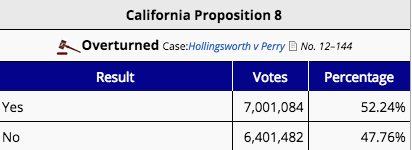
Understanding the chronology of Proposition 8 elucidates the complex tapestry from which contemporary feminist dialogues are woven. Initially passed in 2008, this constitutional amendment sought to define marriage strictly as a union between one man and one woman. In this desire to delineate ‘traditional’ versus ‘non-traditional’ unions, the demarcation illustrates a profound misunderstanding of the nuances of human connection. The hearings anticipated in California not only provide a vital platform for legal discourse but also galvanize feminist thought, challenging the notion of who gets to participate in the sacred institution of marriage.
Feminism at the Crossroads: Rights and Regalia of Marriage
Marriage, an institution historically rooted in patriarchal norms, has often served as a double-edged sword for women. On one hand, it promises societal validation; on the other, it can perpetuate a lack of autonomy. As the hearings unfold, it is essential to examine how the quest for marriage equality simultaneously challenges and reinvigorates feminist discourse. Why should marriage exist exclusively as an avenue for heterosexual unions when many women find fulfillment, collective duty, and family structures outside of traditional norms? The very premise of Proposition 8 not only undermines LGBTQ+ rights but also serves as a flashpoint for redefining women’s roles within society.
Some may argue that marriage is sacrosanct and must be preserved within its antiquated bounds. However, this argument neglects the evolving context of love, partnerships, and familial bonds that dare to defy tradition. Feminism compels us to reject stagnant definitions that serve mainly the status quo. Would it not be more equitable to extend marriage rights to same-sex couples while simultaneously deconstructing the institution’s inherent patriarchal underpinnings? The hearings, thus, do not merely address the validity of Proposition 8; they reveal the various ways in which marriage can either liberate or constrain individuals, predominantly women.
The Intersectional Lens: Understanding Gender, Race, and Sexuality
Proposition 8 is inextricably linked to broader societal issues intersecting race, class, and gender. To view marriage equality as a standalone issue is simplistic and reductive. Feminism demands an intersectional approach, one that recognizes the multitude of identities individuals inhabit. For women of color and those from marginalized backgrounds, the fight for marriage equality must contend not only with gender but also systemic racism and class disparity.
Consider the myriad of experiences that inform a woman’s view on marriage. Intersectionality posits that oppression is seldom singular; rather, it amalgamates into a system of overlapping injustices that shape our realities. The hearings on Proposition 8, therefore, beckon a nuanced dialogue that contemplates how marriage is perceived differently across racial lines and socio-economic strata. For many, the question is not just about the right to marry but also about the societal recognition of their identities and the validity of their family structures.
The voices of women who dare to exist outside the confines of a heteronormative framework are often marginalized. What of queer women, women of color, and those who opt out of traditional relationships altogether? The Proposition 8 hearings symbolize far more than a legal debate; they resonate deeply with issues of visibility and representation. Centuries of patriarchy and discrimination have often relegated non-traditional unions to the outskirts of societal acceptance. Recognizing this narrative is crucial to advocating for a marriage equality that is inclusive, not merely an empty promise of equality.
A Call to Action: What is at Stake?
The implications of the hearings extend beyond legal ramifications; they encapsulate a require for a renewed feminist commitment to solidarity. Advocating for marriage equality within the context of Proposition 8 necessitates a robust framework that recognizes women’s rights as inherently tied to broader civil rights movements. The hearings represent a galvanizing force—a reminder that the fight for equality is far from over.
The feminist movement has always been about challenging unjust power dynamics. Therefore, it is not merely enough to advocate for marriage rights; we must also interrogate the institution itself. The Proposition 8 hearings serve as a vital inflection point for engaging in conversations about love, kinship, and the recognition of diverse family structures. It is time to reframe the narrative around marriage, from one built on exclusion to a celebration of inclusive love and partnerships transcending traditional forms.
Ultimately, as California braces for these pivotal hearings, it is not just the fate of Proposition 8 that hangs in the balance—it is the very notion of what it means to be free in a society that, historically, has sought to regulate intimate relationships. Feminism compels us to push boundaries, challenge norms, and demand a world where love is free of prejudice, regardless of gender or sexuality. The question lingers: when history calls, how will feminist activists respond?
In grappling with the implications of these hearings, one must remain vigilant, engaged, and unyielding in the pursuit of justice—not just for some, but for all. The audacity to imagine a world where love knows no bounds is a revolutionary act in itself. As we confront the past through the lens of Proposition 8, let us embolden our aspirations toward a future that honors diversity, equity, and the myriad expressions of love.