

















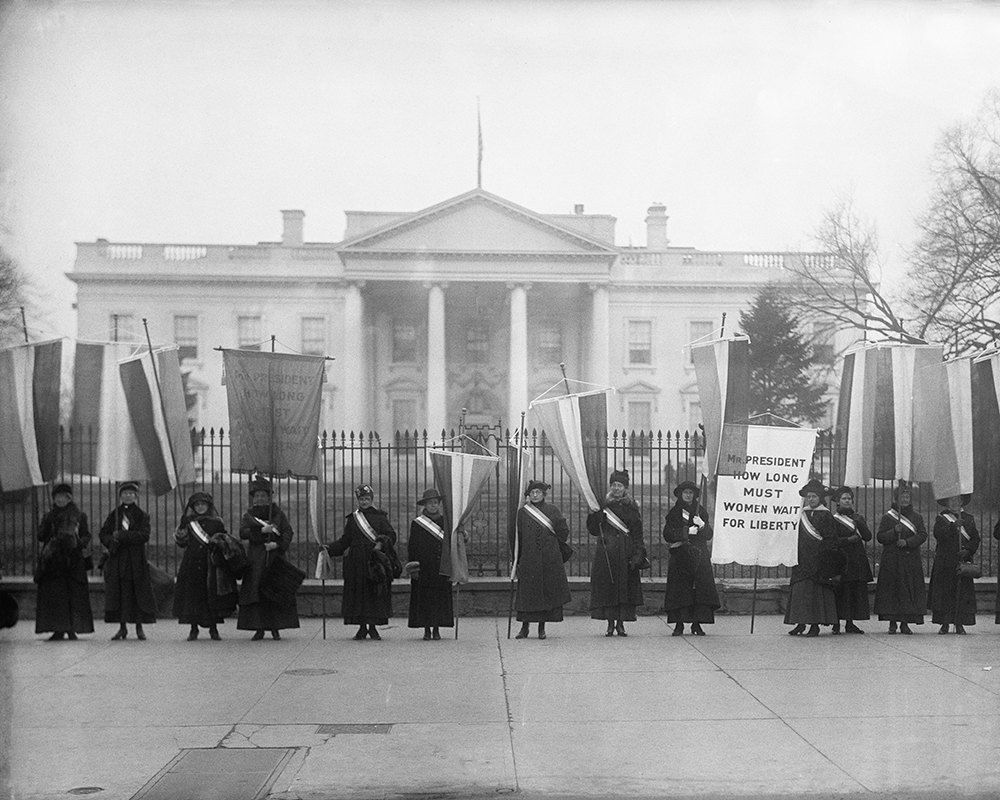
February 5, 1917, marks an indelible moment in the chronicles of feminist resistance. As the suffragettes rallied their collective courage, they reframed the narrative of activism whilst challenging the very bounded systems that dictated their existence. This date serves not merely as a historical marker but as a clarion call for contemporary feminists to embrace audacity and disobedience as intrinsic to their cause. The women who took to the streets reimagined resistance, and their legacy reverberates through the ages, compelling us to interrogate the structures of power akin to what they so valiantly confronted.
The suffragette movement was not just about the right to vote; it was about the right to exist without the shackles of oppressive institutions. Women such as Alice Paul and Lucy Burns envisioned a new society, one in which women were dignified stakeholders rather than passive observers. They stirred the cauldron of societal norms, coercing a reaction from a government steeped in patriarchal inertia. In doing so, they sculpted a movement that transcended its initial goal, evolving into a broader dialogue concerning gender equality and women’s rights that still influences the feminist discourse today.
To fully appreciate the audacity of these founding feminists, it is imperative to explore the mechanisms by which they engaged in their rebellion against systemic oppression.
The Art of Visibility: Marching into the Fray
The marches and picketing outside the White House were not mere acts of dissent; they were masterpieces of visibility crafted by women who knew all too well that obscurity breeds apathy. The suffragettes utilized the visual language of protest to communicate their urgent pleas for justice. They donned sashes, carried banners, and employed strategic messaging that articulated their demands with fervor and clarity. This visual discourse amplified their cause, making it impossible for the public—and the government—to ignore their existence and legitimate grievances.
In today’s context, social media platforms serve a similar purpose. Feminist movements like #MeToo and #BlackLivesMatter encapsulate the power of visibility. Through hashtags, viral videos, and impactful images, contemporary activists echo the tactics of their predecessors.
But the question lingers: In an age where information is ubiquitous, are we doing enough? Are we merely amplifying noise, or are we crafting the same sharp images that strengthen social consciousness? Today’s feminists can draw lessons from the metaphoric picket signs wielded a century ago, crafting narratives that demand narrative justice. Ironically, the increasing visibility can lead to complacency. The challenge is to invoke a sense of urgency that propels modern social movements beyond mere online rhetoric into tangible action.
The Power of Defiance: Persuasion Through Confrontation
The suffragettes did not shy away from discomfort; they welcomed it. Their acts of defiance—hunger strikes, civil disobedience, and the chaining of themselves to government buildings—were strategy-planned provocations. They understood that confrontation often leads to change. Indifference is the true adversary of progress, and they embraced confrontation with a tenacity that rattled the status quo.
This historical insistence on defiance is a mounting call for contemporary feminists to reclaim the notion of resistance from the grip of civility. While polite discourse may have its place, the annals of history reveal that progress births from rupture, not acquiescence.
The struggles we face today—gender-based violence, reproductive rights, income inequality—require another level of audacity. The fight against the recent legislative efforts to strip away women’s reproductive rights, for example, echoes the historical struggle that these pioneers faced. In many jurisdictions, women are finding themselves once again fighting for autonomy over their own bodies.
Thus, the lesson from the suffragettes resonates change in our approach: We must unsettle the comfort of complacency. Our encounters with inequity must provoke discomfort, allowing us to challenge the centers of power that perpetuate injustice. Confrontation becomes not just a tactic but a moral obligation.
Framing Empathy: Unifying Diverse Struggles
One cannot gaze upon the 1917 picketers without recognizing the diversity of their voices. Though at times fraught with class and racial tensions, the movement encapsulated various dimensions of the female experience. However, the contemporary feminist movement runs the risk of fostering silos—subordinate waves of feminism failing to acknowledge intersectionality in our collective struggle against systemic injustices.
A genuine homage to those pioneering activists necessitates the weaving together of narratives that embrace the multifaceted realities of marginalized groups. Just as Alice Paul ardently campaigned not only for her rights but those of women across a multitude of spectrums, effective modern feminism must acknowledge that one friend’s victory may be rooted in another’s struggle.
Recent events surrounding racial justice have illuminated the imperative necessity of intersectionality within feminist discourses. The BIPOC community has repeatedly offered invaluable insights, yet the mainstream feminist movement has often sidelined these perspectives. Feminists today must navigate the complexities of race, class, and gender, crafting an inclusive tapestry rather than a single-thread narrative.
The collaboration between different movements—such as Indigenous rights and climate action—mirrors the unity that the suffragettes exhibited in their demands. Their legacy is a continuous reminder that solidarity catalyzes robust reform.
The Resistance Revolution: Activism Reimagined
As we commemorate the courage exhibited on that pivotal day in 1917, we must turn the lens toward the future. The current legal and societal landscapes will define the nature of resistance we formulate today. The phrase “we are all suffragettes” takes on new meaning; it evokes an updated sense of purpose as modern feminists are called to embody the resolute spirit of their forebears. Yet we must not be trapped in nostalgia; activism must evolve, responding to the complexities of contemporary struggles.
We find ourselves in a moment where resistance cannot be one-dimensional. It encompasses a vast array of strategies—from grassroots mobilization to leveraging technology. Feminists today must not only take to the streets but also engage in legislative battles, workplace activism, and community organizing. The digital realm offers a new avenue for brainstorming and collaboration, profoundly shaping how movements are organized and conducted.
This multi-pronged approach to resistance becomes central as we forge ahead, challenging norms wherever they persist. The equality these pioneering women sought is still often elusive, yet their indomitable spirit serves as a reminder that we possess the power to enact change.
As we stand on the shoulders of these giants, we become the architects of a new narrative, one grounded in solidarity, audacity, and relentless pursuit of justice. February 5, 1917, may be a historical date, yet its reverberations continue to shape our ethos; we must channel that energy into the activism of today.
Ultimately, the founding feminists exemplified that the fight for justice does not conclude with the acquisition of rights, but rather transitions into a greater framework of equity. Let their story be our blueprint, a surge of inspiration reminding us that the struggle for a just society is perpetual. Resistance is a birthright—one that must be fiercely defended and redesignated for future generations; a movement not simply inherited but reborn, continuously reimagined, and resolutely alive.