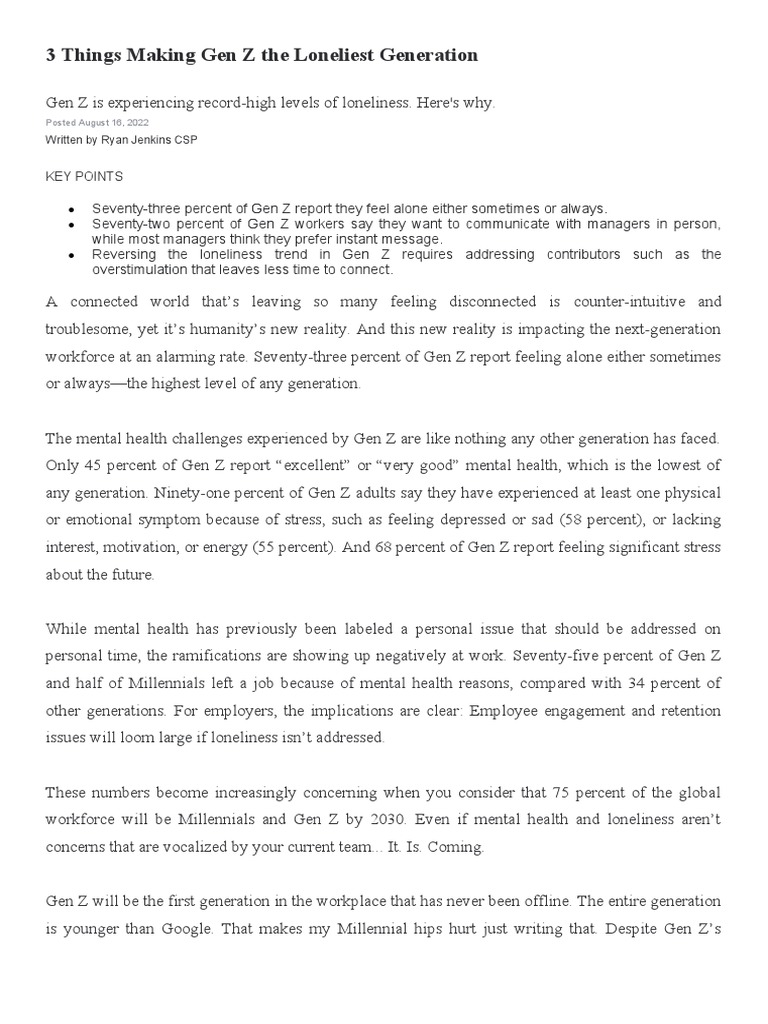
In the labyrinth of contemporary culture, Gen Z men stand as wanderers cloaked in paradox—simultaneously lonelier, angrier, and more ideologically charged than any prior generation. Their psyche is a tempest, a storm of disillusionment and rebellion against evolving gender norms and societal expectations. Caught in the crosscurrents of feminism’s transformative surge and their own quest for identity, they represent a kaleidoscope of contradictions that defy simple categorization. To understand this generation is to unravel the tangled skein of cultural shifts, technological influences, and personal narratives that fuel their intricate emotional landscape.
Genesis of a Generation: Navigating Feminism’s Expanding Horizon
Feminism, having undergone waves of transformation since its inception, now occupies an omnipresent space in modern discourse. For Gen Z men, it is not merely a distant ideology but an intimate, often visceral reality. Unlike their predecessors, these young men are coming of age amidst a seismic redefinition of gender roles, power dynamics, and societal expectations. The traditional patriarchal scripts—which once offered a clear pathway to manhood—have been deconstructed, leaving many adrift in a liminal space between historical identity and future possibility.
This deconstruction has forged a paradox: while feminism empowers marginalized groups and promotes equity, it also challenges entrenched notions of masculinity. Gen Z men find themselves grappling with a double-edged sword. On one edge lies the call to embrace vulnerability, allyship, and introspection; on the other, a pervasive sense of emasculation and displacement. This duality fuels an intense internal conflict, often manifesting in frustration and social withdrawal.
The Loneliness Epidemic: A Generation Untethered
Loneliness is no longer a mere emotional state but an epidemic blanketing young men in a digital age saturated with connectivity yet devoid of authentic intimacy. Paradoxically, Gen Z men dwell in a hyper-connected world, where social media simultaneously facilitates connection and enforces alienation. Online platforms become echo chambers of validation and comparison, exacerbating feelings of isolation rather than alleviating them.
For many young men, the traditional forms of male bonding and communal identity have eroded. Spaces where they once forged camaraderie and shared rites of passage have been diluted by shifting cultural expectations and the contagious anxiety surrounding mental health transparency. The result is a pervasive sense of being untethered—a ship adrift on an uncertain sea without navigational stars. This loneliness, far from being a silent affliction, often translates into simmering anger, disillusionment, and, in some cases, radicalization.
Anger and Pilling: A Generation’s Ideological Armor
The metaphor of “pilling” captures the ideological ferment swirling within Gen Z men, referencing the proliferation of online belief systems and subcultures that promise clarity through binary oppositions. Whether through the “red pill” awakenings, manosphere rhetoric, or alternative frameworks critiquing feminism and social justice, these ideological constructs operate as both shield and sword. They provide answers in a landscape fraught with ambiguity and betrayal.
Yet, this anger is not a simplistic outburst but a complex emotional choreography. It embodies grief for vanished certainties and a yearning to reclaim agency amid rapid sociocultural upheaval. The vitriol and fervor are symptomatic of a deeper existential crisis—a rebellion born from the clash between inherited masculinity and newly demanded sensitivities.
Importantly, this rage is also performative, shaped and amplified by digital culture that rewards extremity over nuance. For some, online arenas become stages to rehearse identity through antagonism, where “pills” are traded like badges of honor, reinforcing collective identity but also deepening sectarian divides.
Reimagining Masculinity: A Fork in the Road
Feminism’s ongoing deconstruction of gender roles forces Gen Z men to reimagine masculinity not as a monolith but a mosaic. The possibilities for redefinition are both liberating and daunting. On one path lies the opportunity to cultivate a more inclusive, empathetic form of masculinity—one that embraces emotional literacy, rejects toxic paradigms, and fosters genuine connection.
Conversely, the alternative path risks retrenchment into isolationist subcultures that valorize grievance and reject change. The generation stands at a precipice, where the interplay between self-reflection and societal pressures will determine whether they embody progress or backlash.
Positive models emerging within this milieu illustrate that vulnerability is not weakness but strength. These narratives encourage young men to dismantle destructive stereotypes and construct identities aligned with authenticity rather than conformity. The cultural script is not yet written; Gen Z men have the agency to author new stories of masculinity that coexist with feminist aspirations.
The Cultural Reverberations and Societal Implications
The struggles of Gen Z men echo beyond individual psyches, resonating through social structures at large. Their alienation influences political discourse, educational engagement, and mental health paradigms. Policymakers, educators, and communities must recognize the unique pressures this generation faces to foster environments that nurture rather than polarize.
The dialogue surrounding men and feminism can no longer afford to be adversarial. Instead, it demands a symphonic collaboration that honors the complexities of identity, power, and culture. Addressing loneliness means creating spaces for honest conversation; addressing anger means moving beyond caricatures to encounter the human emotions beneath.
Ultimately, the cultural reckoning invites society to imagine a future where masculinity and feminism are not locked in combat but dance in dynamic interplay. This delicate choreography challenges old hierarchies and beckons toward a more equitable, compassionate world.
Conclusion: The Odyssey of Gen Z Men
Gen Z men traverse an odyssey fraught with contradiction, yearning, and transformation. Their experiences encapsulate the tensions wrought by feminism’s evolving mandate, revealing a generation both wounded and fiercely animated. To witness their journey is to observe a cultural crucible, where loneliness breeds anger, ideology constructs defenses, and the potential for rebirth glimmers just beyond the horizon.
In this tapestry of complexities lies the unique appeal of Gen Z men—a brotherhood not defined by uniformity but by the shared pursuit of meaning amid chaos. Their story challenges us to rethink gender, identity, and community, inviting a nuanced understanding beyond stereotypes. As they navigate this tumultuous terrain, they illuminate the profound human struggle to reconcile past legacies with future possibilities.