
















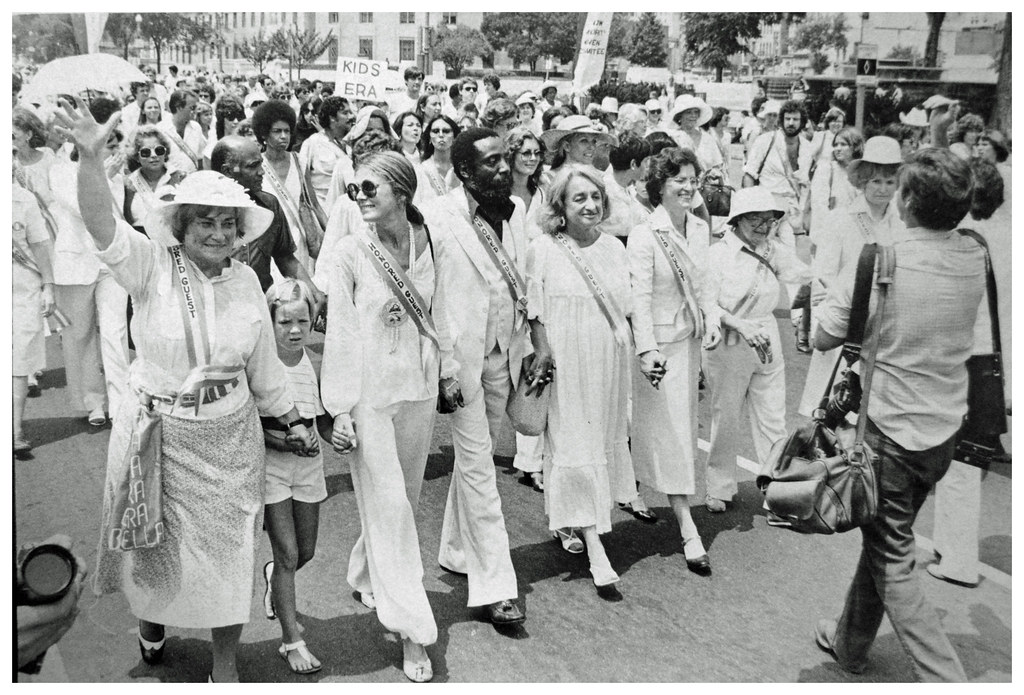
In order to understand the seismic shifts catalyzed by the feminist movement, we must turn our attention to a defining moment in history: July 9, 1978. On this day, a multitude of feminists converged in Washington D.C. for the largest march for the Equal Rights Amendment (ERA) ever witnessed in the United States. But we must ask ourselves, what was the essence of this moment, and why does its resonance still echo in the corridors of contemporary feminism? To fully grasp the significance of this colossal event, we have to peel back the layers of societal constructs, power dynamics, and the relentless quest for equality that has defined women’s struggles across generations.
As the world veered towards technological advances and cultural revolutions, women were still languishing under stifling patriarchal systems, their rights being relegated to the realm of mere discussions. The march wasn’t just a show of force; it was a clarion call that reverberated beyond 1978, challenging future generations to continue the fight for equality. So, why should a younger audience care about this historical episode? Because the very fabric of our contemporary rights—rights that some take for granted—were woven into existence by those brave souls who marched in the blistering heat of July.
To fully appreciate the enormity of the march for the ERA, let’s dive into the historical context and its ramifications in today’s society.
The Era of the Feminist Awakening
The 1970s were not merely a decade; they were a paradigm shift. Emerging from the suffragette movements and the post-war discontent, women were no longer willing to accept the status quo. They craved change, but a change that would ripple through legislation, societal norms, and cultural attitudes alike. The Equal Rights Amendment, first introduced in Congress in 1923, aimed to eradicate discrimination “on account of sex.” Yet it took more than half a century for the movement to gain genuine traction.
The demand for the ERA was not just about the amendment itself; it was a vehicle for broader societal change. Women rallied for a future where they could exercise autonomy over their bodies, engage freely in the labor market, and enjoy the same legal protections afforded to men. In an era marked by escalating civil rights movements, the fight for gender equality took center stage, reflecting a growing discontent with century-old oppressive structures.
So what inspired an estimated 100,000 activists to take to the streets on that fateful day? Frustration, indignation, and an unyielding hope for a brighter, more equitable future—these emotions were palpable in the air. They came from different walks of life but shared a singular message: “Equality Now!” The march aimed not only to galvanize support for the ERA but also to challenge ingrained societal attitudes that viewed women as second-class citizens.
The Power of Collective Action
The sheer numbers that flooded the national mall on July 9 were nothing short of extraordinary. Women, men, and children stood shoulder to shoulder, creating an unbreakable chain of solidarity. This gathering exemplified the essence of collective action—people banding together for a shared cause, transcending individual differences to foster a sense of community and purpose.
In an age where social media reigns supreme, it’s crucial to remember that back then, marching was one of the few avenues to create visibility. Each banner waved, every shout of protest, and each step taken was a defiance against a system that refused to recognize women’s inherent rights. Today, we have platforms like Twitter and Instagram, where hashtags can mobilize millions in seconds. Yet, this immediacy should never overshadow the monumental impact that on-the-ground actions can initiate. The moral of the story? Physical presence matters. It shouts louder than a thousand hashtags.
Lessons in Theory and Practice
As we sift through history, it becomes increasingly evident that activism cannot merely exist in the realm of theoretical ideals. The push for the ERA was underpinned by radical feminist theories that sought to dismantle the very foundations of patriarchy. Yet, these theories needed real-world application—a realization that sparked initiatives like the march. Feminism isn’t merely an abstraction; it’s a practice, an ongoing struggle that requires daily activism, confrontation, and, quite frankly, discomfort.
Every time someone clicks “like” on a post about gender equality or shares an article advocating women’s rights, it’s a step toward raising consciousness—but it cannot replace boots on the ground. The 1978 march serves as a stark reminder that tangible actions often spark the most profound changes. Social theorists had the vision, but the women who marched brought it to life. They challenged us to think beyond digital activism and to embrace a world where our bodies and voices matter, not just online, but in the real world.
The Aftermath: A Movement Unfinished
While the march was monumental, it was only a chapter in the ongoing saga of feminism. The ERA ultimately fell short of being ratified, but the mobilization represented by that day didn’t dissipate into the ether. It catalyzed a new wave of activists—women who rose not just for their rights, but for the rights of future generations. The legacy of the march serves as both a cautionary tale and a source of inspiration: change is possible, but it requires persistence.
Today, young feminists must grapple with a terrain that, while different, isn’t devoid of its own challenges. Issues like reproductive rights, LGBTQ+ rights, gender-based violence, and workplace equality remain as pressing as they did years ago. The question arises: how can a younger audience connect with this heritage of activism? By embracing it, engaging actively, and translating it into modern contexts.
Reimagining Feminism for a New Era
To truly honor the legacy of those who marched in 1978, today’s activists must recognize the multidimensionality of feminism. It cannot be confined to the binary struggles of past generations. The invocation of intersectionality, which recognizes that race, class, sexual identity, and other social categories intersect and shape individual experiences, is essential.
Therefore, the modern feminist movement must challenge itself to address the hierarchy within and push for inclusivity. Every voice matters, and every struggle contributes to the collective narrative of equality—this is the ethos that must reverberate within today’s feminist circles.
As we reflect on the roar of the crowd on July 9, 1978, and the call for the Equal Rights Amendment, we must not lose sight of the fact that activism is akin to a relay race; one generation passes the baton to the next. The task of ensuring equality is far from over, and the legacy of that day urges us to remain vigilant and engaged. Embrace your role in the unfolding narrative—pick up the baton, and let’s continue the race toward true equality.
The fight is far from over; it’s an ongoing dialogue between eras, inviting each of us to participate. As you connect with and draw inspiration from these historical movements, remember: the most significant changes often start with a single step—a step that might just echo into infinity.