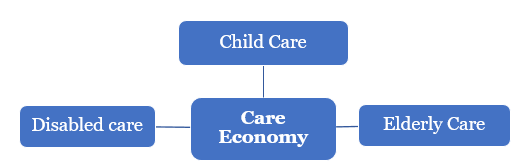
What if the backbone of our society—the endless hours spent nurturing, caring, and sustaining life—was never considered “real work”? Does the label of “helping out” diminish the seismic labor poured into the care economy? Let’s unravel this provocative enigma: care is not charity; it’s demanding, indispensable labor that feminism demands must be recognized, valued, and redefined.
Redefining Labor: Beyond the Myth of “Help”
The care economy is drenched in a cultural myth that care work is voluntary, incidental, or merely “helping” out. This linguistic choice is more than semantics—it’s a calculated effacement of the multitudes of hours people, predominantly women, invest in caregiving. The term “help” connotes goodwill and temporary charity, a spontaneous act sparing the notion of sustained effort and skill. Yet, caregiving encompasses physical toil, emotional resilience, and intellectual engagement that should be classified unequivocally as labor. Why does society persist in relegating this to the realm of the unpaid, the undervalued? Because recognizing it as work would demand structural shifts—economic, social, and political—that are inconvenient for entrenched patriarchal and capitalist paradigms.
The Invisible Backbone: Unpacking the Care Economy
Imagine a colossal economic engine fueling every other sector, yet the engine itself is unpaid, unseen, and uncredited. That’s the care economy in a nutshell. It includes childrearing, eldercare, healthcare, cooking, cleaning—tasks indispensable for societal function and individual well-being. These activities constitute the social scaffolding upon which the formal economy rests. If nurses, teachers, and domestic workers—often bearing a disproportionate share of care labor—were paid their true worth, the global economy would look drastically different. The invisibility cloak over care work perpetuates gendered economic disparities and obscures the essential contributions of caregivers, predominantly women of color, immigrants, and the working class.
Gendered Expectations and the Burden of Care
Why does caregiving remain a feminized sphere? Historical and cultural constructs have tethered women to the domestic as if biology ordained their role. This myth erases choice and labor alike, framing care work as an extension of female nature rather than a socio-economic responsibility shouldered disproportionately. Such expectations intensify the “double burden” women endure—balancing paid employment alongside unpaid caregiving labor. These layers of obligation undermine women’s economic mobility, health, and agency. Feminism challenges this narrative, insisting that caregiving must be recognized structurally—not as women’s “responsibility” but as a societal imperative demanding redistribution, reciprocity, and respect.
Economic Valuation: The Incalculable Worth of Care
Assigning a monetary value to care work feels like trying to bottle the wind. How do you quantify the emotional labor of comforting a sick child or the intergenerational wisdom passed during meals? Yet, ignoring its economic weight perpetuates systemic injustice. Various studies have calculated that if unpaid care work were monetized, it would constitute a staggering percentage of GDP worldwide. Inclusion of care labor in economic metrics would catalyze policy interventions—paid family leave, childcare support, fair wages for care workers—that recalibrate power and resources. Feminist economists argue that economic systems must evolve to encompass care as fundamental production, not peripheral benevolence.
The Paradox of Choice: Autonomy Amid Care Responsibilities
Here’s a challenge to mull over: can true autonomy coexist with the expectation of uncompensated care? Feminism posits that choice cannot flourish in a vacuum glossed over by invisible labor. Women and caregivers often navigate constrained decisions, their opportunities eclipsed by the relentless demands of care. This paradox underscores the urgency to dismantle structures that compel unpaid caregiving as a default mode. Liberation demands recognizing caregiving as work—work that deserves compensation, social safety nets, and cultural respect. Only then can individuals possibly reclaim the agency to choose their roles free of economic coercion.
Policy Gaps: From Recognition to Redistribution
Many states and institutions gesture toward recognizing the care economy, yet the gulf between rhetoric and reality yawns wide. Policies often fail the test of equitable redistribution—offering piecemeal solutions like token maternity leave or insufficient social services that merely reinforce caregiving as a woman’s burden. Feminism insists on comprehensive frameworks: universal childcare, living wages for care workers, support for eldercare, and dismantling labor market discrimination. Redistribution is not about charity; it’s about justice. Proper policy would not only alleviate the material weight on caregivers but also transform societal values around work and worth.
Technological Promises and Pitfalls in Care Work
The rise of automation and AI begs the question: can technology alleviate the care economy’s burdens? On one hand, innovations promise efficiency in administrative caregiving tasks or monitoring health. On the other, care work’s deeply human elements—empathy, nuanced understanding, physical presence—defy mechanization. Moreover, technology risks reproducing existing inequalities if it replaces paid care jobs without compensatory social protections. Feminist critiques urge caution, emphasizing that technology should enhance—not erase—the value of human labor in care. The goal is emancipation through innovation, not further marginalization.
Reimagining a Care-Centric Society
What if we dared to envision a society where care was the nucleus, not the annex, of economic and social life? A society where care work is celebrated as productive, necessary, and powerful labor? Such a transformation demands collective imagination and radical restructuring. Feminism dares us to confront the discomfort of change, challenging the entrenched hierarchies that prize abstract capital over lived human connection. The care economy’s labor is not ancillary; it is foundational. Recognizing this truth with policy, culture, and economics reverses centuries of invisibility and harnesses a new era of equity and dignity.
Ultimately, the question is not whether care is work—it undeniably is. The challenge lies in dismantling the narratives and systems that refuse to call it so. Feminism compels us to confront this paradox head-on, demanding a world that honors care labor with the gravity, remuneration, and respect it inexorably deserves.