

















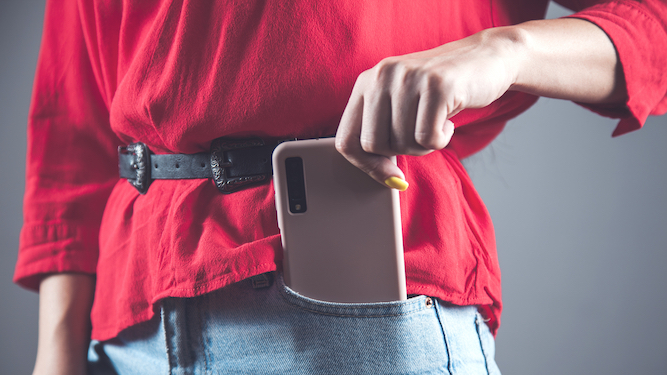
It’s a small detail, almost imperceptible, yet it reveals a vast abyss of inequality: women’s pockets cannot accommodate an iPhone, while men’s pockets can easily swallow a novel. This minor sartorial disparity unfolds a narrative far beyond the realm of fashion—it is a bellwether of pervasive systemic disparities embedded deep into daily existence. What if the trivial inconvenience of pocket size isn’t trivial at all? What if it symbolizes the broader social and cultural limitations still imposed on women? This exploration promises a shift in perspective, urging a reconsideration of how something as simple as pocket dimensions offers a window into entrenched gender biases.
The Anatomy of a Pocket: More Than Meets the Eye
To understand why women’s pockets are notoriously feeble, we must start with the anatomy of a pocket itself. Men’s clothing has historically afforded function a priority—deep pockets capable of holding everything from wallets to keys and yes, bulky smartphones or even a thick novel. Conversely, women’s garments have continually featured pockets as mere decorative embellishments or, worse, tiny slits that mock the idea of storage altogether. This is not just fashion negligence but a carefully perpetuated design choice. It hints at the longstanding narrative that women’s apparel is meant to be aesthetic first and utilitarian second—if utility is considered at all.
From Fabric to Femininity: The Cultural Imprint on Clothing Design
Fashion is never created in a vacuum; it is an intricate weave of culture, politics, and ideology. The diminishing size of women’s pockets speaks to a deeper cultural commodification of femininity. Historically, women’s roles have been tethered to appearances and social expectations, often sidelining independence and practicability. The pocket, as a symbol of autonomy—the ability to carry one’s essentials without aid—has been minimized, mirroring the broader societal insistence that women’s functionality is less important than their form. The trivialization of this garment feature subtly enforces gender binaries, suggesting women should rely on handbags or others rather than on themselves.
Pocket-Sized Patriarchy: How Clothing Perpetuates Gender Inequality
It’s tempting to dismiss pocket size as irrelevant, but doing so overlooks how everyday objects sustain systemic inequalities. Physical restrictions on what a woman can carry without assistance metaphorically reinforce restrictions on autonomy. Cases where women’s pockets cannot hold modern smartphones exemplify a clash between evolving gender roles and stagnant assumptions embedded in production lines. If a woman cannot always carry her phone in her pocket, she must adapt by sewing, carrying bags, or relying on others—actions that resonate with the gendered division of labor and societal expectations regarding dependence versus independence.
Technology and the Pocket Dilemma: When Innovation Meets Outdated Design
The rise of smartphones, especially models like the iPhone with their ever-increasing size, accentuates the pocket paradox. Men’s fashion has accommodated larger phones with relative ease, but the refusal or failure to redesign women’s pockets to meet this technology’s practical demands rings of willful ignorance. This disconnect implies a subtle yet staunch resistance to recognizing women as equal participants in technological modernization. When a pocket cannot even fit a phone—an extension of one’s identity and access to the world—what message does that send about who is expected to keep pace with societal progress and who is not?
The Psychological Toll of Pocket Deficiency
Beyond the physical inconvenience, the psychological impact of gendered pockets is profound. Imagine the constant calculation required: Will my phone fall out? Is it socially acceptable to carry a purse here? Will I be burdened by the extra weight of a handbag, a symbol of traditional femininity? These considerations accumulate, shaping daily experiences and reinforcing internalized limitations. The absence of functional pockets can evoke a subtle but persistent sense of diminished agency—an everyday reminder that women’s convenience and practicality are secondary concerns in design decisions made mostly by men.
Resistance and Reclamation: Women Reclaiming Their Pockets
But this narrative is not one of defeat. Women around the world are actively challenging this outdated norm through activism, design innovation, and cultural commentary. Independent fashion designers are crafting collections that prioritize utility without sacrificing style, integrating voluminous, secure pockets into women’s attire. Social media campaigns parody the absurdity of skimpy pockets, mobilizing public discourse toward demanding change. This movement represents not merely a demand for deeper pockets but a reclamation of space—literal and figurative—in the shared public and cultural realms. Women are asserting that their needs must be visible and accommodated.
The Novel in a Pocket: A Metaphor for Gendered Opportunity
A man’s ability to carry a novel in his pocket carries more weight than just physical convenience: it symbolizes the freedom to carry knowledge, storytelling, curiosity, and self-education without hindrance. For women, the impossibility of this small yet expressive act highlights deeper systemic barriers obstructing access to opportunities. It is emblematic of how society enshrines subtle inequalities, turning seemingly mundane design choices into battlegrounds of gender justice. If women’s pockets cannot foster the liberty to carry a book, what other liberties remain constrained and unexplored?
Looking Forward: Towards Equitable Designs and Societal Shifts
The call for equality begins at the microscopic level, in the cuts and stitches of daily attire. Designers, manufacturers, and consumers must recognize pocket size not as a trivial quibble but as a signifier of broader social inequities. There is a powerful demand for clothing that supports all bodies, all lifestyles, and all ambitions. By reimagining women’s fashion through a lens of functionality and dignity, society embraces a more nuanced vision of gender equality. The future doesn’t merely require bigger pockets; it requires a dismantling of the assumptions that made the pockets small in the first place.
In the end, the story of pockets and iPhones is not about fabric or fashion. It’s about who is granted space—to move freely, to carry knowledge, and to exist fully without unnecessary obstacles. It questions the subtle yet stubborn ways society restricts women under the guise of style and tradition—and it challenges us to see beyond what we thought was insignificant.