





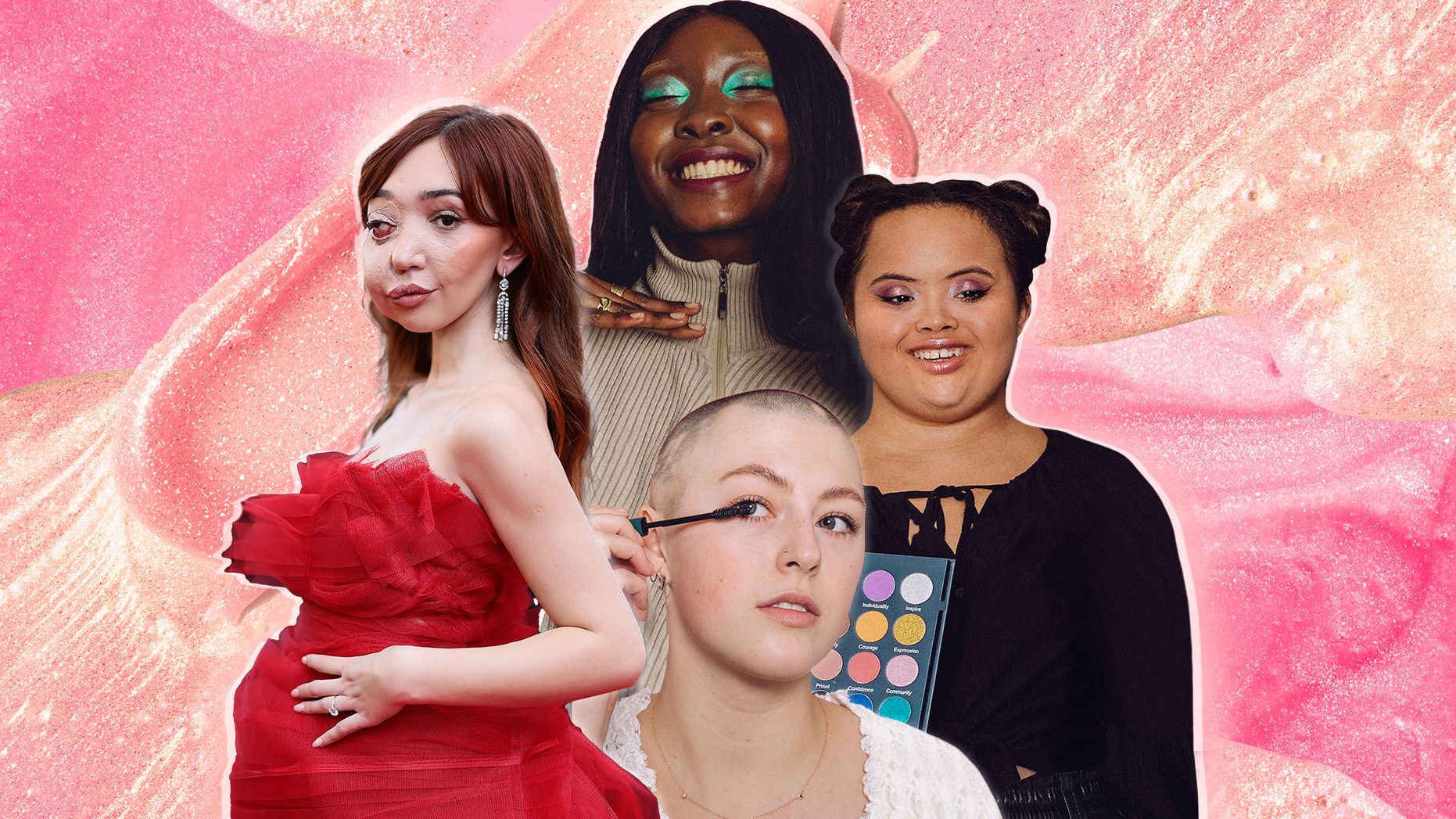
In the grand tapestry of beauty, every thread tells a story, yet some remain ominously frayed, neglected, or deliberately excised. The disabled body, that vibrant, intricate mutation of the human form, is conspicuously absent from the mainstream beauty dialogue—a dialogue that purports to champion diversity but remains shackled by narrow, often exclusionary ideals. Feminism, which once blazed trails for inclusion and bodily autonomy, now confronts a paradoxical silence. Where is the representation of disabled bodies in this conversation? Why do these bodies, imbued with profound narratives and unbridled resilience, linger in the periphery, overlooked by the very movement that claims to dismantle oppressive norms?
The Invisible Canvas: How Beauty Erases Disabled Bodies
Beauty is often skewed as a pristine canvas—smooth, symmetrical, and conventionally desirable. Yet disabled bodies dismantle this notion like abstract brushstrokes disrupting a classical masterpiece. Their contours refuse the standardized mould; they carry scars, aides, and adaptive tools that whisper tales of survival rather than superficial allure. However, society’s narrow gaze frequently paints these bodies as “broken” or “less than,” wielding ableism like an eraser against visibility. This erasure is doubly problematic within feminist spaces. While feminist theory champions the politics of the body, it too often sidelines disabled experiences, treating these bodies as inconvenient anomalies rather than radical agents of beauty and identity.
Feminism’s Selective Embrace: The Myth of Universal Inclusivity
Feminism, at its core, promises liberation, but its practice frequently reveals a selective embrace. The movement’s mainstream faces—embodying specific racial, class, and bodily ideals—rarely include visibly disabled individuals. This selective occurrence is more than a mere oversight; it’s a reflection of ingrained ableism masquerading as normative standards. Disabled women and non-binary people often find themselves wedged between feminist advocacy and the medical model of disability, struggling to assert their narratives beyond pathology or pity. The ideal of “universal inclusivity” awkwardly falters when bodies challenge normative aesthetics or push against societal discomfort, exposing feminism’s uneasy dance with the disabled body.
Disability as a Unique Aesthetic: Challenging Conventional Paradigms
The disabled body is not merely a site of limitation but a font of unique aesthetic potential—a living canvas that calls for reimagining the very foundations of beauty. Adaptive devices, scars, gait alterations, and differing sensory experiences invent an alternative lexicon of allure and magnetism. This distinctiveness disrupts the monolith of traditional beauty, injecting complexity and authenticity. Celebrating disabled beauty demands rejecting reductive notions that beauty equates to perfection, instead embracing bodies as tapestries woven with vulnerability and strength. The disabled aesthetic, when foregrounded, urges society to confront its discomfort and biases, redefining what it truly means to be beautiful.
Media’s Role: Gatekeepers and the Perpetuation of a Homogenous Ideal
The media acts as a colossal amphitheater where beauty is demonstrated, replicated, and normalized. Yet, its spotlight rarely illuminates disabled bodies authentically. Instead, representations are often tokenistic, stereotyped, or entirely absent. When present, disabled figures are frequently framed as objects of inspiration or tragedy, rather than complex individuals whose appearance is valid within the beauty spectrum. This skewed portrayal sustains the myth that disability and beauty occupy mutually exclusive realms. Beyond superficial inclusion, the media must shift from commodification of disability to authentic representation—queering the singular narrative to depict disabled bodies as central players rather than marginal cameos.
The Intersection of Identity: Disability, Feminism, and Body Politics
Intersecting identities complicate the disabled body’s inclusion in beauty discourse. Disability cannot be extricated from race, gender, class, or sexuality; each axis interlaces to create distinct lived realities. For disabled women of color, for example, invisibility in beauty culture is compounded by racialized and sexist standards. Feminism’s failure to reckon with this intersectionality deepens erasure and alienation. The politics of body autonomy become fraught when disabled people are deprived not only of representation but also agency over their appearance and narratives. A truly intersectional feminism demands unabashed recognition of these layered identities and the erection of inclusive platforms that amplify marginalized voices unapologetically.
Reclaiming the Narrative: Disabled Bodies as Agents of Beauty
Reclamation begins with visibility and the dismantling of ingrained biases. Disabled bodies possess a radical capacity to challenge oppressive architectures of beauty and reshape feminist discourse. By centering disabled individuals’ stories, choosing their terms for self-expression, and decoupling beauty from ableist paradigms, a fertile ground for redefinition emerges. When disabled bodies are presented not as anomalies but as exemplars of authentic beauty, the entire framework shifts. It becomes less about fitting into preexisting definitions and more about expanding the collective imagination—inviting society to marvel at resilience, diversity, and profound humanity.
Conclusion: Toward an Unapologetic, Inclusive Beauty
To reshape the beauty conversation is to stare unflinchingly at the color and texture of disabled bodies—and to recognize that these bodies do not dilute beauty; they enrich it. Feminism’s unfinished project lies in its willingness to embrace all bodies as sites of power, pleasure, and representation. The disabled body is not a peripheral afterthought but a cornerstone in this revolution of aesthetics and identity. The time has come for beauty to shed its antiquated illusions, for feminism to broaden its arms, and for disabled bodies to rise as undeniable embodiments of allure, complexity, and undeniable presence.