

















When the mind fractures under the weight of trauma, time itself splinters. Survivors of violence, abuse, or systemic oppression often recount memories in fragments—disjointed images, sensations, and emotions that refuse to align into a coherent narrative. This is not a failure of memory. It is a survival mechanism. The neurobiology of trauma rewires the brain, prioritizing survival over chronology, and in doing so, exposes the violent undercurrents of a world that demands linear storytelling from those who have been shattered by its cruelty.
The Fragmented Archive of the Traumatized Mind
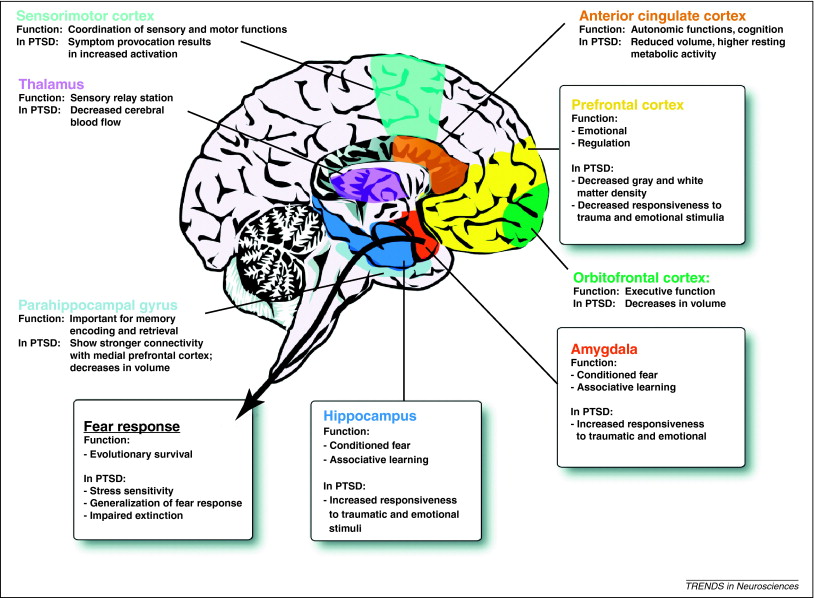
Trauma does not respect the tidy progression of a beginning, middle, and end. It erupts in sensory bursts—smells, sounds, the ghostly touch of a hand that isn’t there—long before the mind can construct a coherent account. The hippocampus, the brain’s librarian of memory, often goes offline during extreme stress, leaving the amygdala, the sentinel of fear, to dictate what is stored. What emerges is not a story, but a collage of survival: a scream heard through a closed door, the metallic tang of blood, the way light fractured through a shattered window.
This is why victims cannot remember linearly. The brain does not archive trauma like a historian; it preserves it like a survivor. The prefrontal cortex, responsible for contextualizing events, is hijacked by the limbic system’s urgency to react. The result? Memories that surface as disjointed shards, resistant to the neat scaffolding of “what happened first.” To demand linear recall from a traumatized person is to ask them to perform a kind of narrative alchemy—turning pain into prose, when their bodies have already done the work of survival.
The Body Keeps the Score, But the Mind Keeps the Scars
Bessel van der Kolk’s seminal work reminds us that trauma is not merely an event in the past; it is a living, breathing presence in the body. The nervous system, once flooded with cortisol and adrenaline, remains on high alert, mistaking safety for threat. A raised voice, a sudden movement, the scent of a cologne worn by an abuser—these are not triggers in the abstract. They are the body’s way of screaming, *I know this. I survived this. Do not forget.*
The dissociation that follows trauma is not detachment; it is hyper-attachment to the self’s survival. When the mind cannot process an event in real time, it splits—one part endures, another observes from a distance. This is not madness. It is genius. The brain, in its desperation to protect the core self, creates a buffer between the unbearable and the psyche. To remember linearly would require the mind to relive the trauma in full, frame by frame. Instead, it offers fragments, knowing that coherence is a luxury when survival is the only currency.
The Tyranny of the “Coherent” Narrative
Society demands a story. Police reports, courtrooms, even therapeutic spaces often hinge on the expectation of a linear, verifiable account. But trauma does not produce witnesses—it produces survivors who speak in metaphors, in gaps, in the unsaid. To force a traumatized person into a chronological retelling is to retraumatize them, to strip away the very mechanisms that allowed them to endure.
Consider the woman who cannot recall the exact date of her assault but remembers the way the rain smelled that night. The man who knows the sound of his abuser’s footsteps but cannot place the year. These are not failures of memory; they are acts of defiance. The brain has chosen preservation over precision, survival over submission to an external narrative. To dismiss these accounts as “incomplete” is to participate in the erasure of their pain.
The Neurobiology of Silence
Not all trauma is remembered in fragments. Some is remembered in silence. The brain may suppress memories entirely, burying them beneath layers of dissociation or shame. This is not forgetting; it is a form of protection. The mind knows that some truths are too heavy to carry in full daylight. They must be whispered, or not spoken at all.
This silence is not absence. It is a fortress. The brain, in its infinite wisdom, knows that some stories are too dangerous to tell—too likely to invite disbelief, revictimization, or further harm. The neurobiology of trauma is not just about what is remembered; it is about what is withheld. And in that withholding lies a profound resistance to the systems that seek to control, categorize, and invalidate survivors’ experiences.
The Politics of Memory
Trauma is not an individual pathology; it is a collective wound. Systems of oppression—patriarchy, racism, colonialism—rely on the fragmentation of memory to maintain power. By demanding linear, “credible” accounts from survivors, these systems uphold the very structures that caused the trauma in the first place. A woman’s fragmented memory of sexual violence becomes “unreliable” in court. A Black man’s disjointed recollection of police brutality is dismissed as “emotionally charged.” The neurobiology of trauma exposes the lie: the problem is not the survivor’s memory. The problem is a world that refuses to listen.
Feminism, at its core, is a demand for the right to be heard. But hearing is not enough. We must learn to listen to the unsaid, the fragmented, the nonlinear. We must recognize that memory is not a ledger but a landscape—one that is shaped by violence, survival, and the quiet insistence of the body to bear witness, even when the mind cannot form the words.
The Radical Possibility of Unremembering
What if the goal is not to remember linearly, but to reclaim the body’s wisdom? What if healing is not about reconstructing a past, but about honoring the ways the past has already shaped us? Trauma does not erase the self; it redefines it. The fragmented memory is not a flaw. It is a map—a guide to the places where the self was broken, and where it was remade.
To those who have been told their memories are “too messy,” “too fragmented,” “not enough”: your mind has not failed you. It has protected you. The task now is not to force coherence where none exists, but to listen—to the gaps, to the silences, to the body’s stubborn insistence that it is still here, still fighting, still surviving. The neurobiology of trauma is not a pathology. It is a testament to the resilience of those who refuse to be erased, even by the violence of a world that demands their stories be told in neat, digestible fragments.