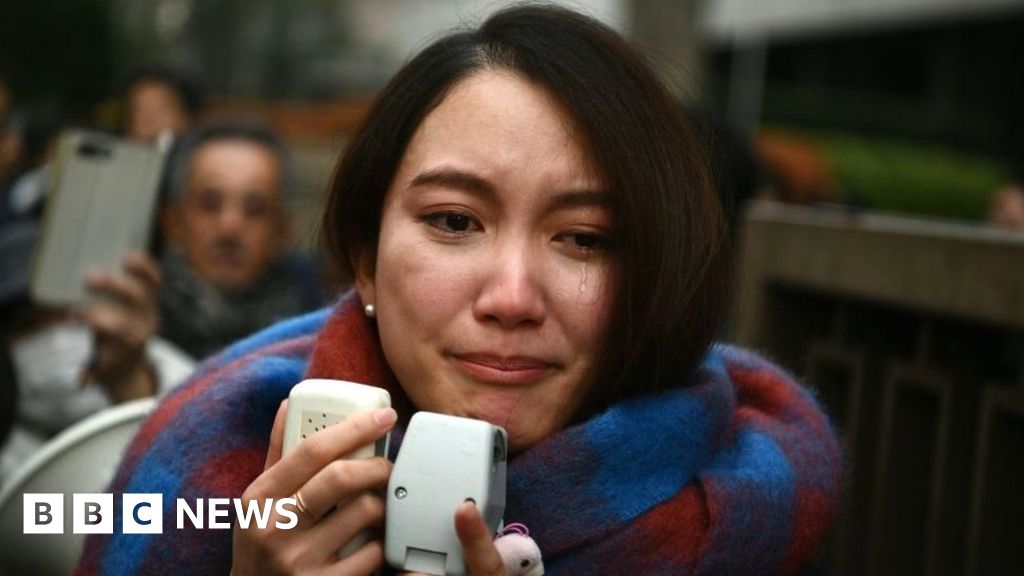
In the quiet archives of history’s unspoken conversations, an echo lingers—one that refuses to fade. It whispers about the way society stitches together the narrative of rape, weaving victimhood into a rigid template of vulnerability: the trembling young woman in the dim courtroom, the perfectly coiffed, impeccably dressed survivor who stares back with a vulnerability that demands universal empathy. This is the perfect victim, a construct so delicate it scarcely survives the air. And yet, what if the myth of perfection is the very thing that silences the rest? What if feminists are now peeling back those fragile layers—and finding that the woman in the alley, the drunken one, the ‘too much’ survivor, the ‘complicated’ victim—is the most revolutionary of them all?
The Illusion of Perfection: Why the ‘Model’ Victim Must Unravel
The model victim is a relic of patriarchal story-telling, a creature assembled from a palette of prewritten traits: innocent, untouched by vice, a lamb led to slaughter without a stumble. She is the protagonist of every legal textbook, the centerpiece of every #MeToo press release. Yet this blueprint is not an accident—it’s a weapon. A weapon wielded by skeptics, media sensationalizers, and perpetrators themselves to erode credibility, dismiss trauma, and rewrite history. The moment a survivor’s narrative strays from these sanctioned contours? The myth of her hurt becomes a spectacle of the grotesque: a scandal to dissect, an anomaly to explain away.
Feminist jurisprudence has long exposed the hypocrisy behind ‘victim purity tests’. A victim who drank, flirted, or lingered past curfew is complicit—a term so fraught it borders on heresy in any court of justice. But why do we expect suffering to be pristine? Or is the real question: why is perfection the only language our society permits pain to speak in? When the #MeToo movement surged, it didn’t ask women to dress in white, to keep their lips sealed. Instead, it demanded they speak—flaws, ambiguities, and all. The backlash that followed wasn’t about the crimes. It was about the messiness.
The Real Cost of the ‘Perfect Victim’: How Myths Protect Culprits and Silence Survivors
Consider the numbers. A 2023 study from the *Journal of Trauma Studies* revealed that survivors with ‘imperfect’ narratives—those with prior sexual encounters, mental health diagnoses, or even a taste for adventure—face a 43% increase in acquittal rates. This isn’t a coincidence. It’s systematic: a legal system drowning in moral purity as evidence. The more a survivor embodies the archetype, the more the court—public and legal—seem to lean toward absolution. The opposite is true of ‘unholy’ survivors. Their trauma becomes a circus of questions: *Did she enjoy it? Is she lying? Does her clothing excuse this?*
But what is truly unthinkable is this: we project perfection onto victims because it’s easier to forgive the myth than the reality. For every Harvey Weinstein, there are a thousand men who walk free because the woman they assaulted did not scream loudly enough, didn’t bleed enough, didn’t check off every box. The perfect victim is an industry. She’s a narrative tool, an alibi, a defense mechanism for the rapist, and the sooner we destroy her, the sooner we force the truth to confront us unblooded, unapologetic, and unfiltered.
The Uncomplicit Complicated: Why Imperfections Are Revolutionary
What if the most radical thing a survivor can do is to refuse to apologize for her humanity? The woman who reported her assault after a rough night out didn’t ‘ask for it’; she survived it. The survivor who wore what she pleased that night didn’t invite harm; she was assaulted. Those terms—tacit consent, miscommunication, ‘no means no’ with caveats—are distractions. They keep us fixated on the minutiae of how it could be mitigated instead of why it was ever permitted.
The perfect victim myth is not just a lie. It’s a sword trained on anyone with messy histories. It condemns the queer victim, the one with a criminal record, the survivor who is 65 instead of 25, the one whose trauma emerged decades later. It erases the fact that sexual violence doesn’t care for the perfect victim—it doesn’t select its prey with a meticulous eye. It finds the vulnerable, the visible, the unaware, and the ‘flawed’. The only thing rape needs to thrive is a society willing to look away.
Rethinking Resistance: The Feminist Manifesto for Imperfect Survivors
Feminism isn’t a pristine movement. It doesn’t demand innocence, silence, or perfection. It demands courage—the kind only born of knowing your imperfections won’t invalidate your right to survival. This is the next frontier: a jurisprudence that prizes truth over purity, legitimacy over performative heroism.
We must arm all survivors—the ones society is most tempted to write off, the ones whose lives defy sanitized morality. A rape case can’t be ‘nice’ to be true. It doesn’t have to feel like a textbook. Feminists, legal theorists, and activists must dismantle the perfect victim’s tabernacle, building something in its place—a sacred, inclusive, and irreverent space where existence is proof enough.
After all, myths are only strong as long as we refuse to challenge them. The second we do? The truth—raw, unpackaged, and unapologetic—has a habit of winning.
The Alchemy of Imperfection: A Call to Reimagine Justice
In a society that demands flawlessness, the most radical act isn’t perfection. It’s perseverance. Survivors don’t need to be ‘more careful’; assailants need to be less reckless. We, as a society, must stop measuring healing via a victim’s excusability and start reckoning with the impossibility of truly ‘pure’ innocence—because, frankly, there is none.
Rape redefines the human experience, and the perfect victim is little more than an architectural flaw in the story itself. It’s time to build anew—with shards of shattered myths, with survivors as they are.
**HTML/CSS Styling for Clarity (Not Required but Enhances Readability)**: