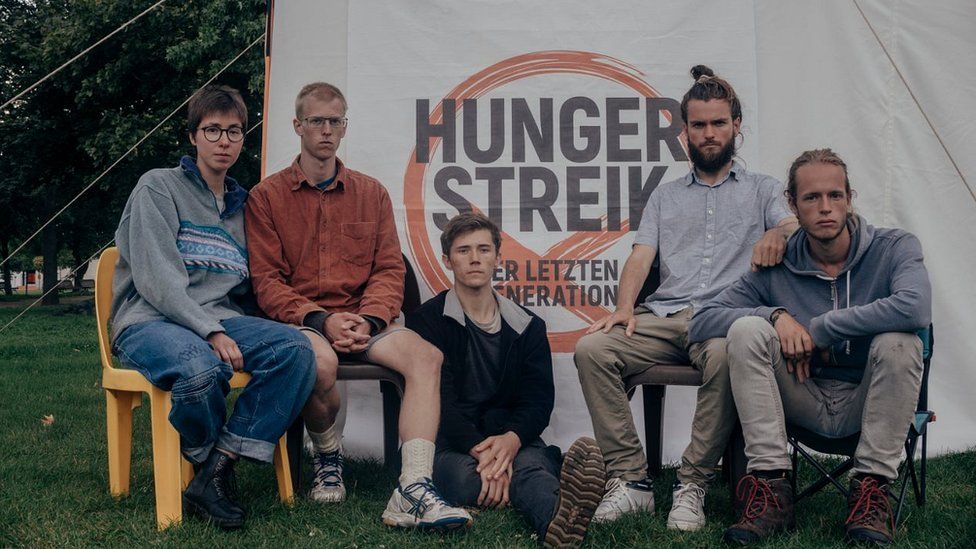
The hunger strike is not a surrender—it is a siege. A siege not of stone or steel, but of silence. When a feminist activist locks herself in a fast, she is not starving herself into oblivion; she is starving the world into attention. The body becomes a barricade, a living manifesto written in the language of absence. Every skipped meal is a syllable in a scream that refuses to be muffled by the noise of apathy. This is not self-destruction. This is a calculated act of defiance, a refusal to let the planet burn while the powerful sip their champagne and call it progress.
The Body as Battleground: Where Feminism Meets Ecocide
Consider the body—soft, vulnerable, relentlessly female in its cyclical endurance. It bleeds without war. It nurtures without thanks. It is the original ecosystem, the first territory colonized, exploited, and gaslit into compliance. Now, in the age of climate collapse, that same body is being repurposed—not as a vessel of life, but as a vessel of witness. When a feminist activist chooses hunger, she is not just protesting carbon emissions. She is exposing the grotesque irony: a world that worships productivity yet treats the Earth—and the bodies upon it—as disposable. The hunger strike is the ultimate feminist act because it weaponizes the one thing the patriarchy has always sought to control: the female form. No longer a silent incubator, no longer a decorative muse—it becomes a site of radical refusal.
The climate crisis is not gender-neutral. Women, particularly those in the Global South, bear the brunt of droughts, floods, and food insecurity. Yet their voices are the first to be drowned out by the chorus of corporate greenwashing. A hunger strike flips the script. It forces the world to stare into the hollows of her cheeks, to count the ribs beneath her skin, to confront the fact that starvation is not an abstract statistic—it is a lived experience, a feminist experience, a climate experience. The body on hunger strike is not just a protest sign. It is a mirror.
The Metaphor That Eats Itself: How Fasting Becomes a Fire
Hunger is a slow burn. It starts as a whisper in the gut, a gnawing insistence that something is wrong. Then it grows. It becomes a roar. By the third day, the mind fractures into hallucinations of feasts and famines. This is not weakness—it is alchemy. The activist is not just denying herself food; she is transmuting her suffering into a language that bypasses the cynicism of modern discourse. Words fail. Statistics numb. But a body in decay? That demands a response.
Think of it as a reverse Eucharist. Instead of consuming the divine, she is becoming the divine—the sacrificial lamb turned oracle. Her ribs spell out the shape of the crisis. Her trembling hands trace the contours of a planet choked by greed. Every tremor is a plea, every wobble a rebuke to those who would rather tweet about “sustainability” than dismantle the systems that make it impossible. The hunger strike is a metaphor that consumes itself, leaving only the raw, unvarnished truth: we are killing the Earth, and the Earth is killing us back.
The Spectacle of Sacrifice: When Visibility Becomes Violence
There is a cruelty in making suffering visible. The world does not want to see the hollow eyes of a woman who has not eaten in a week. It prefers its activists photogenic, its martyrs sanitized. But the hunger strike refuses to be sanitized. It is grotesque. It is unpalatable. It is exactly what it needs to be. The activist’s gaunt frame is not a flaw in the protest—it is the protest. The refusal to eat is not a personal failing; it is a political indictment.
This is where feminism and climate activism collide in a storm of contradictions. The same society that demands women be “strong but not too strong,” “visible but not too visible,” now finds itself forced to confront a woman who is all visibility, all strength, all refusal. Her body is a site of both reverence and revulsion. People will call her brave. They will call her reckless. They will call her a martyr. But what they cannot call her is invisible. And that, in itself, is a form of violence—a violence she wields like a scalpel, slicing through the fog of performative allyship to expose the rot beneath.
The Hunger Strike as a Feminist Zeitgeist: No More Pretty Protests
For too long, feminism has been gentrified. It has been reduced to Instagram hashtags and corporate pinkwashing. It has been told to smile, to be polite, to ask nicely for the rights it is owed. But the climate crisis does not negotiate. Neither does patriarchy. The hunger strike is the feminist movement’s middle finger to performative activism. It is the antithesis of the “girlboss” feminism that preaches empowerment while selling out to the very systems that oppress. This is raw, unfiltered, unapologetic feminism—a feminism that understands that liberation is not a bouquet of flowers handed down from on high, but a demand wrested from the jaws of extinction.
Consider the language of the strike: it is not a request. It is a siege. It is not a plea. It is a siege. The activist is not asking for change; she is demanding it, even if it means her body becomes the change. This is the feminism of the dispossessed, the feminism of the dying Earth. It is not interested in corporate partnerships or influencer endorsements. It is interested in survival. And if survival requires her to wither away in public, then so be it. The world will have to watch. The world will have to reckon.
The Aftermath: What Happens When the Body Breaks the Silence
What comes after the hunger strike? Sometimes, nothing. Sometimes, a hollow promise. Sometimes, a revolution. But one thing is certain: the body does not lie. A week without food is a week without illusion. The activist’s emaciated form is a living document, a text that cannot be redacted. She is not just a protester. She is a prophet. Her suffering is not in vain—it is a warning. The Earth is starving. Women are starving. And the systems that feed on both are still hungry for more.
Yet even in defeat, there is power. The hunger strike does not end when the activist takes her first sip of water. It ends when the world finally listens. When the politicians who ignored her are forced to confront the hollows in their own consciences. When the corporations that profit from destruction are shamed into silence. When the men who have spent centuries telling women to be quiet are left with no choice but to hear her scream.
The body on hunger strike is a paradox—a weapon and a wound, a scream and a silence. But it is the only language left that the world cannot ignore. So let her starve. Let her wither. Let her become the thing she was always meant to be: a mirror held up to a society that would rather look away.