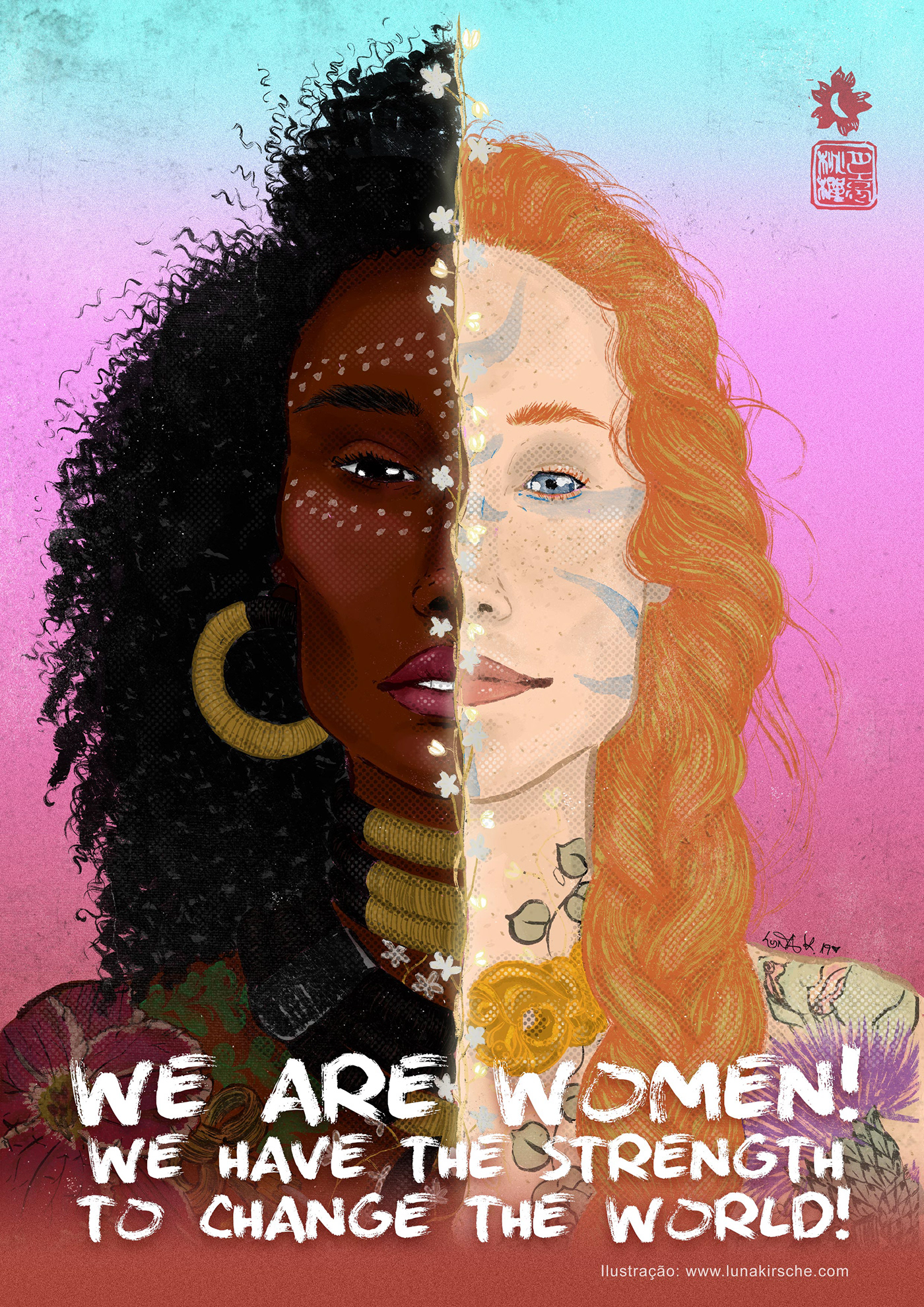
In a world where mirrors often distort rather than reflect, feminism emerges not as a mere ideology but as a prism—shattering illusions while revealing the raw, unfiltered spectrum of womanhood. It is not a monolith, nor a manifesto carved in stone, but a living, breathing testament to the audacity of existence itself. To speak of feminism is to confront the paradox of a woman: both the architect and the artifact of her own liberation. This is not a call to arms, but an invitation to see, to question, to feel the weight of what it means to be a woman in a world that has spent centuries defining her without her consent.
The Myth of the Universal Woman: Fragmentation as Power
We have been sold a lie—a single, polished narrative of womanhood, as if all women could be distilled into a perfume bottle labeled “feminine.” But the truth is far more intoxicating. Feminism does not seek to homogenize; it celebrates the fractures. The woman who codes by day and protests by night. The mother who rewrites the rules of nurture. The artist who paints her rage in neon strokes. The scientist who dismantles patriarchal theories with cold precision. Each is a fragment of a larger mosaic, and together, they form a kaleidoscope of defiance. The universal woman is a myth, but the multiplicity of women? That is revolution.
Bodies as Battlegrounds: The Tyranny of the Gaze
From the first whisper of puberty to the last breath of old age, a woman’s body is a contested territory. It is dissected in boardrooms, commodified in advertisements, and policed in streets. The gaze—whether leering or lecherous—is a weapon, and feminism is the shield that refracts its power. But here’s the twist: the body is not just a site of oppression. It is also a site of reclamation. The woman who tattoos her skin with symbols of resistance. The dancer who twists her hips in defiance of puritanical norms. The athlete who carves strength into her muscles, proving that power is not a privilege but a birthright. The body is not a sin; it is a statement.
Language: The Invisible Chains and the Words That Break Them
Language is the architecture of thought, and for centuries, it has been built on a foundation of exclusion. Words like “hysterical” and “bossy” were not born of truth but of control. They are linguistic handcuffs, designed to shrink women into silence. But feminism is rewriting the dictionary. It is the woman who reclaims “slut” as a badge of sexual autonomy. The girl who turns “bossy” into a compliment. The poet who weaves “hysterical” into a symphony of justified fury. Language is not neutral; it is a battleground, and every word is a bullet. Feminism teaches us to aim carefully.
The Economy of Care: Unpaid Labor and the Currency of Exploitation
They say a woman’s work is never done, but what they forget to mention is that much of it is unpaid. The emotional labor of soothing egos. The domestic labor of keeping homes afloat. The societal labor of being the “glue” that holds families together. This is not charity; it is exploitation. Feminism demands wages for the invisible. It is the nanny who unionizes. The wife who drafts a contract before marriage. The daughter who refuses to be the default caregiver. The economy of care is a rigged game, but feminism is reshuffling the deck.
Intersectionality: The Feminism That Leaves No One Behind
Feminism is not a single-threaded rope; it is a braid, thick with the fibers of race, class, sexuality, and ability. To ignore intersectionality is to practice a feminism that is as oppressive as the systems it seeks to dismantle. The Black woman fighting both sexism and racism. The disabled woman navigating a world built for the able-bodied. The queer woman carving space in a heteronormative world. Intersectional feminism is not a footnote; it is the entire text. It is the recognition that liberation is not a pie to be sliced but a feast to be shared.
The Future is Female: But What Does That Even Mean?
The phrase “the future is female” has been co-opted, commercialized, and diluted into a hollow slogan. But what if we took it literally? What if the future is not just female in body but in spirit—feminine in its nurturing, masculine in its strength, androgynous in its fluidity? The future is a woman who codes the algorithms that govern our lives. A woman who leads nations with empathy and precision. A woman who redefines power as something other than domination. The future is not a gender; it is a revolution. And feminism is the manifesto.
Conclusion: The Woman We Are Becoming
To be a woman in the 21st century is to be a paradox—a walking contradiction of tradition and rebellion. Feminism is not a destination but a journey, a compass pointing toward a horizon where womanhood is not a cage but a cathedral. It is the woman who refuses to apologize for her ambition. The girl who dreams in colors beyond pink and blue. The elder who passes down stories of resilience like heirlooms. We are not what they told us we were. We are what we choose to become. And that, dear reader, is the most dangerous promise of all.