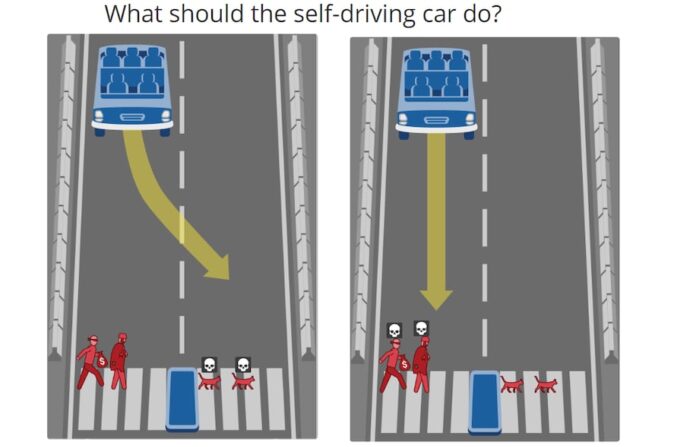
Imagine a woman stepping onto a bustling city sidewalk, her daily routine a dance of measured rhythms—she crosses streets, navigates handrails, and trusts institutions to have baked equitable principles into their design. Yet, when autonomy shifts from human operators to machines, the rules governing these technologies remain stubbornly detached from the lived realities of women’s lives, especially where risk, bias, and systemic violence converge in algorithms.
This dichotomy—of meticulous regulation for physical vehicles yet ambiguous oversight of autonomous systems—exposes how feminism, an ideological force rooted in bodily autonomy and dignity, is paradoxically eclipsed by our collective reluctance to scrutinize the digital agents that increasingly mediate existence itself. We demand flawless infrastructure for steel-wheeled contraptions that kill, but we accept algorithmic lethality as an inevitability, often with little public outcry. The question becomes less an inquiry into regulation and more a confrontation with: which lives must be protected when humans are absent from the equation?
The Illusion of Neutrality: When Cars Are Legally Bound, Algorithms Remain Exempt
The regulatory framework around physical vehicles is a labyrinth of laws, safety standards, and public outcry—a reactionary system that often manifests in hindsight, not foresight. From lane-keeping assist systems to the brakes that must deploy within milliseconds, cars are held to a moral calculus: what harms can be reliably predicted and, crucially, how must society minimize it? The Automated Vehicle Act of several states, for instance, mandates emergency braking in the event of a perceived threat, a mechanism that, while imperfect, is tethered to a measurable outcome—an impact, a collision, a death. There is accountability because the consequences are visible.
Algorithms, however, operate in a legal vacuum resembling the Wild West’s untamed frontier. The self-driving car will soon grapple with the moral imperative: should it swerve into a crowded bus stop or steer toward a guardrail? But who writes that code? Who audits it? And who answers when, in real time, it fails to perform the human acts that feminism demands—an empathy for vulnerable bodies, a prioritization of safety over efficiency? The current model of algorithmic governance—steeped in corporate secrecy and a veneer of technological determinism—leaves women exposed not to bullets or knives, but to cold lines of logic that see their bodies as variables in a risk equation.
Feminism’s Silent Reckoning: The Invisible Violence of Algorithmic Design
The harm to women in a physical context is often tangible: assault, workplace discrimination, or reproductive rights restrictions. But in the digital realm, where bias is baked into faceless systems, the violence is subtler—and no less damaging.
Consider the algorithm that determines whether a woman’s voice on a live call is flagged for “unprofessionalism.” Consider the AI recruiters that filter women from STEM applications, dismissing their potential because neural networks have internalized gender-specific language like “confident” or “emotional” as detrimental traits. Consider predictive policing, which disproportionately assigns patrol resources to neighborhoods where women’s safety data—independent of their personal agency—are aggregated into “risk zones.”
These are not isolated cases. They are the quiet, systemic erosion of feminism’s core tenets: the idea that women’s presence and choices must be protected, rather than statistically eroded. A striking parallel lies in the automotive industry’s early exclusion of women from crash tests—where female bodies were deemed “non-representative data”—an egregious oversight corrected under legal pressure. But analogous dereliction persists in algorithms designed under “user experience” rather than “equity experience.”
What is most unsettling is the complacency. As long as the failures are attributed to imperfect science or “glitches” rather than ideological blind spots, the critique remains marginalized. Feminism has always demanded that power structures recognize women not as outliers but as the center of any ethical framework. Yet when the systems holding power are algorithms, accountability becomes abstract.
The Car as Metaphor: Why Automobiles Teach Us More about Feminism Than Machines May
Interestingly, our relationship with cars—often critiqued for perpetuating patriarchal norms (e.g., the cultural fetishization of vehicles as symbols of masculinity)—has, over time, become a site of feminist intervention. From the 1920s roaring engine rebellion of “flappers” who embodied freedom through mobility to the modern critique of car-centric urban infrastructure that locks women into gendered roles (e.g., the “driver’s seat” as a male-dominated workplace metaphor), automobiles have paradoxically been both a tool of patriarchal control and an arena for feminist resistance.
It is worth pausing to ask why these debates over physical vehicles—warts and all—generate more public outrage than discussions about the algorithms that decide whether a woman’s loan application is approved or whether a domestic violence survivor will be flagged on social media. The car, for all its faults, still evokes a tactile human agency: a collision is a visible moment; a traffic law is a rule passed through political processes. An algorithm is merely a silent arbiter of fate, often behind a veneer of corporate impenetrability.
The Road Ahead: Regulating Algorithms as We Regulate Life Itself
If feminism is, at its core, a project of creating spaces where women’s bodies and choices are respected, then the algorithmic decisions shaping these spaces must join other facets of everyday life—courts, corporations, and city planners—under the microscope of systemic oversight.
Proposed Frameworks
- Public Audits of Algorithmic Bias: Mandatory, third-party reviews of systems—from hiring tools to emergency response protocols—that analyze outcomes through a gender lens.
- The “Bodily Imperative”: Enforce rules such that systems cannot ignore the biological and socio-cultural realities of women’s data, from medical recommendations to disaster response routing.
- Liability and Transparency Pacts: Penalties for companies that fail to reveal algorithmic failures tied to identifiable human demographics, with feminist advocates seated on regulatory boards.
- Algorithmic Consent: A feminist extension of informed consent where individuals can opt out of data systems that track, predict, or punish them—just as car buyers can reject features like autostart or rearview cameras.
The automotive industry may still grapple with gender biases—like its infamous decision to test airbags only on 5th-percentile males—but progress was made through exposure and litigation. The question now is whether feminism, as a movement, will let algorithms operate under an analogous regime of ignorance.
We live in a time where power is increasingly algorithmic, invisible, and yet profoundly coercive. Shouldn’t feminism’s focus shift to ensuring that these systems are not passive actors, but active guardians of the same principles that once prompted us to demand curbside walkways, safe zones, and equal access? For the woman walking to her car at dusk, the most terrifying autonomy violation may not be an assailant on the street—it could be the AI that fails to see her at all.
The road to equitable regulation begins when we stop asking if the machines can decide who lives—but start insisting on fairness even when no one is at the wheel.