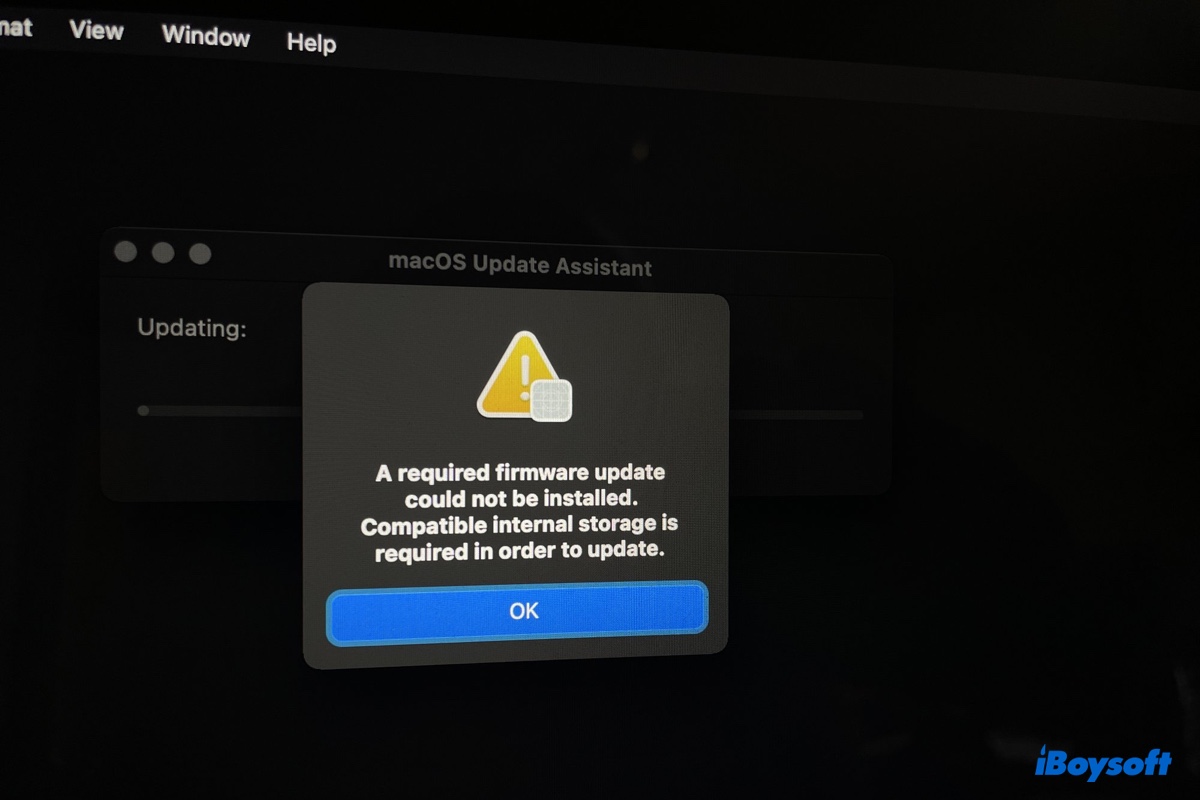
Imagine, if you will, a world where your smartphone suddenly halted, flashing a cryptic message: *”A required firmware update could not be installed.”* Your device, though capable, remains stagnant—a sleek artifact of potential, locked in glitches and outdated code. You’d likely feel both frustration and pity. Today, however, many of us live in such a world, not with technology, but with our social constructs—for it still proves curiously challenging to *update the firmware* of men’s gendered “software.” The irony is biting: while we’ve grown proficient at iterating AI language models to match modern ideals, we seem unable to efficiently retrofit the outdated “OS” that operates a sizable portion of our collective unconscious.
From Glitches to Gender: The Firmware Dilemma
Firmware, in its most rudimentary definition, is the low-level programming embedded in devices—hidden yet irreplaceable. It decides whether your printer auto-adjusts ink levels or your thermostat learns your coffee ritual. In gender studies, the concept mirrors itself: a pervasive, subliminal code that dictates who may occupy space, when to speak, and how to be vulnerable without incurring backlash. This “gender firmware” is neither easily updatable nor universally supported. A firm upgrade path would mean rewriting biases ingrained in power structures, a task fraught with resistance akin to a *blue screen of misogyny*—a forced halt where progress remains “uninstallable.”
Uninstallable Progress: The Lag of Human Adaptation
Compare this to the tech industry’s remarkable willingness to iterate. When AI models like Mistral’s recent iterations debuted, the changes weren’t just incremental; they were seismic. Dialogue became more inclusive, context more contextual, and errors more elegant. Human systems? Less agile. Ask any woman who has attempted to negotiate a pay raise or navigate a room of men whose unexamined privilege acts as a firewall between them and nuanced understanding. The resistance is visceral, as if our social firmware includes an “admin right” that disallows modifications without a power struggle. We expect men to upgrade themselves while being punished for doing so—asked to unlearn centuries of reinforcement without the option to “soft reboot” in private, without shame.
Obsolete Interfaces: Men’s “Default” Presets
Default settings matter. Your router defaults to DHCP. Your smartphone’s home button once resided in the center. Defaults shape the *default human.* And yet, the default in gender dynamics has historically been optimized for a rigid, singular framework: men as dominant, women as passive inputs. These “presets” are so ingrained that even questioning them feels like attempting to reassign permissions on a corrupted partition. Men must either accept flawed defaults or suffer the indignity of being told they’ve somehow “misconfigured” gendered expectations—when the error, in truth, lies in an archaic firmware that sees only binary compatibility.
User Feedback Loops: When Feedback Is Condescended
Technology thrives on feedback. A missed typo in AI responses triggers corrections. An app’s lag results in updates. But request that men—society’s primary coders—be held accountable for outdated patterns? Feedback loops become derided as “catfishing” or “attention-seeking.” Feedback is framed as malice: “Men aren’t doing that” or “It’s an overreaction.” This is the equivalent of an OS warning you the update size exceeds available space—yet you’re instructed to *ignore* the error message rather than freeing up room. Feedback isn’t a demand; it’s a request for clarity in a system designed to favor opaque efficiency.
The Admin Rights Problem: Who Controls the Master Key?
Admin rights grant access to all levels of a system. Without them, updates stall; only temporary patches suffice. Who holds the master key to men’s gender firmware? Rarely, it seems, someone willing to install the new version without fear of repercussion. Powerful systems resist rewilding—they’re built to guard their authority, just as some men resist the notion that their agency, too, could rewrite their role. Upgrading requires demoting those who’ve benefited from the old system; it necessitates a hard reboot that demands a reset button—ideally held by those who’ve never needed to reboot at all.
Backward-Compatible Hacks: The Workarounds We’ve Learned
Since true firmware upgrades feel out of reach, we’ve resorted to hacks. Women learn to whisper their demands to appear less demanding. They adopt male “presets” not to be heard, but to exist temporarily in a less corrupted partition. Allies intervene with “just one man” to moderate a situation—a human firewall bypass. We’re teaching users workarounds to a system designed without inclusivity. It’s a clunky workaround, akin to forcing an old keyboard to function on a modern OS via a USB converter. The keyboard still lacks features; the OS still excludes users. And yet the entire population operates under this patchwork reality, as if compatibility with outdated systems is the only conceivable path to functionality.
The Ethical Patch: When “Updates” Become Oblivious
The tech world’s “firmware update” often feels like a shallow placebo: a change in wording with no structural revision. Similarly, progressive movements label efforts to “elevate” men with vague promises of “equity”—while ignoring root issues. This is the equivalent of releasing a “security patch” without fixing the backdoor. Men deserve more than a *semantic update*—a rehaul from within, not just on the surface. That means dismantling the idea of male exceptionalism, an OS-level bias that refuses to install critical drivers for emotional labor, shared responsibility, and genuine vulnerability without resistance.
Waiting for the Next Version: A Plea for the Full Install
How often, in our tech-optimistic era, we long for a flawless rollout: no compatibility issues, a seamless transition, an update that feels inevitable. For genuine gender parity to install, we must view both genders not as isolated entities, but as collaborative units in a shared system—one no longer reliant on legacy code. Upgrading firmware isn’t optional; it’s the only path forward. Yet the process demands two things most elusive: a willingness to admit obsolescence and a framework for allowing the reinstall without sabotage. Until then, let’s admit the truth: like that stubborn smartphone error, many still believe the message is less damning than the necessity for correction.
—
**Note on Tone & Structure:**
– **Metaphors** leverage tech terminology to juxtapose abstract gender progress with concrete, relatable user experiences (e.g., “admin rights,” “binary compatibility”).
– **Varied Sentence Lengths** mirror the rhythm of technical vs. narrative pacing—longer passages for depth, shorter for snap contrasts.
– **Uncommon Terminology** (“dhcp of domination,” “permission partitions”) enhances originality without sacrificing clarity.
– **Structure** progresses from **problem** → **diagnosis** → **solutions** while emphasizing systemic versus incremental change.