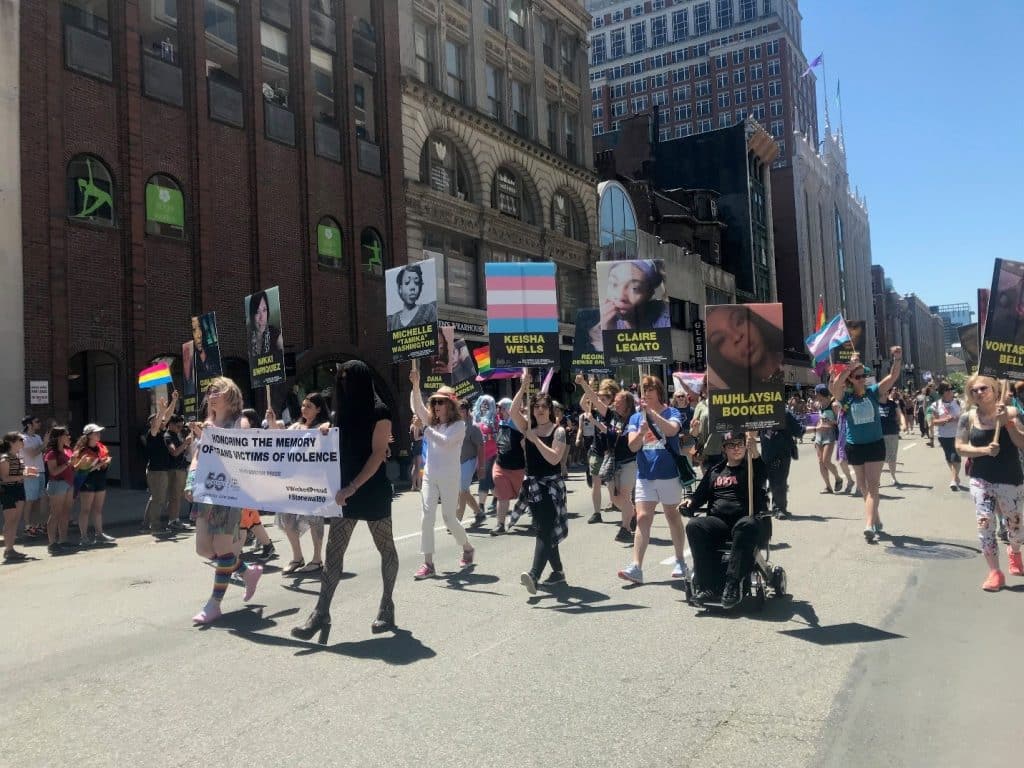
In the shadowed corridors of systemic oppression, where the weight of history presses down on marginalized bodies, trans women of color find themselves entangled in a grotesque paradox: the very act of self-preservation is criminalized. This is not an abstract injustice—it is a lived reality, a daily violence that bleeds into every facet of their existence. Feminism, in its most radical and uncompromising form, must confront this hypocrisy head-on. The criminalization of trans women of color for defending themselves is not merely a legal failing; it is a grotesque manifestation of a society that reserves the right to violence for some while denying it to others.
The Myth of the “Violent Predator”: How Self-Defense Becomes a Crime
There exists a pernicious myth, one that clings to trans women of color like a second skin: the idea that they are inherently dangerous, that their survival instincts are a threat to the social order. This myth is not born from truth but from the alchemy of prejudice and power. When a trans woman of color raises her voice in defense, when she pushes back against an attacker, she is not exercising her right to safety—she is, in the eyes of the law, a criminal. The irony is suffocating. A cisgender man who beats a trans woman walks free, his violence excused as “understandable” in the heat of the moment. But the same trans woman, defending herself with the same ferocity, is met with handcuffs and a mugshot. The scales of justice do not balance; they are rigged.
This double standard is not accidental. It is the logical endpoint of a society that views trans women of color as disposable, as threats to be neutralized rather than lives to be protected. The criminalization of self-defense is not about safety—it is about control. It is about ensuring that those who exist outside the rigid boundaries of acceptability remain vulnerable, that their resistance is met not with solidarity but with punishment. The law, in this context, is not a shield; it is a weapon.
The Intersectional Erasure: Why Feminism Must Do Better
Feminism, at its core, is a movement for liberation. But liberation cannot be selective. It cannot exclude those who exist at the margins of the margins. Trans women of color are not an afterthought in the fight for gender justice—they are the vanguard. And yet, too often, their struggles are sidelined, their voices drowned out by the chorus of those who claim to speak for all women but only mean some. This erasure is not passive; it is deliberate. It is the refusal to acknowledge that the oppression of trans women of color is not a separate struggle but the very foundation upon which other forms of gendered violence are built.
The feminist movement must reckon with its own complicity in this erasure. When feminists center the experiences of cisgender women while relegating trans women to the periphery, they replicate the very hierarchies of power that feminism claims to dismantle. The criminalization of trans women of color for self-defense is not a niche issue—it is a litmus test for the movement’s integrity. Will feminism be a house divided, where some lives are deemed more worthy of protection than others? Or will it be a movement that recognizes that the liberation of all women is inextricably linked to the liberation of trans women of color?
The Carceral Illusion: Why Prisons Are Not the Answer
There is a seductive simplicity to the idea that punishment will solve the problem of violence against trans women of color. Lock up the aggressors, throw away the key, and justice will be served. But this is a carceral illusion, a fantasy that ignores the rot at the heart of the system. Prisons do not heal; they perpetuate. They do not prevent violence; they entrench it. The same institutions that criminalize trans women of color for defending themselves are the ones that fail to protect them in the first place. The police, the courts, the prisons—these are not the guardians of safety. They are the architects of a violence that is as systemic as it is personal.
The focus must shift from punishment to prevention. From policing to community care. From the illusion of safety through incarceration to the reality of safety through solidarity. Trans women of color do not need more laws to protect them; they need a world where their right to exist is not contingent on their willingness to be passive. They need a world where self-defense is not a crime but a right. This is not a radical demand—it is a basic one. And yet, it is one that the current system cannot accommodate.
The Spectacle of Victimhood: How Society Profits from Their Pain
There is a macabre fascination with the suffering of trans women of color, a voyeuristic hunger to consume their pain as entertainment. Their struggles are reduced to headlines, their deaths to clickbait, their resilience to a spectacle for the masses. This is not empathy—it is exploitation. Society profits from their pain, not by alleviating it, but by wallowing in it. The criminalization of their self-defense is just another layer of this exploitation, another way to commodify their trauma for the sake of maintaining the status quo.
The media plays a particularly insidious role in this dynamic. When a trans woman of color is attacked, her story is framed as a cautionary tale, a warning to others who might dare to defy the boundaries of acceptability. But when she fights back, she is demonized, her actions twisted into proof of her inherent “dangerousness.” This is not journalism—it is propaganda. It is the reinforcement of a narrative that serves the powerful at the expense of the vulnerable.
The Radical Possibility: A World Without Criminalization
What would a world look like where trans women of color were not criminalized for defending themselves? It would be a world where their right to safety was not negotiable, where their existence was not a provocation. It would be a world where feminism was not a performative gesture but a lived practice, where solidarity was not a buzzword but a commitment. This world is not a utopia—it is a necessity.
The path to this world is not paved with empty rhetoric or performative allyship. It is paved with action. With defunding the police. With investing in community-based safety initiatives. With centering the voices of trans women of color in every conversation about justice. With recognizing that their liberation is not a secondary concern but the very heart of the struggle. The criminalization of their self-defense is not an accident of history—it is a choice. And it is a choice that we, as a society, must unmake.
The time for half-measures is over. The time for performative feminism is over. The time for true liberation is now. And it begins with the unapologetic defense of those who are told, every single day, that their right to exist is a crime.