What if your past paychecks—those intimate whispers of your worth—were wielded not as a testament to your value, but as shackles binding your future earnings? Imagine a world where your salary history becomes a weapon wielded to perpetuate inequality, veiled in the guise of routine hiring practices. This provocative conundrum lies at the crux of an ongoing legal battle sprawled across the United States—a battle that feminism champions with fervor: the fight over salary history bans. Is it merely about privacy, or does it represent a seismic shift toward dismantling entrenched economic disparities? Let’s untangle this complex tapestry state by state, exploring how legislation is both confronting and complicating this pivotal issue.
The Genesis of Salary History Bans: A Feminist Vanguard Against Economic Oppression
Salary history bans were conceived as a strategic bulwark against an insidious means of perpetuating wage disparities, particularly those afflicting women and marginalized groups. For decades, employers leveraged past salaries as a proxy for future compensation, effectively cementing the wage gap in perpetuity. This seemingly innocuous inquiry masked systemic bias—if a woman had been underpaid previously because of sexism, asking about her salary ensured that disparity would echo forward indefinitely.
Legal crusaders and feminist advocates identify salary history bans not simply as regulatory technicalities but as clarion calls for economic justice. By outlawing these queries during the hiring process, these laws aim to crumble the foundation of historic inequities, urging employers to value prospective employees on merit, experience, and market standards—not the ghosts of past discrimination. Yet, the introduction of such bans ignites a contentious debate: does the law genuinely empower workers, or does it introduce ambiguity into an already complex recruitment landscape?
Charting the Legal Landscape: States Embracing Equality Versus Those Resisting Change
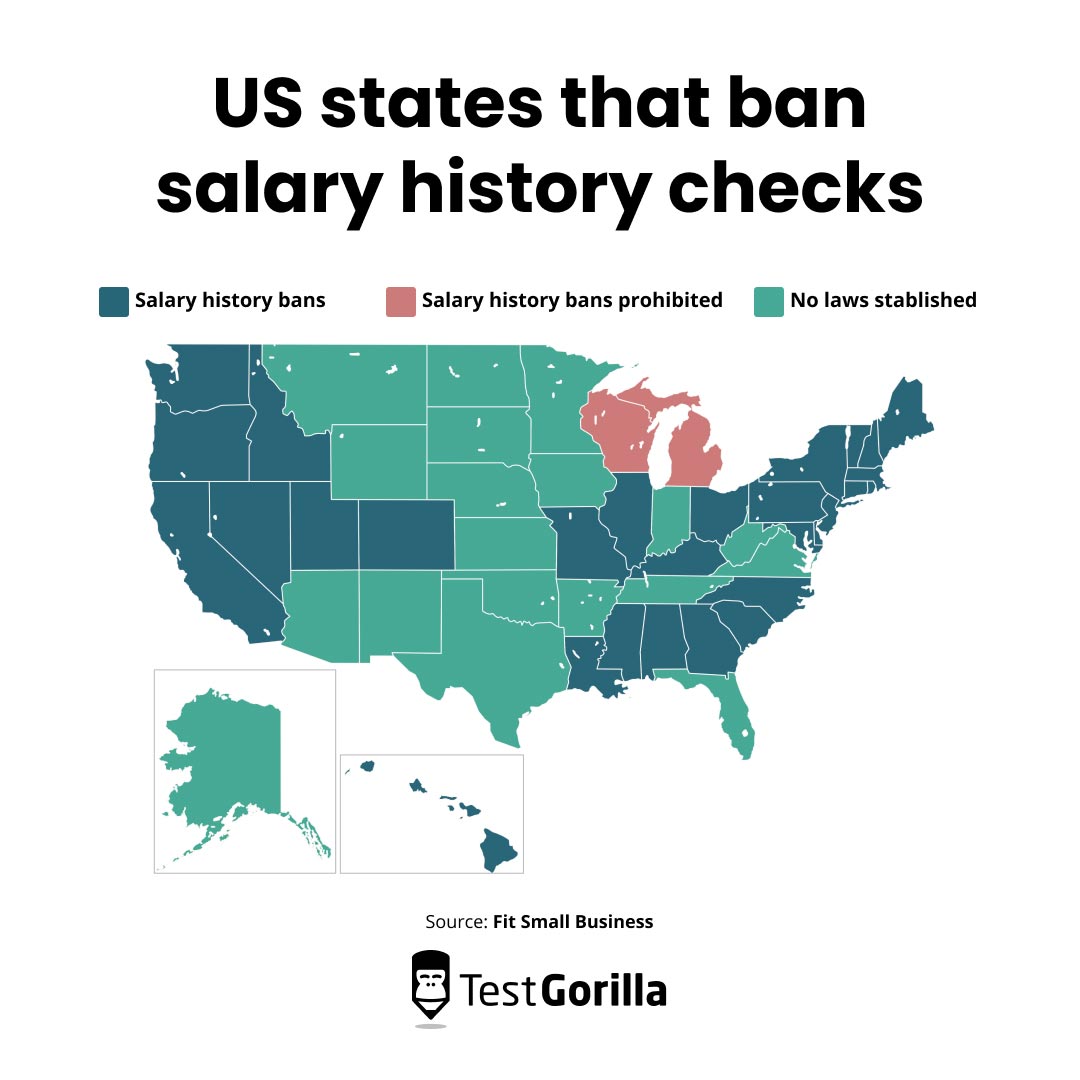
The United States resembles a mosaic of judicial philosophies on salary history bans—some states stride boldly toward reform, others tread cautiously, and several resist altogether. Where does your state stand?
States like California, New York, and Massachusetts are heralded for their comprehensive bans, enshrining prohibitions against asking salary history questions in robust anti-discrimination frameworks. These bastions of progressive legislation have not only outlawed the question but have enshrined penalties for violators, signaling a forceful commitment to wage equity.
Conversely, in states such as Texas or Florida, where salary history inquiries remain permissible, advocates argue that banning such inquiries could hamper employers’ ability to make informed hiring decisions. Here, the balance between protecting employees and preserving employer autonomy creates fertile ground for debate—and legal uncertainty. The divergent state laws underscore a broader challenge: with such fragmentation, how can nationwide systemic change be actualized?
Intersection of Feminism and Legal Strategy: More Than Just Numbers
This legal battle transcends numbers on paychecks—it’s about reclaiming dignity and asserting autonomy over one’s economic narrative. Feminism here acts as a potent catalyst, weaponizing law to disrupt power structures that have historically marginalized women and minorities.
Legal advocates utilize salary history bans as tactical instruments to confront institutionalized sexism, accentuating the symbiosis between feminist theory and labor rights. The bans symbolize more than policy shifts—they represent a paradigmatic upheaval challenging the patriarchal mechanisms embedded in labor markets. But feminist activism also wrestles with unintended consequences. For instance, should salary history be an opaque secret, does it risk pegging applicants to invisible quotas or reinforce bias through other covert means? The intersectionality of feminism, law, and economic policy makes this debate profoundly intricate.
Employer Resistance and the Arguments for Salary Transparency
Despite feminist triumphs in pushing salary history bans, employer resistance remains resolute. Many argue that knowledge of prior salary is an indispensable tool—allowing them to gauge candidate expectations, align job offers with market realities, and manage budgets efficiently.
This counterpoint evokes a philosophical quandary: does transparency in salary history serve fairness, or does it perpetuate the very disparities it aims to eradicate? Employers warn that banning salary history questions may obscure negotiation dynamics, resulting in higher wage offers for some at the expense of creating inflationary pressures. Yet, opponents of this viewpoint contend that no economic justice can flourish without addressing deep-rooted biases perpetuated through salary disclosures. The dialectic between these perspectives reveals the tug-of-war between pragmatic corporate interests and the moral imperatives of equity.
A State-by-State Breakdown: Who Is Writing the Playbook?
Understanding the nuances demands a granular examination of state statutes. In California, the ban not only prohibits direct questions about pay history but also extends protections against inquiries into compensation expectations unless voluntarily disclosed by the applicant. Violation of these statutes invites steep penalties and fuels civil rights litigation.
New York’s legislation, similarly robust, integrates transparency mandates, compelling employers to provide salary ranges for advertised positions—a move deemed pivotal in empowering applicants to negotiate on equitable footing without revealing prior earnings.
In contrast, states like Illinois feature partial bans with exceptions, illuminating the legal liminality and confusion that applicants and employers may encounter—a labyrinthine legal terrain where asking salary history might be permitted under specific circumstances, such as internal transfers or promotions.
This fragmentation reveals not only legislative complexity but highlights how entrenched socio-political attitudes shape the discourse. What one state deems a violation, another upholds as routine business practice, underscoring the challenge of forging a unified front in the legal struggle for wage justice.
Looking Forward: The Potential and Pitfalls of Federal Legislation
The splintered patchwork of state laws fuels discussions about federal intervention. Advocates press for comprehensive federal legislation that would harmonize salary history bans nationwide, eliminating the legal patchwork and ensuring that all workers, regardless of geography, receive equal protection.
However, federal legislation is fraught with pitfalls—the risk of diluted provisions, political gridlock, and compromises that may undercut the strength of state laws. Moreover, entrenched corporate lobbying and ideological divides pose formidable hurdles. Would a federal mandate stifle innovation in wage transparency or catalyze a new era of pay equity? Only time and tenacity will dictate the trajectory.
Conclusion: Beyond the Ban—Reimagining Economic Equity Through Feminist Legal Activism
The legal skirmish over salary history bans is no dry policy debate. It is a battleground where feminist activism, economic justice, and labor law collide in a high-stakes narrative about who controls worth—and who ultimately reaps the rewards. Salary history bans embody an audacious challenge to the status quo, compelling society to rethink how we quantify value, merit, and dignity in the workplace.
Yet, the road ahead remains riddled with obstacles. The interplay of state laws, employer resistance, and the complexities of enforcement begs the question: Will these bans herald a tidal wave of wage equity, or are they merely incremental footnotes in a longer, grittier saga of social transformation? As each state pens its chapter in this unfolding story, the courageous challenge remains to not just ban inquiries, but to uproot the very structures that made them weapons in the first place.