In the labyrinth of contemporary culture, the preoccupation with female beauty remains an omnipresent gaze, simultaneously celebrated and critiqued. This fixation is neither a mere accident nor a trivial obsession but a complex battleground where power, identity, and resistance intersect. The narrative of the “Beauty Myth,” as articulated by Naomi Wolf, collides intriguingly with the Foucauldian concept of the “panopticon,” inviting a profound reevaluation of how societal structures discipline female bodies and agency. This dynamic offers an incisive lens to unravel why beauty captivates, confines, and commands, illuminating the deeper machinery behind its allure.
The Beauty Myth: An Ideological Construct
The Beauty Myth encapsulates a pervasive ideology that insinuates female worth is inextricably linked to physical appearance. Yet, this myth extends beyond mere aesthetics to enforce a form of control that stifles women’s emancipation. It masquerades as empowerment but is fundamentally an instrument of oppression, retreating to more insidious methods as overt sexism dwindles under feminist advances. It thrives in the spaces where progress should have reclaimed freedom, using the pursuit of beauty as a disciplinary mechanism to maintain hierarchical structures.
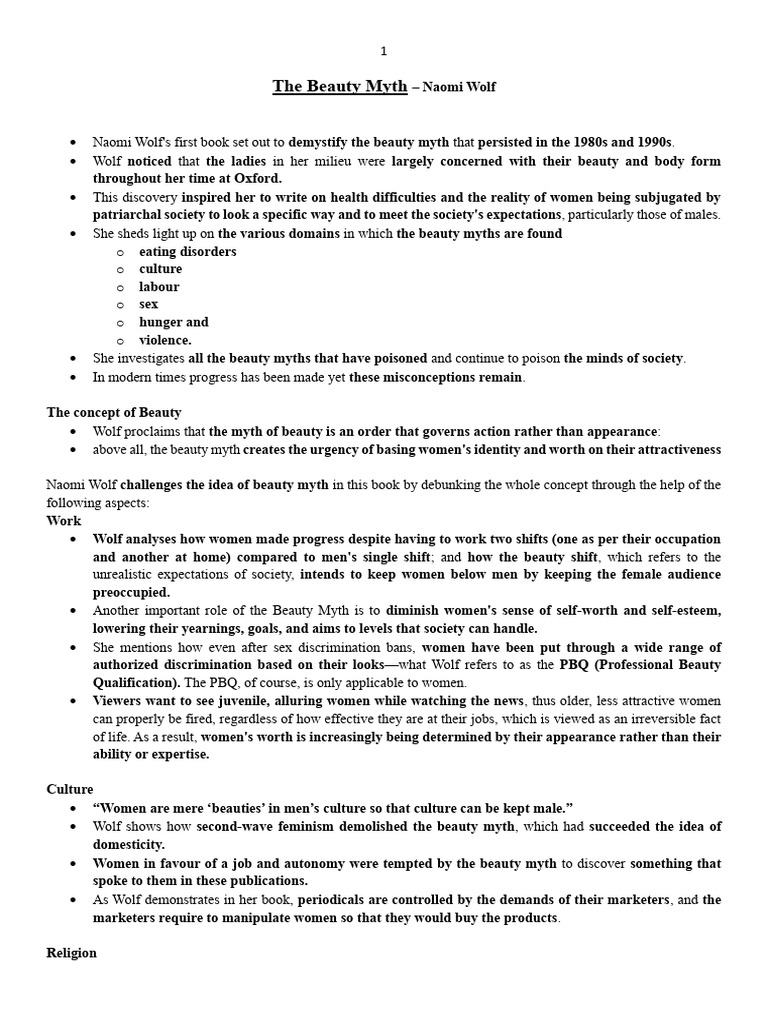
Wolf’s incisive critique delineates how this myth escalates the demand for perfection, crafting an unattainable archetype that perpetuates anxiety and self-surveillance among women. The insistence on beauty rituals thus becomes a form of bourgeois conformity, an apparatus that channels energies away from political or existential liberation toward self-policing and consumerist acquiescence. This mechanism ensures that beauty is both a carrot and a cudgel—enticing compliance while punishing deviation.
The Panopticon: Discipline and Surveillance in Feminist Thought
Michel Foucault’s conceptualization of the panopticon provides a potent metaphor for understanding how surveillance functions in the regulation of bodies. Originally a prison design allowing a single guard to observe all inmates without them knowing if they are watched, the panopticon embodies internalized control and perpetual monitoring. Translating this into feminist discourse unveils how patriarchal scrutiny perpetually watches and disciplines female behavior, grooming women into self-surveillance.
The panopticon transcends physical spaces to inhabit the socio-cultural realm. Women become simultaneously the watchers and the watched of their own bodies, managed through social norms that impose relentless observation. This results in a form of self-disciplining that echoes Foucault’s thesis on power—not as merely repressive but productive, shaping identities and possibilities within tightly bounded parameters. The shaping force of the panopticon seamlessly aligns with the mechanics of the beauty myth, both converging on the body as a site of power and resistance.
Intersecting Realms: Beauty Myth and the Beauty Panopticon
The confluence of Naomi Wolf’s beauty myth with Foucauldian panopticism is neither incidental nor superficial. The obsession with beauty operates as a social panopticon, where women are internalizing the singular gaze of society and policing their bodies to conform to a normalized beauty standard. This internal gaze is more powerful than external enforcement because it is omnipresent and ceaseless, engendering a state of psychic imprisonment.
Within this panoptic matrix, beauty dictates conduct, demeanor, and even aspiration. The constant awareness of being observed transforms self-care into self-surveillance. Rituals such as dieting, cosmetic procedures, and sartorial compliance emerge as acts not simply of vanity but of ideological compliance. They become defensive maneuvers against social sanctions and mechanisms of acceptance, loyalty to a structure that ironically promises liberation through conformity.
The Cultural Fascination: Unpacking Deeper Motivations
Why does the myth of beauty insistently fascinate despite its consequences? The answer dwells in the complexity of power relations and the human yearning for recognition. The beauty myth seduces because it promises something deeply coveted—visibility, value, and control over one’s social standing. Yet, this promise is fraught with contradictions. The beauty ideal is never fully attainable; it is designed to be elusive, ensuring an endless pursuit that perpetuates subjugation under the guise of self-improvement.
Moreover, within the depths of this fascination lies a paradoxical negotiation of agency. Conforming to beauty norms can be a strategic, albeit constrained, form of empowerment—offering women a semblance of control within the confines of systemic domination. This nuanced interplay reveals why rejecting the beauty myth outright is insufficient; the allure of beauty is simultaneously a site of coercion and potential reclamation.
Resistance and Reclamation: Beyond the Panopticon
Despite the pervasive power of the beauty myth and the invasive surveillance rituals it engenders, resistance germinates within these very frameworks. A Foucauldian feminist perspective recognizes power as relational and diffuse, leaving room for subversion and redefinition. Women, by reclaiming their bodies and aesthetics on their own terms, challenge the dictates of the beauty panopticon.
This resistance can manifest in myriad forms—from radical body positivity and diverse representations to the subversion of beauty norms through art, fashion, and activism. By exposing the constructed nature of beauty, these interventions disarm the myth’s stranglehold and complexify the discourse beyond simplistic binaries of victimhood and compliance.
Conclusion: Navigating the Labyrinth of Beauty and Power
The intersection of the beauty myth and the Foucauldian panopticon offers a profound framework to understand the persistent allure and control of female beauty standards. It invites an intellectual reckoning with how power permeates even the most intimate spheres, transforming the quest for beauty into a tangled web of discipline, desire, and resistance.
Unraveling this web demands vigilance—not just toward societal gaze but introspective critique of how women internalize and navigate these forces. The challenge lies in forging paths that break the cycle of surveillance without erasing individual agency, recognizing beauty as both a social construct and a potential canvas for subversion. In this delicate balance lies the future of feminist engagement with the ever-shifting contours of identity and empowerment.