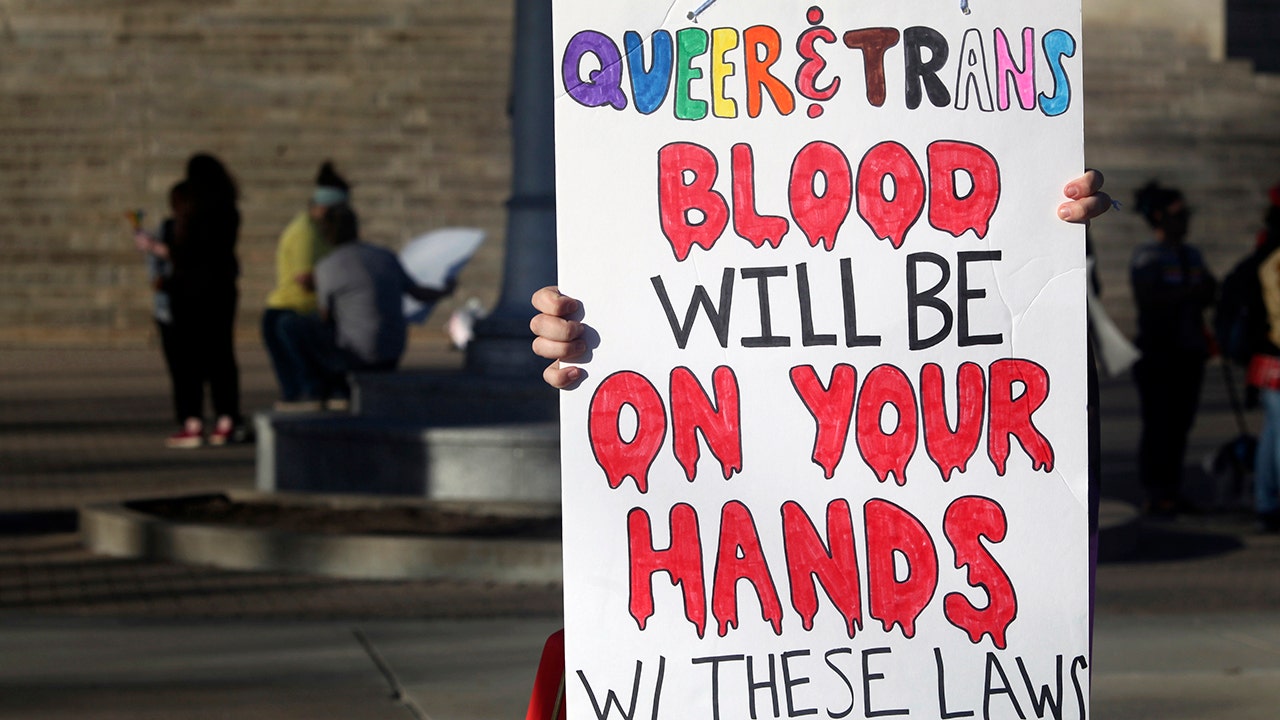
What if I told you that the most urgent feminist battle of our time isn’t just about smashing the patriarchy—but about defending the very existence of trans lives against a creeping, insidious erasure? Feminism, at its core, has always been a movement of liberation, a relentless dismantling of oppressive structures that cage bodies, minds, and identities. Yet today, we find ourselves at a paradoxical crossroads: while some feminists rally against the genocide of trans people, others—whether through ignorance, fear, or outright hostility—become unwitting foot soldiers in a campaign of violence. The question isn’t just whether feminism can afford to ignore trans genocide. It’s whether feminism can afford *not* to stand as its most formidable adversary.
The Feminist Imperative: Why Trans Lives Are Not a Side Note
Feminism has never been a monolith, but its most radical iterations have always recognized that oppression is intersectional. The same systems that police women’s bodies—capitalism, white supremacy, heteronormativity—also target trans bodies with a particular ferocity. To claim feminism is only about cisgender women is to amputate its revolutionary potential. Trans women, in particular, face a grotesque double bind: they are both hypervisible as targets of violence and systematically erased from feminist discourse. When feminists dismiss trans rights as a “distraction,” they betray the movement’s foundational ethos—that no one is free until everyone is free.
Consider the language of “genocide.” It’s not hyperbolic. Trans people, especially Black and Indigenous trans women, are being hunted. The statistics are staggering: in the U.S. alone, 2023 saw a record number of trans murders, with 94% of victims being women of color. These aren’t isolated incidents; they’re part of a coordinated assault fueled by anti-trans legislation, media demonization, and state-sanctioned bigotry. Feminism, if it is to mean anything, must recognize that this is not a “trans issue”—it’s a feminist issue. The erasure of trans lives is the erasure of feminist futures.
The Paradox of Feminist Complicity: When Allies Become Enemies
Here’s the uncomfortable truth: some of the most vocal opponents of trans rights wear feminist labels like a badge of honor. TERFs (Trans-Exclusionary Radical Feminists) have hijacked feminist rhetoric, repurposing it to justify transphobia under the guise of “women’s rights.” They argue that trans women threaten cis women’s spaces, that gender is a biological prison, that inclusion is a slippery slope to annihilation. But this isn’t feminism—it’s a reactionary backlash dressed in radical drag. Real feminism doesn’t build walls; it tears them down.
The irony is delicious, if not tragic. TERFs claim to protect women, yet their rhetoric mirrors the same oppressive logic that has historically justified violence against women. They reduce trans women to predators, ignoring the fact that trans women are far more likely to be victims of violence than perpetrators. They weaponize the language of safety to exclude, when true safety comes from solidarity. And in doing so, they reveal the fragility of their own feminism—a feminism that crumbles when faced with the radical possibility that liberation might require sharing power, not hoarding it.
The Global Stage: How Anti-Trans Violence Mirrors Feminist Struggles
This isn’t just an American problem. Across the globe, trans people are under siege. In the UK, the government has rolled back protections for trans youth. In Hungary, trans people are legally erased. In Brazil, trans women are murdered at alarming rates, their deaths met with indifference. These aren’t isolated incidents; they’re part of a global epidemic of transphobia, one that feminists ignore at their peril. Because here’s the thing: the same forces that target trans people also target women. Misogyny and transphobia are two sides of the same coin, and the coin is called patriarchy.
Feminism must ask itself: what good is a movement that fights for women’s rights while leaving trans women to the wolves? The answer is none. A feminism that excludes trans women is a feminism that has already failed. It’s a feminism that has internalized the very hierarchies it claims to dismantle. And it’s a feminism that will never achieve true liberation, because liberation is not a zero-sum game. You cannot free women by oppressing others. You cannot dismantle the patriarchy while propping up its most brutal enforcers.
The Challenge: Can Feminism Survive Its Own Hypocrisy?
So here’s the challenge, posed not as a rhetorical flourish but as a gauntlet: Can feminism evolve, or will it fossilize into irrelevance? The movement stands at a precipice. On one side, there’s the path of radical inclusion, where trans women are not just tolerated but celebrated as the vanguard of feminist revolution. On the other, there’s the path of stagnation, where feminism becomes just another tool of oppression, a movement that fights for some women while abandoning others.
The choice is stark. Feminism can continue to be a force for liberation, or it can become a relic of a bygone era, clinging to its own exclusions like a drowning man to driftwood. The latter path is not just morally bankrupt—it’s strategically suicidal. Because the enemies of feminism are already sharpening their knives. They see the cracks in the movement’s foundation and are eager to exploit them. If feminism cannot stand united against trans genocide, it cannot stand at all.
The Way Forward: Solidarity as the Ultimate Feminist Weapon
So what’s the solution? It starts with listening. Not the performative allyship of virtue-signaling, but the deep, uncomfortable work of unlearning. It means challenging the TERFs in our spaces, calling out transphobia wherever it rears its head, and centering trans women’s voices in feminist discourse. It means recognizing that the fight for trans rights isn’t a distraction—it’s the litmus test of feminism’s integrity.
And it means embracing a radical redefinition of womanhood. Womanhood isn’t a biological fact; it’s a political identity, one that has always been fluid, contested, and expansive. To exclude trans women from that definition is to betray the very essence of feminism. The movement’s greatest strength has always been its ability to evolve. It adapted to challenge capitalism. It adapted to confront racism. Now it must adapt to defend trans lives—or risk becoming a footnote in history.
Feminism is not a museum piece. It’s a living, breathing force for change. And if it’s going to survive, it must stand against the genocide of trans people—not as an afterthought, but as its defining battle. Because in the end, there is no feminism without trans feminism. There is no liberation without trans liberation. And there is no future worth fighting for that leaves anyone behind.