What if I told you that the most radical act of love isn’t a grand gesture, but a single, whispered word? Not just any word—*yes*—spoken with clarity, enthusiasm, and the unshakable confidence that it will be heard, respected, and never assumed. This isn’t poetry. It’s the bedrock of affirmative consent, the legal and cultural revolution that’s reshaping how we understand power, pleasure, and autonomy in intimacy. Welcome to the era of ‘Yes Means Yes’—where the absence of a ‘no’ is no longer enough, where silence is not compliance, and where the burden of proof shifts from the survivor to the perpetrator. Buckle up. This isn’t just a law. It’s a reckoning.
The Genesis of a Paradigm Shift: Why ‘No’ Was Never Enough
For decades, the legal and social framework around consent operated under a grimly permissive logic: if someone didn’t say ‘no,’ it was assumed they meant ‘yes.’ This ‘No Means No’ standard, while a step forward from outright coercion, was a flimsy shield against the insidious nature of sexual violence. It placed the onus on victims to resist, to scream, to fight—while predators exploited ambiguity, power imbalances, and the crushing weight of societal gaslighting. ‘She didn’t say no’ became the refrain of rapists, the alibi of abusers, the excuse of institutions too lazy to demand better.
Enter ‘Yes Means Yes’—a seismic shift that flips the script. No longer is consent a passive absence of protest; it’s an active, enthusiastic, and continuous agreement. This isn’t just semantics. It’s a demand for mutuality, a rejection of the idea that desire can be extracted like a confession under duress. The law doesn’t just protect bodies; it dignifies them. It says: your pleasure matters, your boundaries are sacred, and your silence is not an invitation. But here’s the rub: this revolution isn’t just about changing laws. It’s about dismantling the toxic myths that have normalized coercion for centuries.
The Legal Alchemy: How ‘Yes Means Yes’ Transforms Power Dynamics
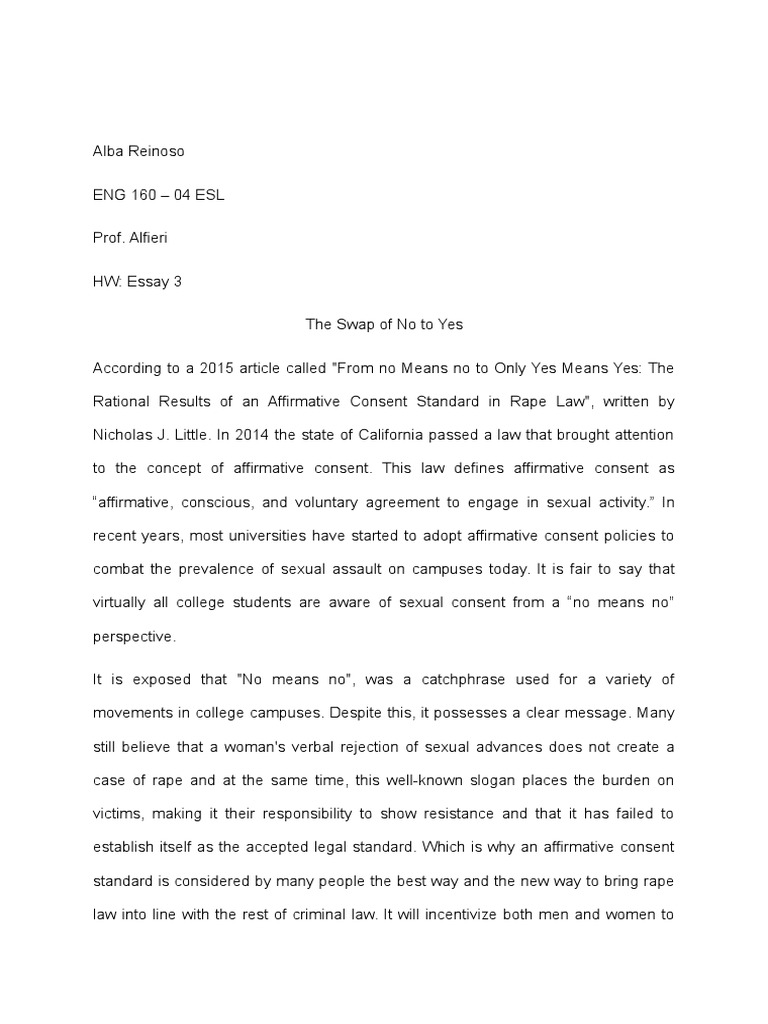
Legislators didn’t conjure this change from thin air. They responded to a groundswell of survivors’ testimonies, the tireless work of activists, and the undeniable truth that ‘No Means No’ was a legal loophole big enough to drive a culture of impunity through. California’s SB 967, passed in 2014, was the first to codify affirmative consent into state law, mandating that ‘an affirmative, conscious, and voluntary agreement to engage in sexual activity’ must be present. Other states and countries followed, each tweaking the language but keeping the core principle intact: consent is not a one-time checkbox but a dynamic, ongoing dialogue.
But here’s where the law gets interesting—and where the pushback begins. Critics argue that ‘Yes Means Yes’ sets an impossibly high bar, that it turns every sexual encounter into a bureaucratic nightmare of verbal contracts. They ask: what about the spontaneity of desire? The unspoken understanding between lovers? The messy, human reality of attraction? To them, I say: if your idea of intimacy requires coercion to function, then the problem isn’t the law. It’s your imagination. Consent isn’t the enemy of passion; it’s its foundation. A ‘yes’ that is coerced is not consent. It’s a violation dressed in the language of romance.
The Cultural Rubik’s Cube: Unlearning the Scripts of Coercion
Laws can change in a legislature. Cultural norms? They’re the slow-burning fires of generational conditioning. ‘Yes Means Yes’ isn’t just a legal standard; it’s a cultural reset. It challenges the scripts we’ve internalized: the idea that persistence is romantic, that ‘playing hard to get’ is a virtue, that a drunk person’s ‘maybe’ is a green light. These aren’t harmless tropes. They’re the scaffolding of rape culture, the excuses that let predators walk free while survivors are blamed for their own assaults.
So how do we unlearn these scripts? Education, for starters. Comprehensive sex education that teaches enthusiastic consent as the default—not as an afterthought. Media that portrays sex as a collaboration, not a conquest. Art that refuses to glorify the ‘alpha male’ who wears down resistance until it crumbles. And yes, awkward conversations with friends, partners, and even strangers about what ‘yes’ looks like in practice. Because here’s the truth: most people don’t know how to ask for consent. They’ve never been taught. And that’s not their fault—but it is their responsibility to learn.
The Paradox of Enthusiasm: When ‘Yes’ Isn’t Enough
But wait. If ‘Yes Means Yes’ is the gold standard, what happens when the ‘yes’ is given under pressure? What if the ‘yes’ is whispered because the alternative is worse? What if the ‘yes’ is a performance, a way to avoid conflict or violence? Here’s the uncomfortable reality: consent can be given and still be invalid. If the power dynamic is skewed—if one person holds financial, emotional, or physical leverage over another—then ‘yes’ is not free. It’s transactional. It’s survival. And survival is not consent.
This is where ‘Yes Means Yes’ intersects with intersectional feminism. Because marginalized people—women, people of color, LGBTQ+ individuals, disabled folks—face unique barriers to saying ‘no.’ Their ‘yes’ might be the only currency they have in a world that already devalues them. So the law must account for these power imbalances. It must recognize that not all ‘yeses’ are created equal. And it must demand that those in positions of privilege—whether social, economic, or institutional—prove that their partner’s ‘yes’ was given without duress. Because a ‘yes’ given in fear is not consent. It’s a hostage note.
The Backlash: When Revolution Feels Like Oppression
Of course, no revolution is complete without a backlash. Critics of ‘Yes Means Yes’ warn of a dystopian future where every sexual encounter requires a notarized affidavit. They claim the law will criminalize normal behavior, turn lovers into suspects, and reduce intimacy to a legal minefield. Some even go so far as to call it a ‘war on men’—as if the right to pleasure were a zero-sum game, and women’s autonomy were the spoils of some patriarchal turf war.
To these critics, I offer a simple question: if you’re more concerned about the hypothetical inconvenience of asking for consent than you are about the very real trauma of being assaulted, then you’ve already lost the argument. The law isn’t here to police desire. It’s here to protect the vulnerable. And if your desire relies on someone else’s silence, then your desire is not worth defending.
The Future We’re Building: A World Where ‘Yes’ is the Only Answer
So where do we go from here? The fight for affirmative consent is far from over. It requires vigilance, education, and a willingness to confront the uncomfortable truths about power and pleasure. It demands that we hold institutions accountable—universities, workplaces, governments—that have long enabled abuse under the guise of ‘boys will be boys’ or ‘she was asking for it.’ It means centering the voices of survivors in policy-making, in media, in every conversation about sex and consent.
But here’s the beautiful thing: ‘Yes Means Yes’ isn’t just a legal standard. It’s a cultural aspiration. It’s the promise of a world where sex is joyful, where boundaries are respected, where pleasure is mutual. It’s the radical idea that no one should ever have to justify saying ‘no’—and that a ‘yes’ should never be taken for granted. So let’s build that world. One enthusiastic ‘yes’ at a time.