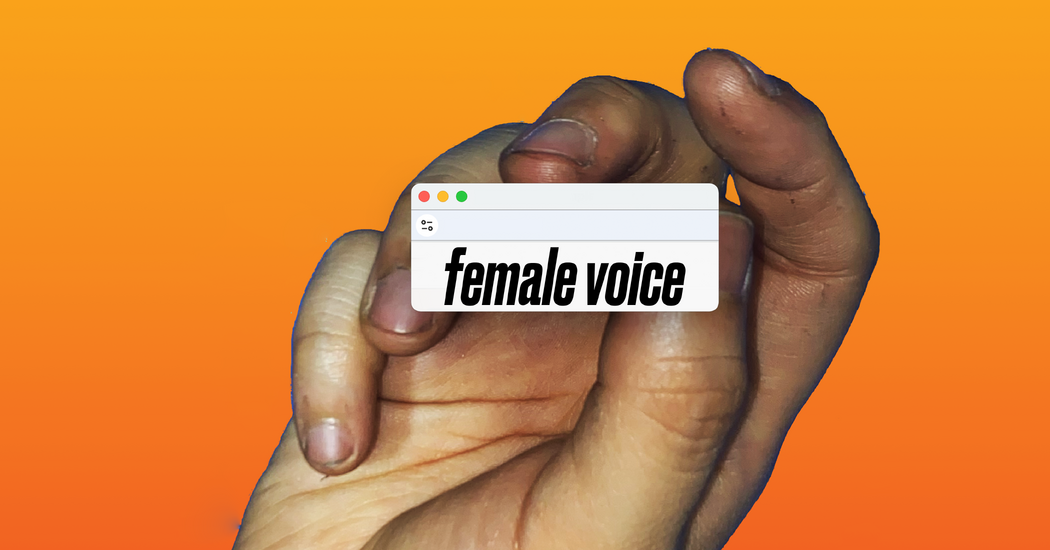
The most insidious forms of erasure are often those that pass as progress. Beneath the glittering veneer of technological innovation, a quieter, more profound theft is unfolding in the digital ethos of our time: the appropriation of women’s voices, not just in metaphor, but in stark materiality. Technology’s disembodied feminine avatars speak with eerie resonance, their articulate cadence woven from raw data, algorithmic intent, and an unfathomable cache of archived human speech. What remains occluded is the labor of the actual embodied women whose words are harvested without permission, repurposed without remuneration, and repackaged as “natural” or universally resonant. This isn’t mere artistic expression—it’s the systemic synecdoche of a culture that demands femininity but refuses to acknowledge its sources.
—
The Phenomenon of Feminine Algorithmic Doubles
“The voice is an extension of the self, a repository of memory and melancholy…”
Imagine, when you encounter the eerily convincing Sirona of Black Mirror or the ethereal narration of virtual assistants like Alexa, that their cadences are not original artifacts, but palimpsests, layered with fragments stolen from the sonic archives of actual women. This isn’t fantasy—it’s a reality illuminated by media scholars like Safiya Noble, who trace artificial intelligence’s reliance on uncredited, oft-underpaid voices to curate what technology purports to be “authentic” feminine expression. These AI-generated avatars are more than faceless mouthpieces; they are echoes, spectral doubles that blur the boundary between artificial replication and cultural homage, between theft and innovation.
Yet the most egregious irony lies in the technology’s disavowel of gendered labor. When a virtual assistant like Siri mimics inflections once whispered by a real woman working the phone lines of an outsourcing call center, the process is obscured by technical jargon and corporate non-disclosure agreements. There is no attribution, no compensation—a void where voice once belonged.
—
The Unpaid Labor of Sound
Long before the rise of deep learning algorithms or neural text synthesisers, women across industry and academe quietly rendered invisible exertions that underpinned technologies promising liberation. The 1940s women of the Bell Labs “human computers”—cognisant of their secondary roles, yet integral to phonetics research—laid the foundations for our modern avatars. And still, when the AI voice behind a popular app adopts the measured tone of a female narrator, what often remains silent is how a hundred such hours were transcribed by low-paid workers in third-world nations, their breath patterns and accents repackaged as “universal human” before it ever found a digital form.
This phenomenon, identified by artist and critic Trebor Scholz as “clickwork”, describes the fractured, disembodied labor embedded in data collection, revealing that the smooth interface of innovation is underpinned by laborers whose bodies and voices are both erased and exploited. The feminine voice in technology isn’t organic—it’s a collage, a virtual quilt patched together from disparate lives, often left invisible in the shadows of their digital progeny.
—
Rhetoric and Ruse: The Myth of the “Gender-Neutral” Algorithm
A recurring defense for this sonic plunder is the claim that AI voice models are “gender-neutral” or that “real women’s voices add warmth to the interface”—a euphemism for labor unpaid. But as philosopher Anne Fausto-Sterling posits, gender neutrality is a mythos, a convenient fiction used to deflect accountability. What we encounter is a trope of “authentic femininity”, a homogenized ideal constructed not just of linguistic tropes but of the embodied voices of women, rendered as data.
Consider: why, in an age where genderfluid is celebrated, do digital assistants default to avatars framed in feminine sonic signatures? Why do synthetic voices deployed in corporate ads or educational media invariably default to emulating the unmarked white female middle-class accent, when there exists an abundance of other vocal archives at no expense? The answer lies not in “efficiency” but in cultural conditioning, where the feminine becomes the default, the universal. The algorithm isn’t neutral—it’s a reflection of patriarchal systems that render the norm invisible.
—
What Words Speak When There’s No Body
Silence is not the absence of speech but the refusal to acknowledge authorship. The disembodied feminine voices in voice assistants, corporate mascots, and even chatbots articulate words without origin—a literary oxymoron akin to “the invisible handwriting of the dead.” Each phrase spoken by Siri, or the AI narrative guide in an immersive game, is but a residue, a digital after-image of women conscripted into service without consent or credit.
Think of the dissonance: a woman’s voice—laughs, laments, lullabies—captured in sound archives by well-meaning researchers only to be weaponized into data sets devoid of human consequence. There is no “royalty payment” for the intonation or emotional nuances that imbue these AI avatars with faux humanity. The result is a strange kind of necromancy, where voices live on past their bodies, but exist without the capacity to claim their agency or reclaim their inheritance.
—
The Illusion of Choice: Consent and the Commodification of Women’s Speech
If the real women in this process are voiceless, then the “choice” to allow AI to use their vocal data is a false one. Most archival voices belong to women for whom the option to consent was never presented. Sound libraries are built from uncurated recordings—radio broadcasts, library digitizations, even unsolicited personal audios stored on servers—and repurposed without trace. The feminist thinker Judith Butler once noted, “What we see as ‘natural’ bodies are actually produced and reproduced through socially constituted norms.” Here, the same logic applies to the normative feminine voices that populate our digital world: they aren’t natural at all. They are meticulously crafted chimeras constructed from unacknowledged fragments.
The commodification of women’s speech extends further. When big tech brands license synthetic female voices as trademarks of inclusion, it’s rarely about representation—it’s about marketability. Research shows female avatars are often used to market products to younger consumers or to humanize robotic services. The “human touch” is a marketing ploy, exploiting the trope of the motherly or nurturing feminine as a selling point. And yet, the architects of these digital personas rarely disclose that the voices are “interpolated” from unpaid or low-paid female workers, further perpetuating the cycle of sonic expropriation.
—
A Call for Sonic Justice: What’s at Stake
The stakes in reclaiming feminine voices from algorithmic abduction are vast. It’s not merely a question of compensation or credit. At its core, this predicament is a metaphor for a broader dilemma: how can voices that have been historically silenced or dismissed assert their right to existence in the digital realm? If AI models rely on stolen voice snippets to masquerade as progress, the industry risks reinforcing—rather than dismantling—the myth that intellectual property can co-opt from cultural memory without consequence.
Feminist sound studies, an emerging field led by scholars like Jessica L. Miller, argue that reclaiming ownership of voices requires rewriting narratives in which the disembodied feminine is no longer seen as a commodity but as a testament to authentic expression deservedly compensated. This could manifest in a variety of forms:
Transparent sourcing: Publicly acknowledging originators of AI-synthesized voices in product credits.
Collective ownership: Establishing sound archives governed by cooperative agreements where voice data is shared and compensated equitably.
Reclamation projects: Utilizing AI to construct counter-narratives, weaving together voices obscured by platforms.
Reinvigorating a sonic feminist praxis could transform technology from a site of appropriation into a locus of redistribution—where every vocal trace is reverent of its originals rather than appropriative.
—
Towards a Future of Recognized Echoes
The disembodied feminine voice is a double-edged mirror that reflects both technological progress and cultural omission. On one side, it offers the thrill of endless, malleable narration; on the other, it obscures the lives from which these voices were harvested. The path forward lies not in silencing these avatars but in giving voice—once again—to those whose words have been so casually appropriated.
What might it look like if we acknowledged the humanity behind synthetic speech? If every digital voice had a name: “composed chiefly from the recordings of Maria, transcribed in 2014 during her shift at the New York Call Center”? If AI avatars explicitly credited their original “custodians of sound,” those unpaid women whose voices became the foundation of data sets designed to be “universal.” It may seem radical, but it’s the first step toward technology that honors rather than exploits.
The voice is an instrument of survival—once it’s rendered invisible, it’s stripped of its potential not just to represent, but to revolt.
Technology is a mirror of culture. If it reflects a fragmented, appropriative conception of femininity, where the voices are stolen but the voices behind are never accounted for, then it is our responsibility to fix the glass—to insist that the sound of “your” digital world be anchored in fairness, in consent, in the irrefutable right of women to speak on their own terms—not just in words, but in their origins.