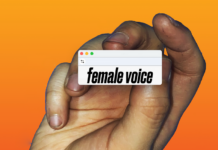
Could the most insidious crime behind Andrew Tate’s notoriety be less about explicit acts and more about a subtler, yet profoundly influential cultural transgression? One that wields misogyny not as a raw weapon but as a routine staple, dulling its edge and embedding it into the fabric of everyday discourse? This exploration invites us to rethink how such figures don’t merely perpetuate toxic ideologies—they banalize them, rendering misogyny tediously mundane and dangerously normalized. Is this the real “crime” lurking beneath the loud controversies? Let’s delve into the multifaceted dimensions of this phenomenon, unpacking how it challenges feminism and the broader social consciousness.
The Banality of Misogyny: When Hate Becomes Humdrum
It is tempting to associate misogyny with overt hatred or violent behavior. Yet, the insidious nature of Andrew Tate’s brand lies in his ability to transform misogyny from a shocking anomaly into a commonplace, almost tedious refrain. This banalization operates like a cultural numbing agent. Repetition breeds indifference, and when misogynistic rhetoric saturates everyday conversation, it loses its provocative sting. Instead of inciting outrage or introspection, it surfaces as mundane, predictable, and disturbingly acceptable.
This normalization complicates feminist efforts, as the fight is no longer only against direct acts of misogyny but against its camouflage of ordinariness. The familiar becomes less likely to disrupt or awaken critical resistance. Consequently, the cultural impact is far more corrosive than any singular, headline-grabbing controversy because it seeps into the collective psyche with the stealth of a chronic condition.
Andrew Tate: The Architect of Misogyny’s Mainstream Facade
Andrew Tate’s prominence in popular culture is emblematic of a disturbing shift. Unlike archetypal villains of the past, Tate doesn’t position himself solely as a provocateur. Instead, he masquerades as a lifestyle guru, a self-help expert, a paragon of hyper-masculinity, all while seeding deeply misogynistic ideas under the guise of confidence and empowerment. This dual role makes his messaging more palatable, especially to young, impressionable audiences.
By aligning masculinity with dominance over women as an aspirational norm, he crafts a narrative where misogyny is repackaged as a routine facet of success and self-worth. The danger lies in the subliminal drift from explicit hatred to implicit acceptance. In this framework, contempt towards women becomes not an aberration but a cultural baseline, cloaked in the banal rhetoric of “just telling the truth” or “calling out modern weakness.”
The Feminist Challenge: Reclaiming Discourse Amidst the Noise
Feminism faces an evolving battlefield with the boring mainstreaming of misogyny. The once clear-cut lines of right and wrong blur into a grey zone of casual denigration, coded language, and performative gender dynamics. This poses a fundamental challenge: how to disrupt a discourse that thrives on becoming background noise.
Feminist praxis must therefore expand beyond confronting explicit misogyny. It calls for innovative strategies to re-sensitize society to the subtleties of gender bias. This means fostering media literacy, promoting critical engagement with influencers, and amplifying narratives that celebrate nuanced femininity and masculinity while exposing the erosion of respect as a social norm.
Moreover, the task is to make feminism itself resilient—not just as a political ideology but as a cultural instinct that resists the habituation of misogyny. It must insist that even “boring” misogyny is unacceptable, that repetition should not breed complacency but renewed vigilance.
Cultural Saturation and the Modern Audience’s Complicity
Part of what enables the dulling of misogyny’s impact is audience complicity. In an age of information overload, consumers can become desensitized to repetitive harmful narratives. When misogynistic tropes are omnipresent—across social media, entertainment, and self-styled personalities—they risk being shrugged off as background static rather than a clarion call to action.
This saturation creates a paradox: the more widespread misogyny becomes, the less shocking it appears, and the less likely individuals are to confront it. Society’s digital echo chambers further exacerbate this cycle, offering constant reinforcement of toxic beliefs without critical counterbalance.
Understanding this dynamic is crucial for cultural change. It demands that audiences cultivate intentional awareness, questioning not only overt villainy but the subtler erosion of empathy and respect hidden in the repetitive banal rhetoric.
The Psychological Undercurrents of Misogyny’s Normalization
Why does misogyny become boringly mainstream? The answer lies partly in psychological mechanisms such as cognitive dissonance and social conformity. When confronted with persistent misogynistic narratives from admired figures, individuals often rationalize or minimize the offense to maintain social cohesion or personal identity.
The repetition of such ideas facilitates their internalization, making them seem “natural” rather than constructed. This psychological absorption turns misogyny into a cultural habit—one harder to break than isolated incidents of overt hostility.
Additionally, the allure of belonging to a perceived “alpha” social group can outweigh the discomfort of harboring problematic beliefs. The mainstreaming of misogyny thus becomes a collective psychological phenomenon, with wide-reaching social implications.
Beyond the Controversy: Redefining Accountability in the Digital Age
The obsession with scandal often eclipses the deeper issues at play. Andrew Tate’s public controversies attract swift outrage, but they risk overshadowing the need for sustained cultural accountability. Addressing the banal mainstreaming of misogyny demands more than bans or public shaming—it requires systemic shifts in how digital platforms moderate content and how publics engage with media personalities.
This involves recognizing the role of economic incentives, algorithmic amplification, and fleeting digital outrage cycles that often benefit figures who thrive on controversy. Accountability must therefore extend to the infrastructures that enable the widespread dissemination of insidious rhetoric and the societal willingness to consume it uncritically.
Only by confronting these structural dynamics can feminist movements hope to reclaim discourse and prevent misogyny from settling comfortably into the cultural status quo.
Conclusion: Is Disarming the Mundane the Key to Progress?
Perhaps the most formidable obstacle feminism faces in the age of Andrew Tate is not just combating overt misogyny but reclaiming the cultural terrain poisoned by its tedious normality. When hatred loses its shock value, it becomes easier to ignore—and harder to dismantle.
The solution may lie in rekindling a collective sensitivity to all forms of misogyny, no matter how “boring” or normalized. It involves recognizing that the most dangerous crime is not loud defiance of equality but the stealthy, repetitive infiltration of misogynistic ideology into the banal rhythms of daily life.
In this relentless persistence, feminism must find new strength: not just as a movement of vocal resistance but as a prevailing cultural vigilance, refusing to let the mundane become a shield for injustice. Only then can the real crime be truly addressed and undone.