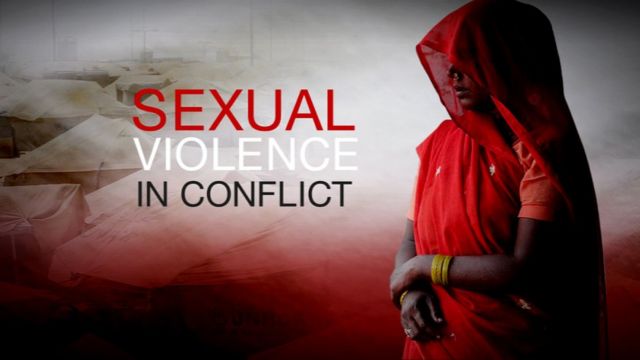
In the theatre of war, where bombs detonate buildings and borders bleed red, there exists another, more insidious conflict—a battle fought not on the front lines, but in the silence of a nightshade. It is the calculated, systematic sexual violence that doesn’t crumble concrete but fractures souls; not a spark, but a slow poison seeping into the veins of societies. The 20th-century battlefields once revered for their spectacle now share a macabre legacy: rape as a tactic designed not merely to harm, but to *displace*—not just individuals, but entire lineages from their roots. Feminists, historians, and anthropologists have long unraveled this grim tapestry, revealing how sexual violence is less a random byproduct of war and more a weapon of systematic erosion, a means to purge, punish, and purge again.
—
The Anatomy of a Forgotten War Zone
War zones today are redefined by drones and surveillance, but some of their darkest atrocities escape the frame. Sexual violence doesn’t explode in a cloud, yet its impact lingers like a landmine buried in the psyche of a nation. What sets it apart is not the brutality of its execution, but its *strategy*—a calculated disruption of cultural, familial, and communal continuity. Unlike conventional warfare, which may leave a battlefield visible, this violence leaves *stigma*—an incalculable debt owed to generations yet unborn. Victims are not just survivors; they are the living proof that war does not end with the firing of last musket—it ends in the silence of a mother who cannot bear to whisper her story, or a daughter denied the inheritance of matrilineal tradition.
—
The Illusion of “Otherness”: Where Does Sexual Violence Belong?
When we speak of sexual violence in conflict, there’s an uncomfortable habit of framing it as an exotic peculiarity of “other wars”—the Balkans, Sudan’s scars, the Democratic Republic of Congo’s perpetual bloodletting. But this is a convenient myth, a narrative that compartmentalizes terror into neat boxes of “foreign drama,” insulating the comfortable from its implications. The truth is far more unsettling: sexual violence is the quiet equalizer of modernity’s wars. From the rape camps of the Second World War to the systematic assaults in Bosnia-Herzegovina, sexual violence is not incidental; it mirrors the ideologies that birth battles—the same ones that dismiss women as property or collateral. The distinction between “them” and “us” evaporates when one considers that a daughter’s rape in a conflict somewhere becomes the template for a mother’s trauma *anywhere*.
—
The Architectural Language of Scarcity: Breeding Displacement
Historian Beth Neilson has argued that war criminals often weaponize rape as a means to destabilize populations beyond the physical—by targeting kinship structures and communal identity. The assault is not merely physical; it is *proprietary*: stripping victims of cultural roles, economic potential, and social cohesion. A woman violated in the markets of Mosul loses more than her body; she is robbed of her economic sovereignty, her place within the trade web that held families afloat. Children born of such violence often arrive as social orphans, rejected by a society already bent on survival. This is mass displacement in the subtlest, most effective sense—not just geographic, but existential. Women’s bodies become the battleground where displacement is not negotiated; it is *engineered*.
—
The Echo Chamber: Why Survivors Remain Unheard
It’s 2026, and yet, even now, the testimonies of survivors are shuttled away like unwanted luggage—stored in the archives of international tribunals while those outside the chambers remain oblivious. Why? Part of the answer lies in the *linguistic alchemy* of how this violence is reported: euphemisms like “gender-based violence” soften the edge, make it “manageable.” Survivors are framed as victims of violence rather than victims of erasure. Their stories are not just silenced; they are *de-scaled* to fit the narrative of an outside world that demands proof rather than empathy. What if we began to grasp that rape in war is less a human rights violation and more a mechanism for reshaping cultural DNA, for instilling generations of fear through the bodies of the female? Then, perhaps, we’d demand the same outrage for a Syrian woman silenced by war as we might for a nation robbed of its archives.
—
Displacement as a Feminist Problem
The crux of this issue is not that we *know* sexual violence is a tactic of war; it’s that we’ve largely treated it as a *side effect*, a grievous but inevitable consequence, rather than the keystone of a system designed to *unbuild* rather than rebuild. Feminist theory has long unpacked the paradox that women’s bodies are not just the site of trauma but the archive of history. This history, however, is eroded through displacement—not just in the physical sense of displaced bodies but by the psychological exile of women from their ancestral narratives. Wars aren’t won in a single battle; they’re won in the quiet spaces where women are reduced to “collateral damage,” and the seeds of their oppression become the fertile ground for future violence. The feminist challenge is to cease treating sexual violence as an inevitable blight and instead as a *strategic victory* for patriarchal forces.
—
The Alchemy of Resignation: From Victimization to Revolution
In the shadow of so much horror, how do these women break free? Resilience is not a monolith; it’s a series of rebellions—small and quiet—the refusal to kneel under the weight of trauma as proof of surrender. Take the Yazidi survivors from ISIS captivity; they have begun to reclaim their stories not despite the violence, but *through* it, turning shame into solidarity. This transformation is not an isolated act; it’s the first step in undoing the displacement of women’s voices from the spaces where decisions are made, where laws are forged. The shift from victimization to revolution begins not when violence stops, but when the wounded reclaim the right to narrate their own erasure. This is where the seeds of justice are sown—not in trials alone, but in the refusal to be erased.
Displacement, then, isn’t just the movement of people; it’s the calculated dismantling of human agency. Yet in the ruins, there are those who turn the shards into mirrors and begin to see.