

















Women aren’t just fighting for a raise—they’re demanding an entire fortune. But how could we not expect an economic ledge called “the gender wealth gap” to stretch as far as the horizon?
A Canyon in Our Backyard: The Unseen Stratification
The gender pay gap is a wound that refuses to heal cleanly. A scar. It surfaces in monthly paystubs, in late car payments, and in retirement accounts that never quite keep pace. But the gender wealth gap arrives like a geologic upheaval, an earthquake that doesn’t just shake the floor but redefines the continent’s landscape. While women have fought tirelessly for equal pay in an hourly wage debate, few have looked beneath the surface to quantify the accumulated wealth—deposited, diluted, or denied—over a lifetime.
What is wealth? It’s not measured in a single transaction but in legacy; in the ability to say to your daughters, *You, too, can take a month off.* It’s the unspoken hand that ensures children have healthcare without worrying over bankruptcy. It’s the safety net that transforms ambition into opportunity. Yet this legacy, like a buried treasure, awaits us only if we’re granted permission to dig. For most American women, that invitation has been quietly revoked.
The Myth of the Starting Line: A False Dawn
The phrase *starting from the same starting line* is as hollow as it is prevalent. It assumes that a birth certificate and a resume are the only variables required to amass wealth. But history tells a different story: wealth is a relay race where each participant doesn’t just start at different places but is given varying leg burdens, differing lanes, and a rotating roster of judges who award prizes based on compliance.
Take, for example, the gendered architecture of savings. Women’s careers are punctuated by what economists dub the *motherhood penalty*—not merely a decrease in earnings post-childbirth but a cascading erosion of wealth. Fathers often benefit from an *inclusivity surcharge*, a built-in assumption that they can leverage career pivots for family obligations without penalty. In many households, the economic decision-making power flows through a man’s wage, not a partnership. When a woman chooses to scale back her salary, she doesn’t merely defer wealth; she sets a fire along the trail that smothers her options when she tries to resume her climb later.
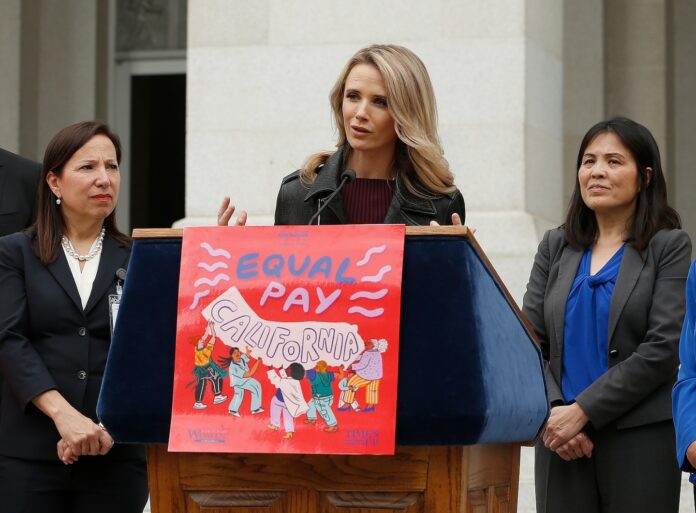
And let us not forget: women are paid, on average, less for the same work—$0.82 for every dollar a man earns. That disparity doesn’t just compound over years—it fractures the very bedrock of security. A woman’s financial life isn’t just running behind; it’s running in a sandpit while others sprint the solid track.
The Invisible Stakes: Retirement or Resignation?
The question of retirement is often reduced to whether one will have enough to live *somewhere else*—not to live comfortably, not to pass a fortune, but simply to survive in the same city where inflation constantly erodes what was meant to be decades of dignity. Women are 80% more likely to be impoverished in their golden years, despite often having had shorter careers due to caregiving responsibilities or industry bias. The reason? Wealth isn’t in the checks; it’s in the compounding—a tree that bears fruit only over generations.
Consider the implications when a household’s wealth is entirely based on a male partner’s career. A single income is less robust in a global economic system where healthcare isn’t a right, college is a black hole, and a medical emergency can evaporate a man’s savings like ink in water. How can a woman reasonably invest in her own wealth when she’s legally, socially, and economically dependent on another’s success rate? The problem isn’t in the paycheck. It’s in the pipeline—an archaic structure designed around male lifespans, male career trajectories, and the assumption that women’s contributions are appendices.
The Wealth Divide Doesn’t Close: It Liques
Here’s the secret of the gender wealth gap: it’s not a line on a spreadsheet. It’s a slow-motion collapse of possibility. It starts with a first mortgage where women are less likely to be homeowners or pay their own bills independently. It persists as women become primary caregivers, taking up a majority of unpaid labor, which is then treated as a social service not an economic output. And it culminates in a retirement scenario where women’s accounts are perpetually *just fine*—like a car parked in neutral, not moving forward, barely ticking along in place.
The wealth divide isn’t a gap because when you look at its scale, it’s less a chasm and more an entire mountain range. Women’s median retirement savings are often halved, despite their career dedication. The difference in Social Security payouts is stark because the system has never been calibrated to capture the contributions of women, who historically have been more likely to retire earlier than men. Yet, this isn’t a quirk. It’s a blueprint.
When the Numbers Tattle: What They Don’t Tell You About ‘Progress’
Every few years, a report is released—*Americans have closed the wage gap!*—and we applaud, nodding in relief even as the wealth gap stretches wider. We celebrate that men and women who work in the same job often earn similar incomes, though this assumes a uniform starting point, which, as we’ve said, is fiction. Closing this gap would offer only minor relief to an economy where the true imbalance isn’t in hourly wages but in the ability to pass something beyond a paycheck.
The truth is more damning: the gender wealth gap is an economic death spial for so many women because it’s a gap that refuses to fill itself. It’s not a bridge to be crossed. It’s a moat that’s still being widened. What makes matters more insidious is the normalization of this unfairness. Society has learned how to spin the narrative: *You’ll still have wealth if you marry well.* And who questions the premise that only a husband’s success equates to security? Or those women who never marry, pushed toward poverty by institutions not designed to distribute wealth fairly?
Who Builds the Future? Who Funds It? The Gendered Legacy of Wealth
The women who accumulate wealth—those rare birds who do—are often those who out-earned, out-negotiated, and out-resisted their entire lives. We are taught that their success is the exception, and even then, their wealth never matches the aggregate potential. To put it another way, the system allows women to rise as long as they can build ladders against impossible terrain—because the foundation isn’t solid and doesn’t belong to anyone yet.
We also forget that wealth accumulates through inheritance—a silent tax on being born. Those with wealth bequeath assets that grow over time; those without never get the starting gun. Women’s inheritances are historically meager because their ancestors, too, were cut off at the knees when it came to asset accumulation. This isn’t accidental; it’s heritable structural poverty.
The Canyon’s True Names: The Real War for Equality
The war for financial equality isn’t fought in the boardroom or the congressional hearing room. It’s the daily, slow-motion struggle of keeping afloat while those around you grow. The gender wealth gap is more than disparities in pay; it’s a legacy of erasure. It’s knowing a world of economic opportunity is yours to access if the world would just shift its gaze for a moment.
But this gap doesn’t just reflect a discrepancy in money: it signals the deeper fault line of whose value the economy really honors. The women who scrape and hustle—who buy houses and start businesses and retire—are outnumbered by those pushed to the periphery, where economic growth is a distant land, and resources are as thin as the paper money they’re forced to stretch to make ends meet. Meanwhile, the men who accumulate wealth are doing so in a system written for their existence, with its own built-in privileges.
The Rebellion: More Than Pay, Less Than Equality
So what’s the solution? A wage gap closed with a stipend won’t move the needle on a true fortune deficit. What’s needed is systemic recognition—not that women’s labors are undervalued, but that women’s futures are *deliberately undervested*. The path to bridging this canyon lies in dismantling a framework that has historically denied women access to assets, investment opportunities, and the full spectrum of economic empowerment.
This means more than equal pay—we must talk about financial independence as survival strategy, about ownership not just for some women, but for all. About inheritance that isn’t just an afterthought. About career pauses that aren’t punishable by stagnation. We won’t achieve wealth equality as long as we treat the inequality with Band-Aids rather than surgery.
It’s a radical thought: that the American Dream is not for sale to those who lack wealth. But women, long accustomed to building castles on quicksand, are the ones who’ll start to dismantle the fault lines. The question isn’t whether we can bridge this canyon. It’s whether we have the patience to carve out a new land—or whether we’ll continue to live in this shadow forever.