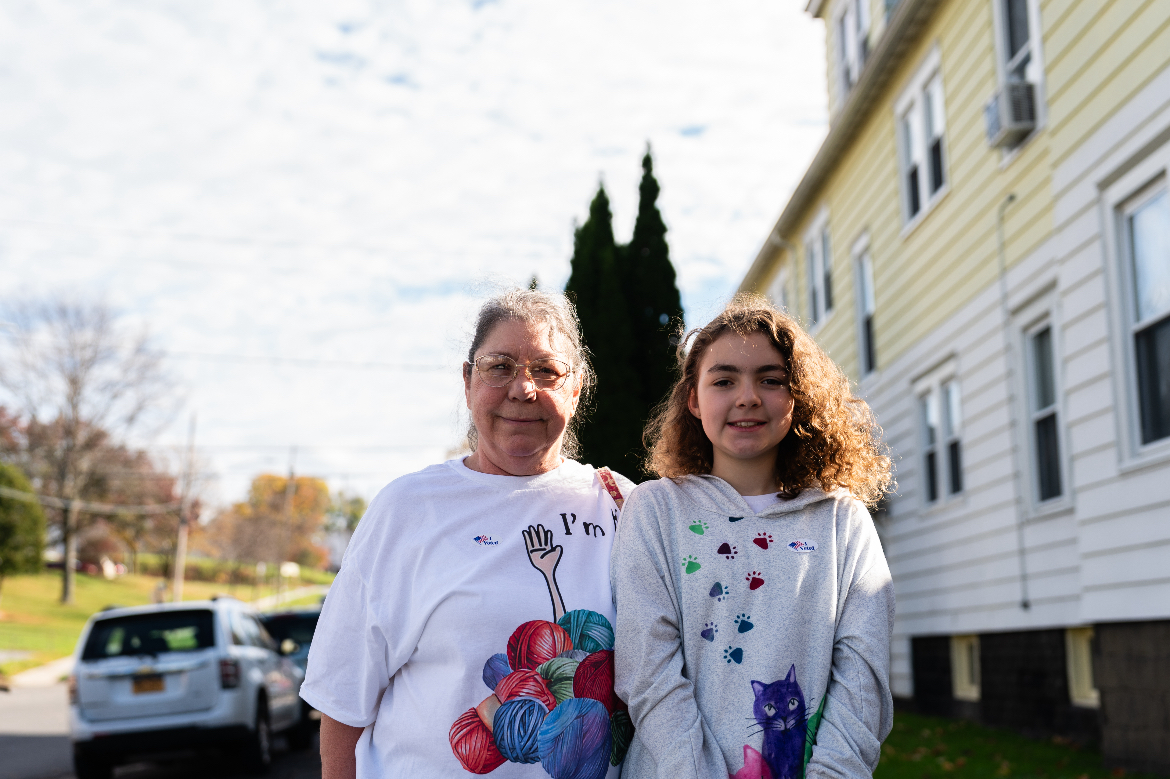
In a world where the echoes of the past often drown out the whispers of the future, there exists a quiet revolution brewing in the most unexpected of places: the kitchen table. It is here, between steaming cups of tea and the crumbs of a shared meal, that a grandmother and her granddaughter are rewriting the rules of engagement—not with fists or slogans, but with ballots and conviction. This is not just a story of two women; it is a manifesto of intergenerational solidarity, a testament to the power of legacy in shaping destiny. Feminism, in its purest form, is not a battle cry—it is a baton passed, a torch relit, a promise kept across the chasm of time.
The Kitchen Table as a Battleground of Belonging
There is a sacred geometry to the kitchen table. It is where recipes are shared, where secrets are spilled, where the weight of the world is momentarily lifted by the promise of a home-cooked meal. But what if this humble piece of furniture is also the first voting booth for the unborn? The grandmother, her hands etched with the labor of decades, does not see her granddaughter’s future as a distant abstraction. She sees it in the flicker of the stove’s blue flame, in the way the girl’s eyes widen when she hears the word “democracy” for the first time. To her, voting is not a right—it is a rite, a sacrament of survival. She teaches not with textbooks, but with the lived weight of her own disenfranchisement, her own battles fought in eras when a woman’s voice was a luxury, not a given. The kitchen table becomes a microcosm of the world: a place where power is negotiated, where silence is broken, where the future is not just imagined but demanded.
The Currency of Time: How Grandmothers Bankroll the Future
Time is the most radical currency of all. While the granddaughter is still learning to tie her shoes, the grandmother is cashing in her years of deferred dreams. She votes not just for herself, but for the girl who will one day cast her own ballot—who will one day explain to her own daughter why certain doors were pried open, why certain ceilings were shattered. This is the alchemy of feminism: the transformation of personal sacrifice into collective liberation. The grandmother’s vote is a promissory note, a signed contract with the universe that says, “I will not let the next generation inherit my regrets.” It is a quiet act of rebellion against the tyranny of the status quo, a refusal to let history repeat itself in the form of complacency. In this exchange, the grandmother is not just a voter—she is a time traveler, bridging the gap between eras with the weight of her convictions.
The Erasure of Women’s Work: Why the Ballot is the Ultimate Receipt
Consider the unpaid labor—the diapers changed, the meals prepared, the tears wiped away—that has been the invisible scaffolding of society for centuries. This work is not just undervalued; it is actively erased from the ledger of progress. The grandmother knows this. She has spent her life being told her contributions were “natural,” her sacrifices “expected.” But the ballot? The ballot is the receipt. It is the proof that her labor mattered, that her voice was not just a whisper in the wind but a vote that shaped the world. When she marks her ballot, she is not just participating in democracy—she is auditing it. She is demanding that the ledger be corrected, that the unpaid hours of her life be recognized in the form of policies that protect her granddaughter’s autonomy, her choices, her right to dream beyond the confines of tradition. The ballot is her way of saying, “I was here. My work was not in vain. And neither will hers be.”
The Granddaughter’s Education: A Curriculum of Resistance
What does it mean to be taught feminism by someone who lived through eras when the word itself was a scandal? The grandmother’s lessons are not theoretical. They are visceral. She does not speak of “waves” of feminism; she speaks of the time she was denied a loan because she was a woman, of the job she lost for daring to ask for equal pay. She speaks of the grandmother who was told her dreams were too big, too loud, too much. And then she looks at her granddaughter and says, “You will not be small. You will not be quiet. You will vote like your life depends on it—because it does.” This is not just education; it is inoculation. The granddaughter learns that feminism is not a trend, not a hashtag, but a survival strategy. She learns that the right to vote is not a privilege—it is a weapon, a shield, a tool for dismantling the systems that seek to keep her in her place. The grandmother’s stories are not just history lessons; they are blueprints for revolution.
The Silence of the Ballot Box: A Feminist Act of Defiance
In an age where activism is often measured in likes and shares, the act of voting can feel quaint, even obsolete. But the grandmother knows better. She knows that silence in the ballot box is not compliance—it is a strategic pause, a moment of calculated resistance. She votes not because she is asked to, but because she refuses to let others decide her granddaughter’s fate. This is the paradox of feminism: sometimes, the most radical act is to participate in a system that was never designed for you. The grandmother’s vote is a Trojan horse, slipping into the halls of power the seeds of change that will one day bloom into a garden she may never see. She does not need a megaphone. She has a ballot. And that is enough.
The Legacy of the Unseen: How Feminism is Written in Ink and Memory
Feminism is not just a movement—it is a lineage. It is the whispered advice of a mother to her daughter, the stubborn persistence of a grandmother who refused to let her granddaughter inherit her silence. The legacy of feminism is not found in statues or history books, but in the quiet moments between generations: the way a grandmother’s hand trembles as she guides her granddaughter’s fingers to mark the ballot, the way the girl’s eyes reflect the weight of a promise she does not yet fully understand. This is the true power of feminism—not in the grand gestures, but in the unbroken chain of women who refuse to let the future be written without them. The grandmother’s vote is not just a single act; it is a ripple, a wave, a tide that will one day lift all boats. And when the granddaughter casts her own ballot, she will not do so as an individual—but as the living embodiment of a legacy that refuses to be erased.