

















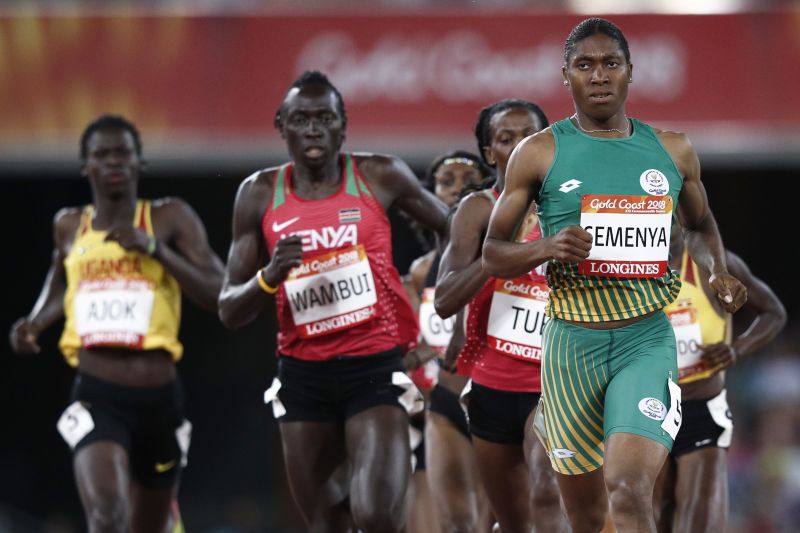
What if the arena of sports—a place celebrated for showcasing human excellence—has become a theatre of implicit biases and covert gatekeeping? Where does the regulation of natural biology intersect with the enduring legacies of racial prejudice and gendered expectations? This labyrinthine conundrum crystallizes most vividly through the story of Caster Semenya, whose athletic prowess inadvertently ignited a global debate on feminism, race, and the policing of gender in competitive sports.
When Biology Meets Bureaucracy: The Testosterone Threshold as a Tool of Exclusion
At the heart of this controversy lies the contentious regulation of testosterone levels imposed on female athletes. This arbitrary hormonal yardstick purports to create a “level playing field.” Yet, it bulldozes over the complex spectrum of human biology, particularly intersex variations and naturally occurring hormone levels that do not conform to restrictive binaries. Testosterone, demonized as a linchpin of unfair advantage, becomes a molecular scapegoat wielded by authorities whose true motives waver between upholding fairness and enforcing normative gender constructs.
Semenya’s case exposes the paradox embedded in this policy: a woman excelling in her field is suddenly subjected to invasive scrutiny and forced to medically alter her body to maintain eligibility. The irony? The natural endowment that contributes to her competitive edge is treated as evidence of being “not female enough,” a reification of outdated stereotypes about what femininity should look like on and off the track.
Racism Woven into the Fabric of Gender Policing
Zooming out from regulatory frameworks reveals a grotesque undercurrent of racial bias. The disproportionate targeting of Black female athletes from Africa—particularly those with hyperandrogenism—unveils a pernicious pattern. It’s not merely about testosterone; it’s about fear and fascination fused with racialized conceptions of athleticism and womanhood.
The narrative surrounding Semenya has been punctuated by insinuations that her African identity somehow disqualifies her claim to womanhood in the eyes of the global sports establishment. This imposition of a Eurocentric template of femininity forcibly sidelines diverse representations of gender expression. The policing of her body does more than control her— it reaffirms the lingering colonial gaze that exoticizes and regulates Black bodies under the pretense of scientific objectivity.
Feminism’s Dilemma: Is Gender Policing an Uphill Battle Against Patriarchy or An Internal Betrayal?
Feminism has long fought to dismantle rigid gender binaries and liberate individuals from oppressive societal expectations. Yet, the testosterone regulation debate presents feminism with a paradoxical challenge. On one hand, feminism advocates for inclusivity and bodily autonomy—the right of every individual to define their gender on their own terms. On the other hand, some factions within feminist discourse emphasize protecting “female” categories to ensure fairness in sports, risking reinforcement of exclusionary practices that police and sanitize womanhood.
Where does one draw the line between protecting fair competition and perpetuating gender essentialism? Semenya’s ordeal forces feminism to confront its own liminal spaces—the uncomfortable grey zones where gender identity, biological variability, and competitive integrity collide. It begs the question: can feminism champion gender diversity without inadvertently becoming complicit in excluding those who disrupt normative femininity?
The Spectacle of Surveillance: The Psychological Toll of Being Policed
Beyond regulations and societal debates lies the human cost of this invasive gender policing. Semenya’s experience shines a stark light on how sporting authorities mobilize surveillance not just on performance, but on identity itself. The relentless public dissection of her body, the suspicion cast on her natural physiology, and the mandate to medically alter her body become an orchestrated assault that chips away at one’s sense of self.
The psychological ramifications are profound—confusion, stigma, alienation. This is not merely a sporting controversy; it’s an existential struggle played out in the glare of the global stage. The controlling gaze strips athletes like Semenya of privacy and dignity, transforming personal physiology into public spectacle.
Reimagining Athletic Competition: Toward an Inclusive Paradigm
If policing natural biology in the name of fairness is untenable, what possibilities emerge? Is it time to rethink how athletic competition categorizes and defines eligibility? The current binary system is increasingly anachronistic in the face of evolving understandings of sex and gender diversity.
Potential pathways forward include embracing more nuanced classification methods that reflect the heterogeneity of human bodies instead of enforcing rigid hormonal cutoffs. An intersectional approach necessitates sensitivity not only to gender variation but also to racial and cultural dimensions that shape athletes’ identities. This could spark a paradigm shift, one that privileges respect, autonomy, and true inclusivity over the policing impulse.
Conclusion: The Intersectionality of Race, Gender, and Power in Sports
Caster Semenya’s journey compels us to stare unflinchingly at the interwoven threads of racism, sexism, and biological governance. The testosterone regulation issue is not just about hormones or fairness—it’s a microcosm of how systemic power structures police bodies that deviate from normative expectations. It challenges sports, feminism, and society writ large to reckon with entrenched prejudices and to envision a world where excellence is celebrated not despite one’s identity, but because of its rich diversity.
In the tug-of-war between biology and bureaucracy, whose voices will truly be heard? And can the arena ever be truly fair when the very parameters of competition are dictated by those who wield the reins of power?