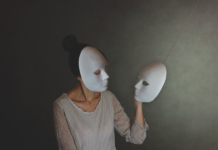
What if the very aesthetics we celebrate as feminist liberation are quietly suffocating the mental health of the girls who embody them? The curated poses, the performative vulnerability, the relentless pressure to be both revolutionary and flawless—these are not just trends. They are cages disguised as liberation, and the girls trapped inside them are drowning in the paradox of empowerment.
The Aesthetic of Rebellion: A Double-Edged Sword
Teen girls today are raised on a diet of feminist aesthetics that demand they be both soft and unbreakable, vulnerable yet indestructible. The “girlboss” trope, the performative vulnerability of “trauma porn,” the curated vulnerability of social media—these are not just visual trends. They are a new kind of tyranny, where rebellion is measured in likes and liberation is quantified in followers. The problem? These aesthetics are not just performative; they are prescriptive. They tell girls that to be feminist is to be perpetually on display, to turn their pain into content, to weaponize their emotions for the sake of visibility. But what happens when the performance becomes the prison?
The mental health toll is staggering. Studies show a direct correlation between the rise of feminist aesthetics in mainstream culture and the spike in anxiety, depression, and self-harm among teen girls. The pressure to embody these ideals is not just external—it’s internalized. Girls are told that their worth is tied to how well they perform their feminism, how authentically they can channel their pain into art, how seamlessly they can turn their struggles into a brand. The result? A generation of girls who are exhausted, not just by the demands of adolescence, but by the impossible standards of feminist aesthetics.
The Paradox of Visibility: When Empowerment Becomes Exploitation
Feminist aesthetics thrive on visibility. The more a girl’s pain is seen, the more she is celebrated. But visibility is a double-edged sword. It can liberate, but it can also exploit. When a girl’s trauma becomes a commodity, when her vulnerability is monetized, when her struggles are reduced to a hashtag—what does that say about the value of her pain? That it’s only worth something if it’s seen? That her healing is secondary to her performance?
This is the dark underbelly of feminist aesthetics: the commodification of pain. Girls are taught that their struggles are not just personal but political, and that their pain is a currency to be spent in the name of progress. But what happens when the currency loses its value? When the likes dry up, when the followers unfollow, when the movement moves on? The girls are left with the wreckage of their own performances, their mental health collateral damage in the pursuit of visibility.
The Tyranny of the “Perfect” Feminist
There is no room for imperfection in the world of feminist aesthetics. A girl must be strong, but not too strong. Vulnerable, but not too vulnerable. Angry, but not too angry. The “perfect” feminist is a myth, a construct designed to keep girls trapped in a cycle of self-policing. She must be everything to everyone—revolutionary yet palatable, radical yet marketable, authentic yet aspirational. The pressure to embody this myth is crushing.
Consider the rise of “aesthetic activism,” where girls are expected to curate their lives as if they are living in a feminist mood board. Every outfit, every post, every thought must align with the aesthetic of the moment. But what happens when a girl’s reality doesn’t fit the mold? When her life is messy, her emotions complicated, her journey nonlinear? The aesthetic demands perfection, and the girl is left with the impossible task of performing it.
The Illusion of Choice: Are Girls Really Free?
Feminist aesthetics sell the illusion of choice. Girls are told they can be anything, do anything, express anything—as long as it fits within the prescribed aesthetic. But is it really a choice when the alternative is invisibility? When the cost of nonconformity is social exile? The aesthetics of feminism are not neutral. They are curated, controlled, and commodified. And the girls who buy into them are not free—they are complicit in their own subjugation.
The real challenge lies in dismantling the myth that feminist aesthetics are inherently liberating. They are not. They are a new kind of oppression, one that disguises itself as empowerment. The question is not whether girls should embrace feminist aesthetics, but whether they should be forced to perform them at the expense of their mental health. The answer is no. The cost is too high.
The Way Forward: Reclaiming Feminism from Aesthetics
To reclaim feminism from the tyranny of aesthetics, girls must be given the space to define their own liberation. They must be taught that their pain is not a commodity, their struggles are not a performance, and their worth is not tied to their visibility. They must be allowed to be messy, complicated, and imperfect—without fear of being labeled “inauthentic” or “not feminist enough.”
The solution is not to reject feminist aesthetics outright, but to interrogate them. To ask who benefits from their proliferation. To demand that the girls who embody them are not exploited in the process. To recognize that liberation is not a pose—it’s a practice. And it’s one that must be rooted in self-compassion, not self-surveillance.
The future of feminism depends on it. Because a movement that silences the girls it claims to empower is not a movement at all. It’s a performance. And performances, no matter how well-curated, are not enough.