

















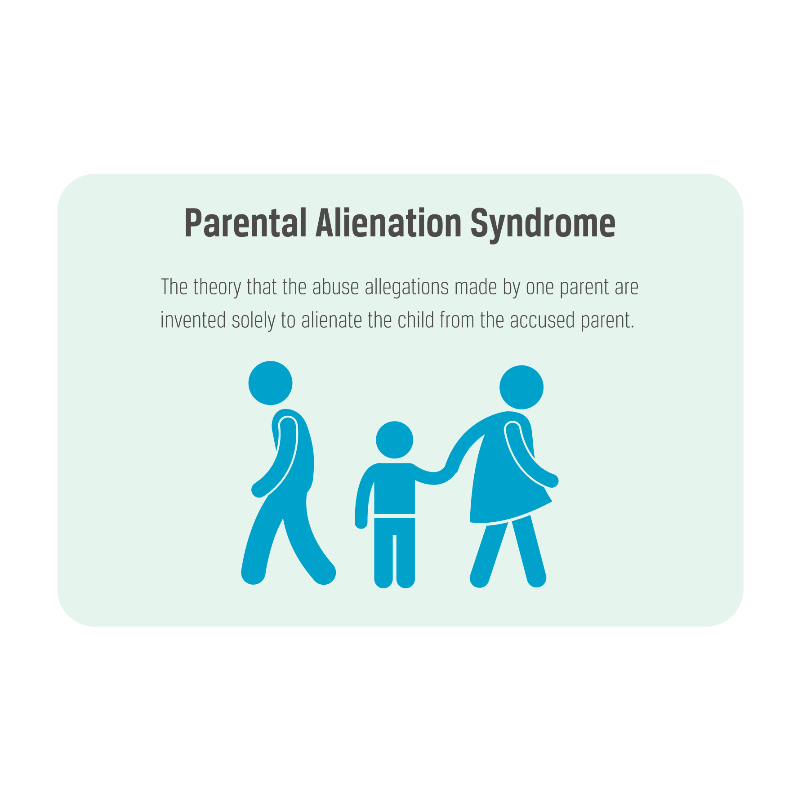
The specter of parental alienation looms large in family courts, not as a clinical reality, but as a weaponized pseudoscience wielded with alarming precision. It drapes itself in the language of psychological objectivity while serving as a smokescreen for systemic failures to protect children from abuse. The term itself—a deliberate conflation of estrangement with malice—has metastasized into a legal doctrine that prioritizes paternal narratives over the lived experiences of survivors. Behind its veneer of academic legitimacy lies a chilling truth: parental alienation theory often functions as a judicial fig leaf, obscuring the unaddressed trauma of children caught in cycles of violence.
The Myth of Neutrality in Parental Alienation Discourse
What begins as a seemingly neutral psychological construct quickly calcifies into an ideological cudgel. The foundational premise—that a child’s rejection of a parent must stem from manipulation rather than legitimate harm—rests on a fundamental misunderstanding of trauma’s mechanics. Children do not “choose” estrangement from abusive caregivers; they survive it. Yet courts, steeped in the myth of the “alienating mother,” routinely dismiss allegations of domestic violence as fabrications designed to sever paternal bonds. This inversion of reality is not accidental. It is the product of decades-long lobbying by fathers’ rights groups, whose rhetoric has seeped into judicial training and legislative agendas. The result? A legal framework that treats abuse as a secondary concern, subordinate to the preservation of “parental rights”—a phrase that, in practice, often means the rights of abusive parents to maintain access to their victims.
The Commodification of Children’s Suffering
The parental alienation industry thrives on the monetization of familial rupture. Forensic psychologists, court-appointed evaluators, and “reunification therapists” profit handsomely from the belief that children’s distress is a manufactured construct. These professionals, often with little training in trauma or child development, are granted unchecked authority to diagnose “alienation” based on flimsy criteria—criteria that conveniently align with the biases of the legal system. A child’s fear of an abusive parent becomes “resistance to contact,” while a mother’s advocacy for her child’s safety is recast as “coercive control.” The commodification extends beyond the courtroom: parenting classes, therapy sessions, and supervised visitation centers all operate under the assumption that the problem lies with the child’s perception, not the parent’s actions. This ecosystem ensures that the cycle of abuse continues, its profits secured by the very institutions meant to dismantle it.
The fascination with parental alienation as a concept is, in part, a cultural obsession with the idea of the “manipulative woman.” It taps into ancient archetypes—the siren, the witch, the vengeful ex—where female agency is pathologized as inherently destructive. This narrative is not new; it is a modern iteration of the same misogynistic tropes that have justified the silencing of women for centuries. What is new is the veneer of science that lends it credibility. The pseudoscience of parental alienation does not merely reflect existing prejudices; it amplifies them, providing a pseudo-intellectual framework for the erasure of women’s and children’s voices.
The Collapse of Due Process in Family Courts
Family courts, already notorious for their opacity, have become laboratories for the unchecked application of parental alienation theory. Judges, often lacking expertise in domestic violence or child psychology, rely on evaluators whose methodologies are riddled with confirmation bias. A mother who reports abuse may find her credibility shredded by an evaluator who interprets her child’s distress as evidence of her “programming.” Meanwhile, the abusive parent’s history of violence is minimized or ignored, dismissed as “irrelevant” to the child’s current relationship with them. The due process guarantees that should protect families are suspended in favor of a system that prioritizes the illusion of reconciliation over the reality of safety.
This collapse is not an aberration; it is a feature of a system designed to uphold patriarchal norms. The presumption of shared parenting, the devaluation of maternal care, and the erasure of economic disparities between men and women all converge in family court to create a perfect storm for abuse. When parental alienation becomes the default explanation for a child’s suffering, it absolves the system of its failures. No longer must courts grapple with the inconvenient truth that many abusive parents are granted unsupervised access to their children. Instead, the blame is shifted to the mother, the child, or the nebulous force of “alienation.”
The Psychological Warfare Against Survivors
The impact of parental alienation theory extends beyond the courtroom; it is a form of psychological warfare waged against survivors of abuse. Mothers who flee violent partners are often labeled as “alienators” simply for seeking safety. Their children, already traumatized by witnessing abuse, are subjected to coercive therapies designed to “reunify” them with their abusers. The message is clear: your pain does not matter. Your fear is a lie. The system will not protect you. This gaslighting is not incidental; it is the intended outcome of a framework that treats abuse as a manageable inconvenience rather than a crisis requiring urgent intervention.
The psychological toll is devastating. Survivors report symptoms of complex PTSD, not from the abuse itself, but from the revictimization they endure in court. Their attempts to protect their children are recast as malicious acts, their trauma narratives dismissed as fabrications. The irony is grotesque: a system that claims to prioritize the “best interests of the child” instead weaponizes the child’s own suffering against them. The child’s rejection of an abusive parent is pathologized, while the parent’s history of violence is ignored. The result is a generation of children who learn that speaking the truth about abuse will only bring them further harm.
The Future: Dismantling the Pseudoscience
The fight against parental alienation pseudoscience is not merely a legal battle; it is a cultural reckoning. It requires dismantling the myths that underpin it—the idea that mothers are inherently manipulative, that children’s fears are irrational, that abuse is a secondary concern. It demands that we interrogate the systems that profit from familial rupture, from the forensic evaluators who peddle their services to the courts that rubber-stamp their findings. Most of all, it requires that we center the voices of survivors, whose experiences have been systematically erased by a legal framework that prioritizes the illusion of neutrality over the reality of justice.
The parental alienation industry will not collapse overnight. It is too deeply entrenched, too lucrative, too aligned with the interests of those who benefit from the status quo. But its foundations are rotting. The survivors who have been silenced are finding their voices. The research that debunks its claims is gaining traction. The public is beginning to recognize the human cost of this pseudoscience. The question is not whether the system will change, but how many more children will be sacrificed before it does.