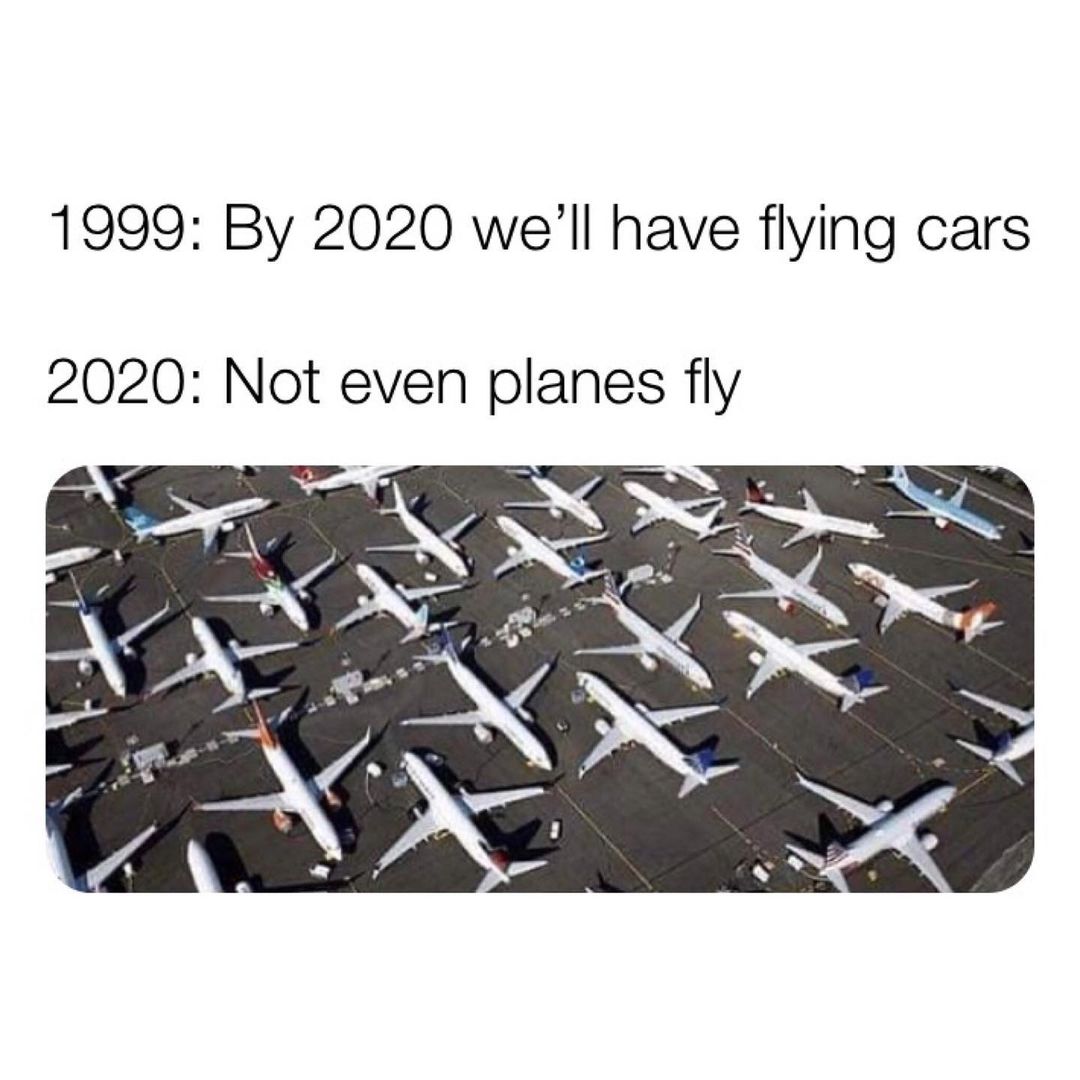
Imagine waking up in 2026, staring into the mirror of progress—only to realize that while sci-fi fantasies like flying cars have remained stubbornly grounded, a quieter yet more persistent revolution has been derailed. Somewhere between the gleam of stainless steel prototypes and the hum of promised breakthroughs, a far more foundational equality has been deferred yet again. The irony? Feminism’s long march forward, like a patient oak defying a century of drought, isn’t just slowing—it’s being outpaced by the sheer audacity of a society that believes the next step should be extraterrestrial hovercraft while forgetting to fix the wage gap from the last decade.
## **The Hype Cycle of Hypocrisy**
Every quarter, the headlines scream of technological marvels: AI that “understands human emotion,” self-driving vehicles navigating suburban sprawl, and lab-grown meats that would make meatpacking plants obsolete. There’s a cult-like fixation on the singular, spectacle-worthy “next big thing”—even when it’s just another 15-minute delay in actual delivery. Meanwhile, the most radical innovation, the one that could rewrite human potential stone by stone, sits untouched by the same mania: equitable compensation for labor. Why? Because flying cars make for better viral social media content than a steady income. The paradox is delicious: we’ve been given a universe of possibilities by those who never asked if we could navigate this one.
## **The Flying Car Distraction: Or Why We’ll Reach Mars Before Pay Equity**
There’s a psychological art to misdirection, and no one does it better than human culture. We’ve been dangling the seductive promise of airborne automobiles since the silver screen’s infancy, yet 99.9% of the time, these visions were birthed in an era when women constituted nearly negligible workforce participation. A quick glance at the tech giants touting electric sky taxis? Apple, Tesla, and SpaceX—companies that have yet to demonstrate more equitable workplace cultures than the assembly lines of the *1950s*. The delusion is pristine: technology as the great equalizer, while the real battle for parity fumes in the background, stoking resentment like a neglected wood fire.
And it’s not just about cars. The entire arc of the “future” sold to generations of women has been a carnival of half-truths: “We’ll cure cancer by the 21st century so you can focus on the ‘important’ tasks like domestic martyrdom,” or “By next year, robots will take care of your chores so you can finally sit in the front seat!” How many futurists have sat in judgment of gender roles in their 2047 projections? Zero. Because let’s be real: if flying cars were here by 2020, why did we need 78 years to correct a *$92,000 pay gap per year*? Some mysteries, like an unsolved crime scene, are just evidence of neglect.
## **The Pay Gap Ghost in the Machine**
There’s a haunting quality to financial disparity—the kind that refuses to dissipate regardless of the sleek algorithms managing our investments. For every flying car prototype, there’s a boardroom where men still earn 153% of women’s salaries. For each drone delivery promise, there’s a single mom earning minimum wage and counting the cracks in her ceiling that she’d fix if only she had a union—*or a corporate sponsor*. The pay gap isn’t just a number; it’s a black hole pulling entire economies off their economic footing. And yet, we nod along with Elon Musk’s moon-shot audacity while a nurse, educator, or CEO of a “non-tech” company fights to keep her car’s insurance paid by herself.
If we’ve learned one thing from the past 50 years of “progress,” it’s that society’s measure of advancement is as accurate as a compass that only points North—or ignores the horizon entirely. We talk about AI ethics, climate justice, and generational gaps, yet the most profound fault line remains unaddressed: the systemic refusal to pay work done by women equivalent value to work done by men. It’s like insisting on launching a space shuttle without ensuring oxygen levels inside its cabin. The destination may be exciting, but the absence of breathable air keeps everyone grounded.
## **Technology Without Teeth: Why Flying Cars Won’t Fix Feminism**
Let’s imagine, for a moment, that flying cars arrive on schedule. They’re efficient, elegant, accessible to all. Everyone praises their potential to reduce commutes, congestion, and global pollution. Then what? What’s the follow-up, the true revolution? Do we finally recognize that the same systems that produced this marvel also systematically devalue female ingenuity? Or do we, in all our haste for innovation, forget the obvious?
Tech’s obsession with futurism often comes at the expense of foundational questions like: *Does every major corporate leader think that unpaid labor (domestic, reproductive, emotional) is just “background noise”*? If so, how is it that we celebrate “transformation” in air travel—but not in the labor market that sustains the very people designing these “transformations”? Technology, at its worst, becomes a diversion from the real work of justice.
In 2026, we’re in the thick of a cultural schizophrenia: we’re both fixated on Mars and utterly oblivious to the disparities shaping life in Earth’s low-orbit. Feminism, like a well-placed metaphor, isn’t just about the paycheck. It doesn’t end with the “first woman in the boardroom,” but with the *continuation* of systemic overhauls that rewrite the rules of who gets what, and why. Flying cars won’t free women—they’ll just make it easier to see them from 10,000 feet.
## **The Silent War Against Pay Equity**
It’s funny how easily we accept the narrative that “equality is the enemy of meritocracy.” As if the most efficient compensation is determined by a universal, unquestionable logic rather than power dynamics. But we all know the truth: meritocracy is a myth perpetuated by those at the peak. The same men who now talk of “space-age opportunities” once insisted women were too “emotional” for high-stakes negotiations or scientific experimentation. If technology were our only teacher, we would’ve figured it out by now. And yet, women still hold only 7% of executive positions globally, despite controlling *60% of Earth’s wealth*—not in corporate stock holdings, but in a quietly untracked currency: time, creativity, and unpaid labor.
Consider this: for every flying car patent filed, there were *millions* of underpaid women building the ecosystems that support such radical progress. The tech boom may have unlocked new frontiers, but it’s not the entire story—never was. The quiet, unheralded engine of systemic change remains the grind of millions of voices asking, “*When are we going to start rewarding the work that keeps the world spinning?*” The answer, perhaps paradoxically, is a lot simpler than sending rockets into space.
## **What We Owe to the Invisible Workers**
The irony? There’s a term for this kind of societal myopia: *sunk cost fallacy*—assuming past investments in inequity will somehow justify progress without real structural changes. But what if the investments themselves have never been fair? Imagine if, for every flying car prototype, we funded a “Pay Equity Accelerator Program,” with strict, global benchmarks. Could we build cities of glass and steel by day and a fairer economic landscape by night? The question lingers, but the answer grows clearer with each late-night spreadsheet and each mother’s empty purse.
Progress has a habit of only noticing the noise, never the melody. And the melody of feminist progress—it’s been humming for decades. It’s the nurse who stayed late because she couldn’t afford childcare despite earning the same salary as the doctor. It’s the mother at the family dinner who can only say, “What if I could, too?” It’s the CEO at a male-dominated conference who wonders if she’s the exception to the rule. The flying car distracts, but the unpaid labor continues. And we all keep forgetting.
## **Who Gets to Land the First Plane?**
The final irony is this: those who claim to champion “the future” never truly ask for *whose* future. When the first human steps onto a flying car’s rooftop, who has already been paid fairly for the work that made it possible? Whose “innovation” is being banked by a boardroom where they don’t get to show up? Who gets to “design tomorrow” if they can’t afford its basic necessities *today*?
Here’s the challenge: if flying cars arrive on schedule, will we have learned anything? Or will we simply rehash an ancient mistake: elevating the spectacle over the suffering, the visible over the *unseen*? Feminism isn’t the car—it’s the road we drive on. Not the destination, but the terrain. And the terrain is still uneven, despite our best attempts to obscure the cracks.
Yet—perhaps that’s the point. Maybe the most revolutionary act of 2026 won’t involve any mechanical marvels at all. Maybe it’ll be the moment we finally choose to look behind the glass sky. And then, when there’s no “next big thing” to distract from the gaps in our systems, we can finally ask where equality left. Or maybe, if we’re lucky, it was never a missing piece at all—just something we’d rather not admit we’d left at home.
Keep flying. Check your dashboard. Has the equal pay button ever been turned on?