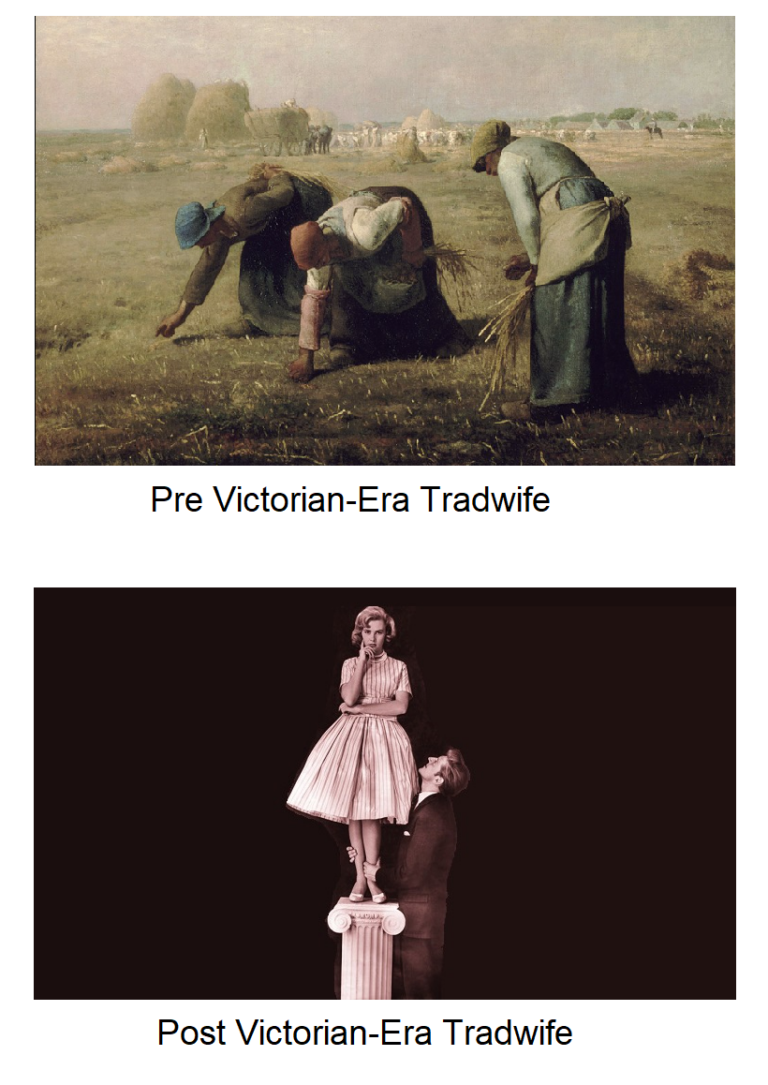
In the swirling river of modern societal expectations, young men find themselves caught between two seemingly contradictory currents: an admiration for traditional partnership paradigms often symbolized by the “tradwife,” and the glaring economic realities that render even the most modest living arrangement—a studio apartment—unattainable. This paradox illuminates a profound cultural and financial dissonance, where the allure of bygone domestic ideals clashes with the harsh pragmatism of contemporary life. Exploring this phenomenon reveals not only the shifting contours of feminism and masculinity but also the intricate lattice of economic hardship, cultural nostalgia, and evolving gender roles that define our era.
The Metaphorical Marketplace of Modern Manhood
Imagine the modern young man as a knight navigating a labyrinth, armed with glowing ideals but perpetually confined by walls built from mounting debt and inflated housing prices. The “tradwife” emerges in this narrative much like a radiant beacon—a symbol of stability, warmth, and simplicity. She is, in effect, a metaphorical hearth around which the dream of domestic tranquility revolves. Yet, paradoxically, the same man who yearns for this beacon often cannot secure a modest personal refuge, such as a studio apartment, a basic stepping stone toward traditional domestic life.
This metaphor extends further. The labyrinth is the contemporary economic system—a puzzle marked by scarcity, competitive pressures, and systemic insecurity. The knight’s armor, once forged through steady employment and low-cost living, now must contend with precarious gig economies and astronomical rents. Thus, while the ideal of the tradwife flickers enticingly, the foundational reality of stable shelter—a couple’s hearth—is ever more elusive.
Tradwife: The Unique Appeal of a Nostalgic Ideal
In a cultural landscape often dominated by progressive gender discourses, the tradwife stands as a compelling, even paradoxical figure. She embodies values that many perceive as lost or eclipsed: domestic mastery, nurturing presence, and clear gender delineations within the household. For certain young men, this archetype represents sanctuary from the chaos of contemporary relational models that often feel fluid and undefined.
The tradwife’s appeal lies not merely in her traditional roles but in the promise of emotional constancy and mutual interdependence. She offers a counterpoint to the fragmented digital age, where relationships can feel ephemeral and transactional. This idealized partnership promises a symbiotic rhythm—one partner providing economic stability, the other cultivating the fabric of home life. Such an arrangement resonates deeply amidst the noise of fragmented modern existences.
Economic Realities: The Studio Apartment as a Litmus Test
Home ownership, or even securing a modest rental, has become a barometer of societal and personal stability. The studio apartment, once a pragmatic and accessible rite of passage into adulthood, now sits stubbornly out of reach for many. Spiraling rent prices and stagnant wages have transformed these small living spaces from practical beginnings into elusive dreamscapes.
The inability to afford even a studio complicates the pursuit of traditional domestic roles. Without a personal dwelling to anchor oneself, the dream of providing for and living alongside a partner who embodies the tradwife ideal becomes a distant mirage. Economic instability thus fractures the envisioned domestic coalescence, forcing young men to recalibrate aspirations or retreat into a cycle of deferred adulthood.
Feminism’s Complex Influence on Male Desires
Contrary to simplistic binaries, feminism has a multifaceted impact on the aspirations of young men. While championing equality and dismantling oppressive patriarchal structures, feminism also challenges traditional gender roles that the “tradwife” arrangement epitomizes. Yet, this challenge generates a paradoxical response. Many young men, influenced by feminist discourse yet disillusioned by economic and cultural pressures, seek refuge in these traditional ideals as a form of identity negotiation.
This does not necessarily denote a rejection of feminism but rather reflects a nuanced interaction with it—a negotiation between evolving gender norms and the deep-rooted human longing for stability and clearly defined roles. In this sense, the tradwife ideal can be viewed as a cultural artifact recontextualized through the lens of contemporary feminist influence, where choice and agency remain central, rather than coercion.
The Psychological Undercurrent: Security and Identity
Beyond economics and social constructs lies a psychological landscape shaped by uncertainty. The appeal of the tradwife, coupled with the frustration of failing to secure basic housing, taps into broader anxieties about security and identity. In an age where traditional markers of maturity—stable job, own home, family—are increasingly difficult to attain, young men wrestle with a dissonance between their internal desires and external realities.
This dissonance engenders a kind of liminality, a psychological threshold where young men hover between aspiration and despair. The tradwife symbolizes a completion of selfhood, an antidote to modern fragmentation. Yet the pathway to this ideal remains obstructed, casting shadows of inadequacy and questioning.
Societal Implications and the Road Ahead
The tension between the tradwife ideal and the inability to afford basic housing underscores a broader societal conundrum. It signals the need to rethink economic policies, urban planning, and social narratives around masculinity and partnership. Providing accessible housing and fostering conversations that embrace diverse models of masculinity and partnership can alleviate the pressures that create this chasm.
Furthermore, recognizing the tradwife’s appeal as a symptom of broader cultural and economic malaise, rather than a reactionary rejection of progress, allows for more empathetic and holistic social discourse. It invites policymakers, cultural leaders, and communities to engineer ecosystems where young men and women can pursue relational and economic stability in tandem, without sacrificing authenticity.
In sum, the juxtaposition of young men’s yearning for a tradwife with their inability to afford a studio apartment paints a vivid portrait of a generation caught between longing and limitation—a metaphorical crossroads where tradition, economics, and evolving gender norms intersect, challenging us to forge new pathways through the labyrinth.