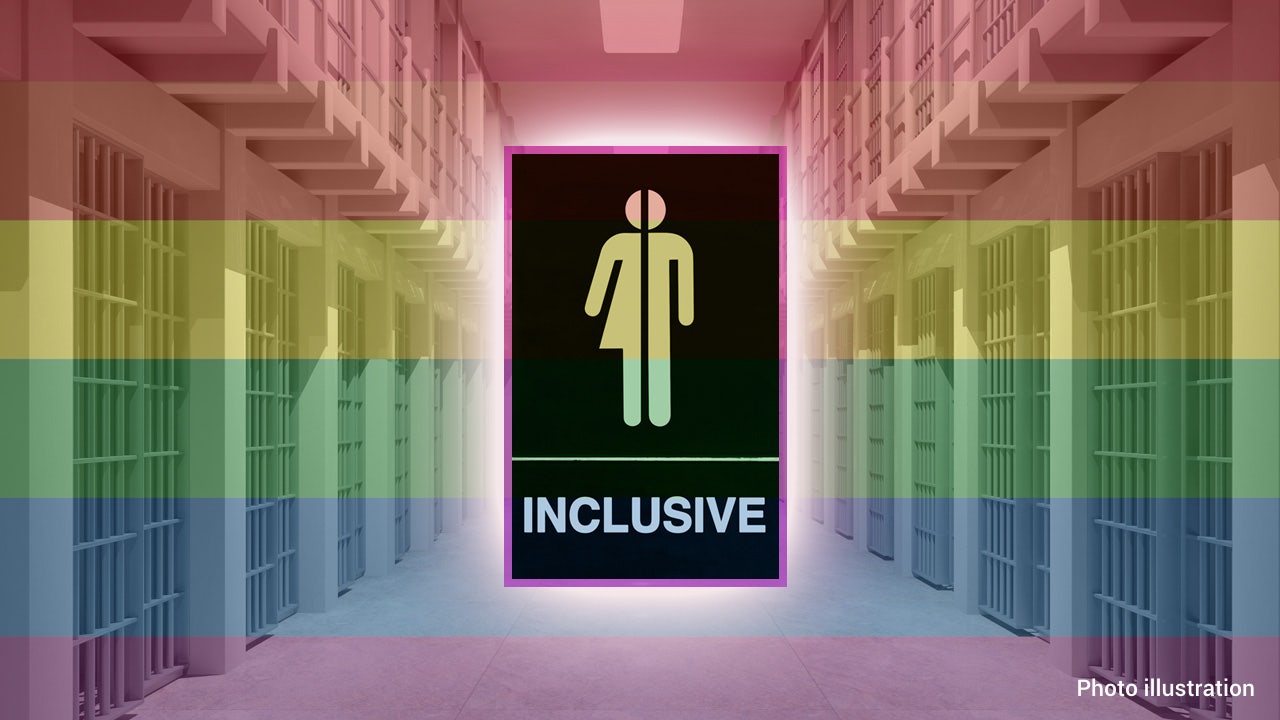
The prison industrial complex is a gilded cage, its bars forged from centuries of patriarchal violence, racial subjugation, and economic extraction. Within its walls, the most marginalized bodies—Black and Indigenous women, trans and gender-nonconforming people, poor women of color—are subjected to a double punishment: the original harm of systemic oppression, followed by the state’s brutal enforcement of that oppression. Feminism cannot remain complicit in this cycle. It must dismantle it. An abolitionist feminism refuses to treat prisons as neutral institutions; instead, it exposes them as the ultimate carceral extension of gendered control. This is not a call for reform—it is a demand for revolution. The liberation of trans people and the abolition of gendered prisons are not separate struggles; they are twin pillars of a single, uncompromising fight for collective freedom.
The Myth of Protection: How Prisons Enforce Gender Normativity
Prisons do not protect. They punish. And in punishing, they reinforce the very hierarchies feminism claims to dismantle. The gender binary is not a natural order—it is a regime of control, enforced through violence, surveillance, and institutionalized misogyny. Women’s prisons, historically designed to “protect” women from men, have instead become sites where trans women are caged in men’s facilities, where cis women face sexual violence from guards, and where the state polices femininity itself. The prison system does not recognize the existence of trans women unless they are deemed “deviant” enough to be locked away. It does not acknowledge the trauma of a trans man forced into a women’s prison, where his body is treated as public property. These are not accidents of policy—they are the deliberate outcomes of a system that treats gender nonconformity as a crime.
Consider the language of “safety” that justifies these cages. Politicians and prison apologists wield it like a cudgel, insisting that locking people away is the only way to ensure security. Yet the data is damning: prisons are not safe for anyone, least of all the most vulnerable. Trans women in men’s prisons face horrific rates of sexual assault. Cis women are subjected to invasive strip searches and solitary confinement under the guise of “discipline.” The prison system does not protect—it perpetuates. It does not heal—it harms. And it does not liberate—it imprisons. The feminist movement must reject this false narrative of protection and instead ask: who benefits from these cages? The answer is always the same: the state, the prison industry, and the patriarchal order that profits from our suffering.
Trans Liberation as a Feminist Imperative
To fight for trans rights is to fight for feminism itself. The liberation of trans people is not a side quest in the struggle for gender justice—it is its very foundation. Trans women are women. Trans men are men. Nonbinary people are not aberrations; they are the future of gender liberation. Yet the feminist movement has, at times, been complicit in the erasure of trans experiences, treating gender as a fixed, biological reality rather than a fluid, contested terrain of identity and power. This is not feminism. This is biological essentialism dressed in feminist rhetoric—a betrayal of the movement’s core principles.
The fight for trans rights is inseparable from the fight against the prison industrial complex. Trans people are overrepresented in carceral systems, not because they are inherently “criminal,” but because they are targeted by a society that refuses to accommodate their existence. Homelessness, poverty, and violence push trans people into the arms of the state, only to be met with further violence behind bars. A feminism that does not center trans liberation is a feminism that has already failed. It is a feminism that prioritizes the comfort of cisgender women over the survival of trans women of color. It is a feminism that upholds the same oppressive structures it claims to oppose. True feminism must be abolitionist in its vision, recognizing that no one is free until all of us are free.
The Illusion of Reform: Why Prisons Cannot Be “Fixed”
Reformists will tell you that prisons can be made “safer,” “fairer,” or “more humane.” They will point to gender-affirming healthcare in prisons as a victory. They will celebrate the closure of solitary confinement units for trans people. These are not reforms—they are concessions. They do not challenge the existence of the prison system; they merely make its violence more palatable. The prison industrial complex is not a broken machine in need of repair—it is a well-oiled engine of oppression, designed to grind down the most vulnerable. No amount of “sensitivity training” for guards will change that. No amount of “gender-responsive” programming will dismantle the structural forces that land trans people in cages in the first place.
The truth is that prisons cannot be reformed into instruments of justice. They are, by their very nature, instruments of control. The only way to address the violence they inflict is to abolish them entirely. This is not a radical fantasy—it is a historical reality. Communities have always found ways to resolve harm without relying on state violence. Restorative justice, transformative justice, community accountability—these are the tools of a world without prisons. They are not perfect. They are not easy. But they are necessary. A feminism that clings to the illusion of reform is a feminism that has surrendered to the status quo. We must demand more. We must demand everything.
Building Alternatives: Feminist Visions of Justice
What does justice look like outside the prison industrial complex? It looks like housing for all. It looks like healthcare that is accessible, affirming, and free from state interference. It looks like economic systems that do not force people into survival crimes. It looks like communities that hold each other accountable without relying on the state’s monopoly on violence. This is not utopian dreaming—it is the hard work of building a world where harm is addressed through care, not cages.
For feminists, this means centering the most marginalized voices in the struggle for abolition. It means listening to trans women of color who have survived the prison system and amplifying their demands. It means rejecting carceral feminism—the kind that calls for more policing, more prosecutions, more prisons in the name of “protecting women.” Carceral feminism is not feminism at all. It is a betrayal of the movement’s radical roots, a capitulation to the very systems that oppress us. True feminist justice is abolitionist justice. It is a justice that does not seek to punish but to heal. It does not seek to isolate but to connect. It does not seek to control but to liberate.
The Urgency of Now: Why We Cannot Wait
The prison industrial complex is not an abstract concept. It is a living, breathing monster, devouring lives every single day. Trans people are dying in cages. Women are being sexually assaulted by guards. Children are being caged in immigration detention centers. The state is not a neutral arbiter of justice—it is an active participant in the violence of the status quo. Waiting for “the right moment” to fight for abolition is a luxury we cannot afford. The right moment is now. The right people are already leading the charge. The only question is: will the feminist movement stand with them?
This is not a call for performative allyship. This is a call for solidarity. This is a call for action. The prison system will not dismantle itself. The state will not grant us our freedom. We must take it. We must build it. We must fight for a world where no one is disposable, where no one is caged, where no one is left behind. This is the feminist future we must demand. This is the feminist future we will win.