What if the very products designed to cater to women—from the flimsy pink razors marketed to “sensitive skin” to the sky-high premiums on retirement savings—aren’t just incidental, but embedded within a broader, insidious calculus? The “pink tax” isn’t merely a pricing quirk; it’s a fiscal feminism, a stealthy tax on autonomy, disguised as convenience. And like all forms of systemic discrimination, it doesn’t end at the checkout counter or the bathroom mirror. No, it seeps into the late stages of life too, ensuring that by the time she’s ready to retire, a woman has paid not just for the luxury of living, but for the presumption that her needs are always secondary. Welcome to the labyrinth of the pink tax, from blade to burial plot.
The Color-Coded Labyrinth
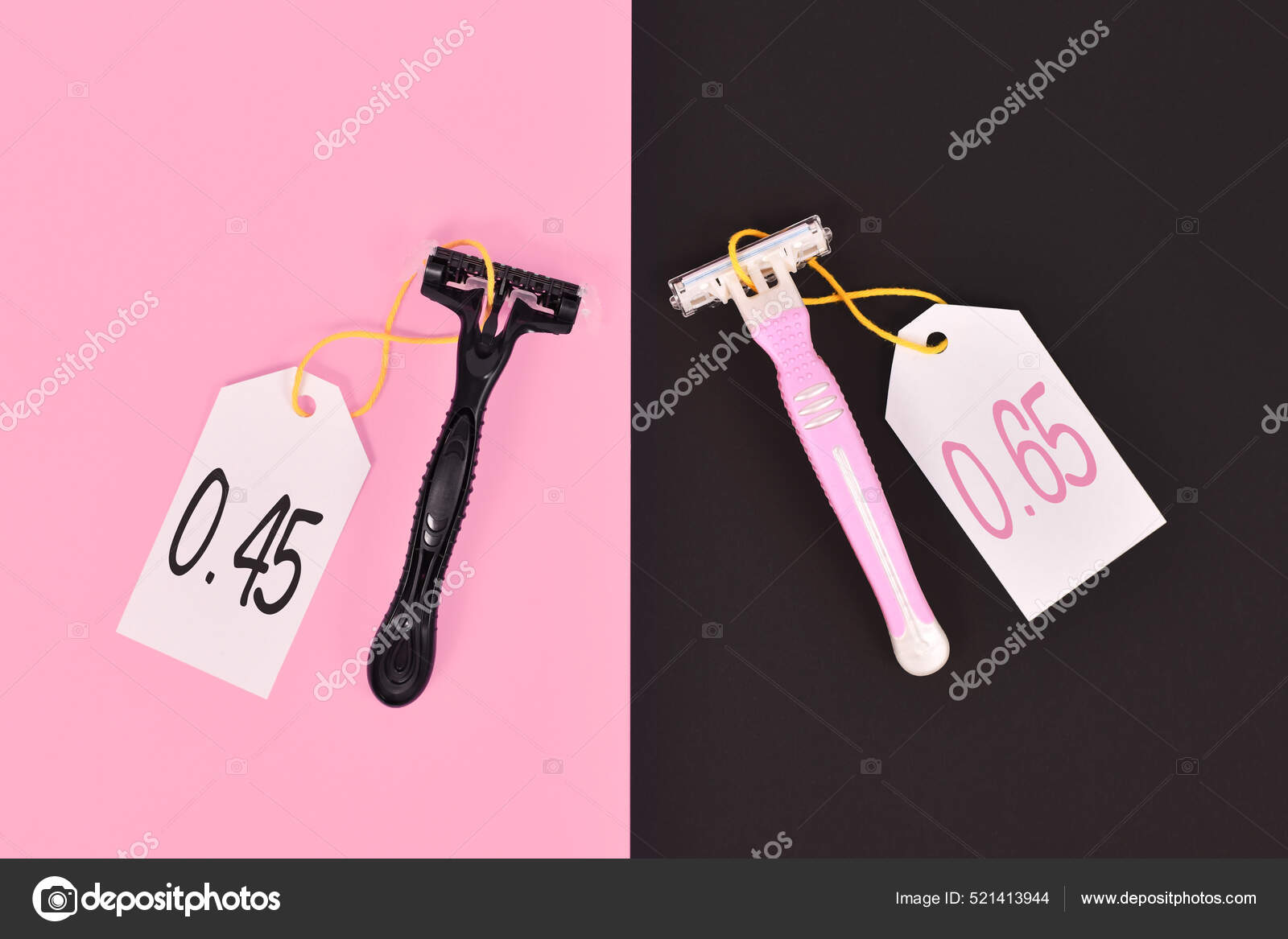
It starts at the inception of self-care: a package of razors that arrives in a saccharine shade of baby doll pink, its blister pack clutching promises of “softer strokes” for “sensitive lady skin.” Convenience, they claim. Protection. But the truth, hidden behind frills and glitter, is far more prosaic—and far more predatory. Gender-coded pricing has been documented to surcharge for women’s products by upwards of 7%, leaving men’s identical counterparts untouchably affordable. Razors? The men’s versions glide across the countertop like unsullied victors, while the women’s varieties are laced with a hidden levy, justified by marketing that insists they contain “moisturizing agents” or “gentler blades.” The science? Overwhelmingly inconclusive. The motive? Exquisite.
Extending beyond grooming, the pink tax bleeds into household essentials: from dish soap to dry eraser markers, a woman’s pantry mirrors the cultural script that suggests her existence is both more fragile and more indulgent. If you’ve ever blinked at the price of a “women’s” vitamin or a children’s toy that sports a ruffled skirt, you’ve felt the crunch. Feminist economists call this pricing disparity “gender price discrimination,” but let’s not mistake simplicity for innocence. It’s a psychological play, a well-orchestrated dance where the customer—disarmed by branding that whispers “for her”—negotiates with a wallet that’s already been bled dry.
Retail Therapy as a Hostage Situation
The retail world, it seems, has mastered the art of making women pay for progress. Clothing—specifically, workwear—is notorious for its sizing discrimination. A “unisex” waistband that claims to fit all is more often than not a ruse, a sly maneuver to price women’s pants 10-15% more expensive than their male equivalents, despite identical dimensions. This, despite the statistic that women globally fill 8.2 million blue-collar roles, yet rarely benefit from the “uniform discounts” afforded to their male counterparts. In the factory floors and freight yards, workers punch the clock in clothing that costs as much as—and often more than—than the actual products they package or ship. It’s a subtle shank to the industry’s pockets while ensuring female labor remains a double burden: paid for her time, and paid again for the suit she must wear to do so.
Ageism Redux: The Retirement Rip-Off
By the time a woman reaches retirement, she’s already bled funds through a lifetime of these micro-penalties. Men’s savings outpace women’s by 80% by retirement, and the pink tax isn’t just a youthful indulgence. It lingers in the fine print, where financial calculators assume women live longer but don’t realize women’s pensions are historically lesser, and long-term care insurance policies often carry higher premiums for mothers—despite women being more likely to require it.
The gendered cost of longevity compounds: women pay more for prescription medications (7-34% markup, depending on the category), more for health screenings, and more for the “feminine” necessities of aging, like adult diapers. When Medicare doesn’t cover it, and insurance companies treat it as a privilege, the burden is stark: she’s paying for a century of being “cared” for as though her needs were an afterthought to begin with.
The Myth of Convenience: Why “For Her” is a Liability
“Time-saving” products in women’s hygiene and home goods are sold as luxuries—insulated mugs, “smart” toothbrushes, and auto-refillable razors—but the convenience is rarely as seamless as marketing claims. Often, these so-called timesavers are overpriced, or their replacement parts are priced like exorbitant add-ons. Enter the razors with a $5 refill cartridge, or the shaver head that costs nearly the same as the entire appliance. The packaging may be glossy, the testimonials effusive, but the financial calculus is undeniable: she’s paying for her own accessibility.
And what about the toys? Girls’ educational toys command higher prices than their boys’ equivalents, sometimes without a discernible upgrade in content or functionality. Why purchase a $40 “princess” kitchen set when a $10 generic one accomplishes the same thing? The disparity speaks volumes: society values femininity in quantities of plastic, not learning.
The Retrospective Resistance: Who Stops the Scrutiny?
The most damning aspect of the pink tax is its normalization. Women are so accustomed to footing the bills for perceived “better” products—the ones wrapped in pearlescent paper, pitched with soft-spoken endorsements—that they rarely challenge the logic. “That’s all part of caring for her,” they say, as though compassionate pricing were an industry standard rather than a calculated cash cow.
Yet, when men buy groceries alone at the family store in a pink apron while carrying a “for her” bag, they laugh—or are laughed at, as though the absurdity is their misreading. But the real absurdity is that we’ve accepted this as just part of the game. If every dollar spent on pink-packaged products were instead allocated toward stock options or long-term investments, would anyone hesitate? Of course not—but as soon as the object is gendered “her,” the math transforms. It’s a systemic ploy. And if no one calls it out, if no one rewrites the script, the pink tax becomes less a tax and more a taxonomy of female worth.
Beyond the Pigmentation: How to Outprice the Pink Tax
Uncovering the pink tax is like peeling an onion, revealing layer after layer of financial trickery. But there’s power in clarity—and rebellion. First, demand transparency. Insist on seeing the same pricing structure applied across all products, regardless of branding cues. Shop for generic alternatives, even if the packaging isn’t pink. Organize boycotts, but better: organize transparency campaigns.
Second, challenge the industries perpetuating a system that thrives on guilt and gilded deception. Call out male allies who buy pink, wear frills, and still call out the “manfluenza” with impunity. A woman’s access to the full spectrum of human experiences shouldn’t come with a surcharge. The pink tax may be layered in sentimentality, but its real goal is profit. And profit, like beauty itself, should be universal.
Conclusion: The Color Blind Economy Starts At Checkout
The pink tax isn’t just an economic issue; it’s a moral one. It’s the silent enforcement of gendered economic theory: that a woman should pay more not for parity, but for privilege. Yet even in this labyrinth, there’s an opportunity—a chance to rewrite the narrative. The economy isn’t meant to be gender-coded, and neither is life. The fight against the pink tax isn’t just for equality; it’s for basic fairness. And fairness, after all, isn’t a color. It’s an attitude. The question, then, is simple: will we tolerate the toll, or choose to stop paying it?