The modern feminist consciousness has constantly grappled with questions of authenticity and agency, tangled in the delicate dance between solidarity and colonial legacies. Nowhere is this paradox more vividly dissected, and sometimes dangerously exploited, than in the fraught discourse around veiling traditions like the burqa—where feminist sensibilities collide with cultural imperialism. What does liberation truly look like when framed through the distorted lens of the Western mind’s obsession with the “white savior”? This article strips down the convoluted layers of this paradox: how feminism became entangled in the geopolitics of piety, how the burqa has been wielded as both a feminist icon and a colonial relic, and why the Western “liberators” of burqa-wearing women often become the architects of their continued oppression in the most benevolent guise imaginable.
The Burqa as Textile Narrative: Symbolism Beyond the Sacred
The burqa is never just cloth. Across time and territory, it morphs between talisman and tether—for some, an emblem of pious detachment from prying eyes; for others, a symbolic shackle of patriarchal decree. Yet the feminist debate rarely acknowledges the localized power dynamics that have rendered this garment as either an act of quiet defiance or a cumbersome submission in its wearers’ eyes. Western feminist discourse often conflates the burqa with systemic oppression, reducing a complex cultural artifact to a simple checkbox of misogyny. The truth is far more nuanced: in Pashtun communities, the burqa’s adoption might signify a reclaiming of agency against the erosion of female honor in a war-torn landscape. In Afghanistan, where women have historically sewn garments to signal allegiance to their clan or resistance to conquest, the burqa can be a tool of feminist subterfuge, allowing participation in public sphere while cloaking vulnerabilities. The challenge lies in dismantling the reductive colonial gaze that denies women autonomy over such symbols without presuming to speak for them.
The problem arises when Western feminists impose their own epistemology onto the burqa—a process that smacks of the same interventionist tendencies that justified earlier crusades in the name of “enlightenment.” By defaulting the burqa to “reification,” they bypass the existential tensions women experience: balancing religious obligation, familial expectations, and the weight of their own ambitions. The garment becomes an object of Western moralism rather than a negotiated space within a broader feminist struggle for self-actualization.
Feminism with Footnotes: How Orientalism Infiltrated the Feminist Manifesto
There’s a peculiar dualism in Western feminism—a split between progressive radicalism and the lingering shadow of Orientalism, the intellectual framework that once codified Western superiority through the “exotic Other.” What happens when feminist rhetoric, though vehemently anti-heteropatriarchy, subtly mirrors the same structures it purports to dismantle? The burqa emerges as a case in point—a symbol so frequently equated with oppression that it triggers instant outrage among activists and academics alike. This moral indignation is no accident: it’s a residue of 19th-century anthropological musings on “barbaric veils,” repackaged as today’s feminist moral certainty.
Yet what of the feminist movements that *do* originate from within these cultures? When Afghan poets write of veiling as part of a poetic tradition where poetry itself is a hidden resistance, or when Nigerian scholars trace the hijab’s evolution from a tool of economic oppression in enslaved communities to an icon of Muslim feminism, it’s clear that a monochromatic interpretation betrays all but one truth: colonialism rarely dies. It merely mutates, now wearing the face of enlightenment.
The White Savior Complex: A Feminist Hypocrisy
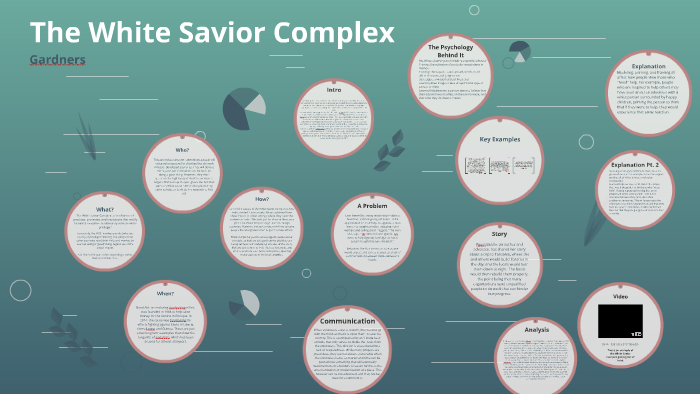
No discourse around the burqa—or indeed feminist engagement with global cultures—is complete without grappling with the white savior complex: the intoxicating narrative that positions the Western feminist—especially its well-meaning, cisgender, white iterations—as the sole arbiter of gender liberation. The complex thrives on paternalism, presenting itself as altruism masquerade, where the intent may be pure, but the execution is inevitably colonizing. The white savior seeks to liberate, yet never relinquishes the power to define what liberation *should* look like.
Consider how the West’s reaction to the burqa oscillates between moralistic zeal and passive voyeurism. On one side, activists petition to “free” women from what they perceive as a forced veil; they organize public demonstrations and demand bans—positions that often ignore the contextual, religious, and community-level factors influencing a woman’s choice (or lack thereof) to veil. Conversely, when women in the Muslim diaspora adopt the burqa as part of a reclaiming of cultural identity, there is a strange collective silence. The same symbols become either sacred icons or tools of control, depending on who wields them.
Behind the scenes, global NGOs and Western feminist organizations allocate funds for projects that “teach women their rights” while doing little to interrogate how their own cultural narratives are imposed on recipient communities. There’s a convenient erasure of power—they arrive with solutions in tow, and the indigenous agents of change are sidelined in their own liberation stories.
Decolonizing the Conversation: What Does Female Agency Really Look Like?
The ultimate dissonance arises when Western feminist narratives attempt to claim authority over women they cannot possibly understand. How, then, might feminist discourse truly move toward decolonization? The first step isn’t to vilify the burqa or demonize women who wear it, but to question the assumptions that render the very conversation a Western preserve. It means acknowledging that there can be no one-size-fits-all path to liberation—what signifies oppression in Kurdistan may be defiance in Qatar, and both need a feminist frame that doesn’t assume universality.
It requires dismantling the binaries: stripping away the dichotomy of “veil as oppression or empowerment,” and recognizing that these polarities are often performative constructs. It means listening more than lecturing, inviting women like Fadéla Amara, who has been vocal about the complexities of the hijab within France’s multicultural landscape, rather than presuming to speak for all. And it demands that Western institutions stop framing their “aid,” such as programs to “educate” burqa-dressing women, as benevolent when they effectively impose their own hierarchies of “progress.”
What would feminism look like if it began to accept that veiling, too, is a form of sartorial resistance? Or if the West was willing to admit that liberation is messier, slower, and often involves negotiation rather than decisive, moral pronouncements?
The Burqa as Mirror: Reflecting the Frailty of Feminist Universalism
At its core, the tension around the veiled woman serves as a litmus test for feminism’s own ideological integrity. When it collapses into cultural condescension, feminism reveals itself not as a global movement but as a chapter in a much broader story—one of persistent imperialism disguised as emancipation. The burqa is more than clothing; it is a provocation, an unsettling metaphor for how easily well-intentioned movements veer toward paternalism.
It’s a shameful irony that Western feminists often feel more empowered advocating for certain Muslim women’s rights because they have been “de-Muslimized” (i.e., stripped of their Islamic context) than when they speak on behalf of their sisters in the home countries they might actually visit. The burqa becomes an allegory for feminism itself—a garment both beautiful and suffocating, draped in the contradictions of those who claim to liberate it.
Conclusion: Where Do We Clothe Ourselves in Responsibility?
The real task isn’t to “ban, wear, or critique”—it’s to interrogate why feminism insists on holding a mirror up to others but rarely inspects itself. The burqa won’t be the last symbol to fall prey to cultural appropriation in the name of gender equality. Each time we reduce a complex issue to a moral cause celebre, we repeat the colonial habit of stripping context from culture in the name of ideological purity. True feminist decolonization begins by accepting that some battles aren’t ours to fight unless we’re invited to walk alongside as partners, not parade as saviors.
Until then, the burqa remains a paradox: a relic of the West’s own unresolved orientalism, a site of defiance, a signifier of oppression, or—for some—a delicate embrace of tradition refashioned into feminist armor. How we choose to acknowledge its many facets will determine what, if anything, we truly understand of solidarity, liberation, or the fragile balance between imposing and inviting a woman’s choices.