

















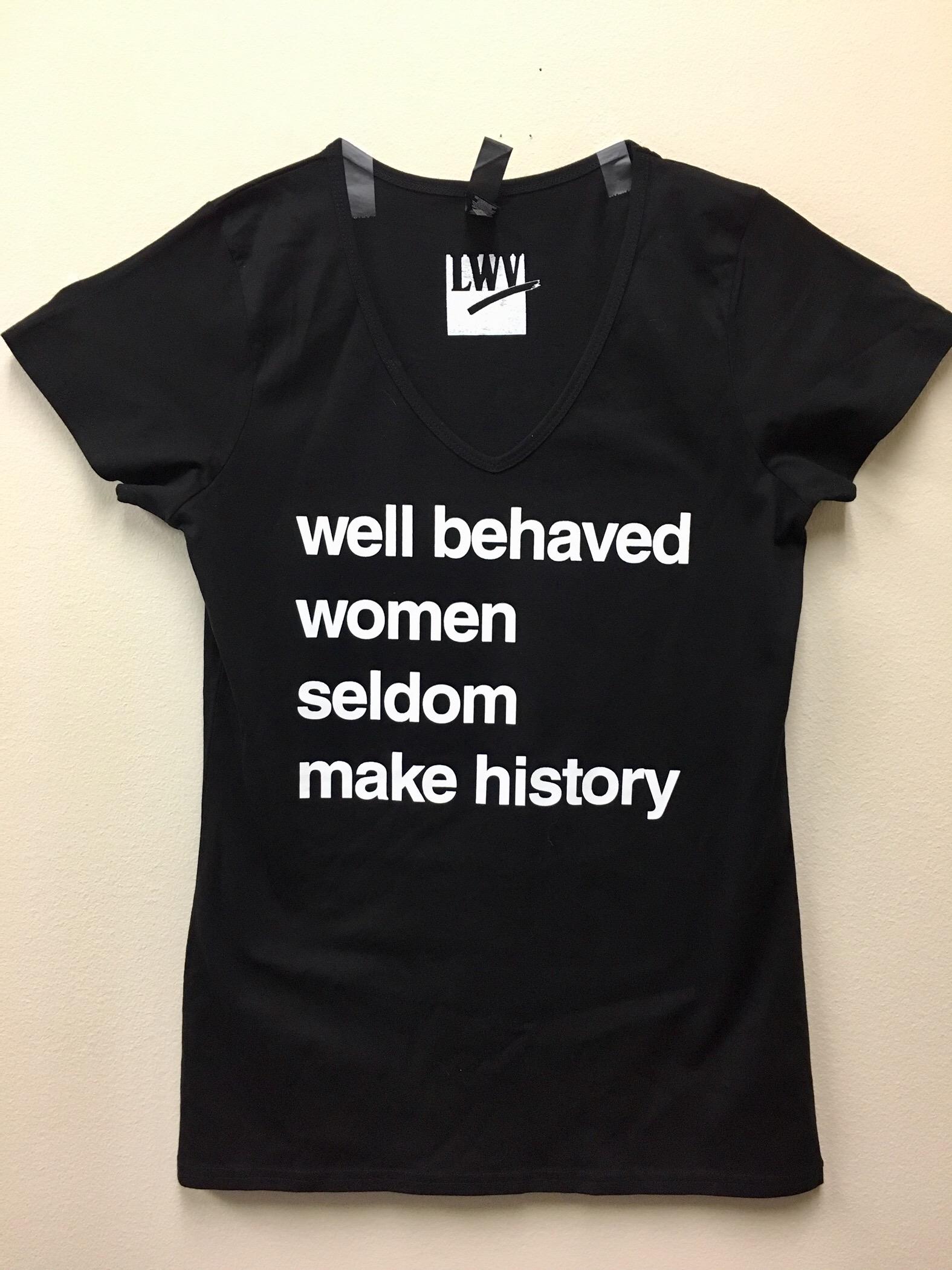
“Well-behaved women seldom make history.” This oft-repeated adage has become a battle cry for feminists who reject societal norms and strive for seismic change. Yet, hidden beneath its provocative surface lies an overlooked reality: well-behaved women do often make dinner. This juxtaposition beckons a radical reconsideration—not simply of women’s roles, but of the narratives we elevate and the subtle power embedded in traditionally feminized spaces. What if rebellion isn’t only loud and public? What if compliance contains its own kind of subversion? The feminism of the future demands an interrogation of what “making history” truly entails, alongside a celebration of those who craft culture within the seemingly mundane. Prepare for an exploration that will rattle expectations and provoke a fresh discourse on agency, power, and the paradoxical identities women inhabit.
The Mythos of Rebellion: Redefining “Making History”
History venerates the audacious—the disrupters, the renegades, the ones who defy norms with raucous fervor. From suffragettes chaining themselves to railings to radical voices championing liberation at every turn, “making history” has been the domain of the fearless and the unruly. But this glorification of insurgency cultivates a reductive binary: well-behaved versus revolutionary, ordinary versus extraordinary. The problem? It neglects the imbricated ways in which societal transformation arises not only from overt defiance but also from subtler strategies of endurance, persuasion, and daily labor.
Well-behaved women, far from invisible, participate in a quieter form of history-making. They shape family dynamics, nurture creativity, and sustain communities. Their adherence to, or strategic use of, social norms can be a form of cultural capital wielded with deliberate intent. This recalibration questions the very metrics by which history judges significance, urging us to honor multiple modalities of effecting change.
Domesticity as a Contested Site of Feminist Power
The dinner table has long been dismissed as mundane, a symbol of traditional domesticity shackling women to a prescribed and limited role. Yet this space is a crucible of influence. The act of “making dinner” transcends mere meal preparation—it is a performance of care, a conduit for transmission of values, and an epicenter for social negotiation. Where some see conformity, others discern resistance.
Consider how culinary traditions function as repositories of cultural identity and vehicles for matrilineal heritage. Women’s careful stewardship over these domestic rituals preserves languages, histories, and recipes that might otherwise evaporate in the wake of globalization and cultural homogenization. Moreover, the kitchen can become a stage for asserting autonomy, experimenting with flavors just as fierce as any protest slogan.
Far from passive participants, women occupying these traditionally “well-behaved” roles often navigate deeply complex power dynamics—balancing familial expectations, personal aspirations, and social critique. This duality defies simplistic categorization and insists upon recognition of domesticity as a site of feminist power, not oppression disguised as maternal duty.
The Paradox of Compliance: How Conformity Can Be Revolutionary
Compliance often carries negative connotations—submissiveness, acquiescence, erasure of self. But what if compliance is deliberately tactical? Feminism recognizes that survival sometimes demands camouflage. The ability to “play the game” can open doors otherwise locked to women, enabling access to education, employment, or spaces of influence.
Well-behaved women who make dinner may simultaneously orchestrate subtle forms of revolution beneath the surface—whether by supporting family members’ ambitions, curating political conversations over shared meals, or mentoring younger generations with wisdom gleaned from lived experience. These acts are rarely captured in history books, yet they forge enduring legacies.
Furthermore, conformity to certain norms can disarm opponents, making radical ideas more palatable within the framework of familiarity. Being well-behaved does not inherently preclude agency; it complicates it. This paradox invites a more nuanced understanding of feminist praxis—one that appreciates both outspoken defiance and quiet mastery.
Challenging the Binary: Beyond Well-Behaved vs. Activist
Feminism thrives when it dismantles dichotomies—embracing complexity over caricature. The trope of “well-behaved women” standing in opposition to those who “make history” is a false construct that erases intersectionality and the fluidity of women’s identities. Reality is messier.
Every woman’s story combines threads of compliance, rebellion, care, and ambition. These threads do not unravel in isolation but weave a tapestry rich in contradiction and nuance. Accepting that well-behaved women can, and do, enact historical change expands our horizons beyond performative activism and viral moments.
This expanded paradigm also reinvigorates feminist discourse by incorporating contributions often marginalized: the laborers, caregivers, the storytellers who build movements through relationships rather than rhetoric alone. It compels institutions and individuals alike to reassess what histories deserve prominence and whose voices populate the narrative.
The Intersection of Feminism and Culture: A Dinner Table Revolution
Culture is not only crafted in legislative arenas or on protest borders—it’s forged daily in kitchens, living rooms, and conversations around modest tables. Feminism that acknowledges these spaces cultivates a profound democratization of power.
When women engage in the act of making dinner, they enact a ritual that transcends nourishment. It serves as a metaphorical and literal feeding of ideas, resilience, and hope. The dinner table can be a forum for strategizing, storytelling, and kindling the flames of transformation that fuel broader social change.
This intersection challenges patriarchal notions that confine women’s worth to passive roles. Instead, it posits domesticity as fertile ground for radical emergence—where intimate care intersects with public consequence, and quiet acts ripple outward to shape collective futures.
A Call to Reimagine Feminist Narratives
It is time to retell feminism’s stories with greater inclusivity and sophistication. Valorizing only the most visible and defiant women undercuts the interconnectedness of feminist action. Recognizing the power in “well-behaved” women who make dinner does not dilute radicalism; it broadens its scope.
Embracing this broader vision invites a feminism that is inclusive of diverse strategies and acknowledges historically overlooked spaces as vital arenas for change. It honors women who steward heritage, nurture community, and embody resilience in forms both grand and quotidian.
Ultimately, “well-behaved women seldom make history but they do make dinner” is not a pithy dismissal—it’s an invitation. An invitation to peer beneath surface binaries, to celebrate layered agency, and to understand that the making of history is as nuanced as the women who live it.
History will remember the rebels and the caregivers alike. And in that recognition, true feminist revolution begins.